
Pests and Diseases
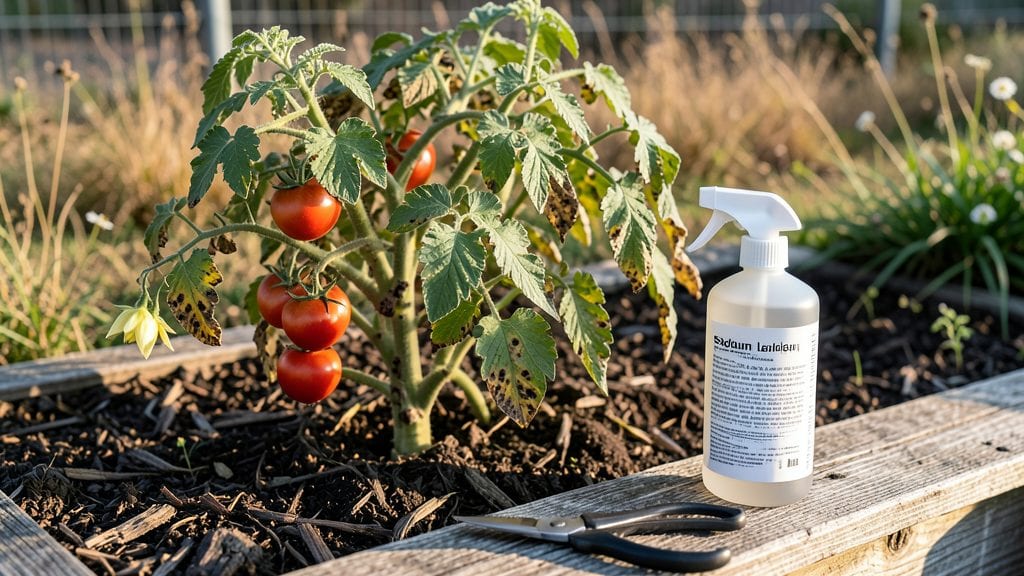
When your tomato plants develop dark, greasy spots or white powdery patches, you’re facing a common tomato plant disease treatment—and here’s how to stop it before it’s too late. 🌱 I’ve saved my own plants from total collapse using these exact methods, and the key is acting within 48 hours before the disease spreads beyond control.
The right treatment can turn a dying plant around, but timing and identification make all the difference.
Most home gardeners panic because they don’t recognize early signs: yellowing leaves, brown stems, or moldy growth. The good news? Blight thrives in wet conditions, so improving airflow and removing infected leaves immediately cuts off its food source.
Copper fungicide sprays or baking soda mixtures work fast, but you’ll also need to adjust your watering habits to prevent future outbreaks. This isn’t just about spraying—it’s about breaking the disease cycle.
Within 48 hours of treatment, you’ll see new growth pushing out, and within a week, the plant can bounce back stronger than before. The secret is consistency: check plants daily during humid weather, prune aggressively, and rotate crops next season.
You’ll end up with tomatoes that stay healthy all season long, not just a few salvaged fruits.
Works for both early and late blight, powdery mildew, and even bacterial spot—just adjust the treatment based on symptoms. Let’s get those plants back in fighting shape before the disease wins.
Root Causes of Tomato Plant Diseases
Understanding why tomato plants fall prey to fungal and bacterial blights is the first step toward preventing and treating them effectively. These diseases don’t strike randomly—they thrive due to specific environmental, biological, or cultural factors.
Below, we break down the most common triggers, so you can address the real issues at play.
Fungal spores and bacteria love stagnant, humid conditions. When tomato plants are too close together, air can’t circulate freely, creating the perfect breeding ground for pathogens like Phytophthora (which causes blight) or Alternaria (a common leaf spot fungus).
- Why it happens:
- Dense foliage traps moisture, extending leaf wetness—the primary trigger for fungal spores to germinate.
- Poor airflow slows evaporation, keeping leaves damp longer (even after rain or watering).
- Weakened plants (from stress or poor nutrition) are more susceptible to infections.
- Actionable insight: Prune plants to improve spacing (aim for 18–24 inches between stems) and remove lower leaves that brush against soil. Use drip irrigation instead of overhead watering to keep foliage dry.
Tomatoes are drought-tolerant, but many gardeners overcompensate by watering too frequently or too heavily. Soggy soil and wet leaves create ideal conditions for bacterial and fungal growth.
- Why it happens: - Fungal diseases (e.g., early blight, late blight) thrive in 24+ hours of leaf wetness.
Overwatering keeps leaves damp longer than necessary. - Bacterial spot (Xanthomonas perforans) spreads rapidly in wet conditions, entering through stomata (leaf pores) or wounds. - Root rot (Pythium or Phytophthora) occurs when soil stays waterlogged, suffocating roots and inviting pathogens.
- Actionable insight:
- Water deeply but infrequently (1–1.5 inches per week, adjusting for rain).
- Water early in the day (before 10 AM) to allow foliage to dry.
- Avoid mulching too close to stems—keep mulch 2–3 inches away to prevent moisture buildup.
Tomatoes prefer warm, stable conditions (60–85°F). Sudden shifts—especially cool nights + humid days—stress plants and weaken their defenses, making them vulnerable to blight.
- Why it happens:
- Late blight (Phytophthora infestans) spreads faster in cool (50–77°F) and humid (90%+ RH) conditions.
- Early blight (Alternaria solani) thrives in warm days (80°F+) and cool nights (60°F), creating condensation on leaves.
- Bacterial wilt (Ralstonia solanacearum) exploits stress from temperature fluctuations, clogging plant vascular systems.
- Actionable insight:
- Use row covers in early season to moderate temperature swings.
- Improve airflow with fan circulation in greenhouses or shaded areas.
- Choose heat-tolerant varieties (e.g., ‘Heatmaster’ or ‘Solar Fire’) if your climate has extreme swings.
Pathogens don’t just appear—they hitchhike on gardening tools, infected plant debris, or compost. If you’ve had diseased tomatoes before, the soil or tools may still harbor spores or bacteria.
- Why it happens:
- Fungal spores (e.g., Cladosporium for leaf mold) can survive in soil for years, especially in organic matter.
- Bacterial cells (e.g., Pseudomonas syringae) overwinter in plant residues or irrigation water.
- Reusing contaminated tools (pruners, stakes) spreads diseases from one plant to another.
- Actionable insight:
- Sterilize tools between uses with 70% isopropyl alcohol or a 10% bleach solution.
- Rotate crops—don’t plant tomatoes in the same spot for 3–4 years (use cover crops like clover in between).
- Test soil for pathogens if you’ve had repeated issues (some nurseries offer disease diagnostics).
Healthy tomatoes resist diseases better. Nutrient deficiencies (especially potassium, calcium, or nitrogen) or excessive fertilizer (burning roots) leave plants defenseless.
- Why it happens:
- Low potassium weakens cell walls, making plants more susceptible to blight and wilts.
- Calcium deficiency causes blossom-end rot, but also reduces resistance to bacterial spot.
- Excess nitrogen promotes lush foliage but delays fruiting, keeping plants in a stress-prone vegetative state.
- Actionable insight:
- Side-dress with compost mid-season for balanced nutrients.
- Use a low-nitrogen, high-potassium fertilizer (e.g., 5-10-10) when flowers appear.
- Avoid fresh manure—it can burn roots and introduce pathogens. Use well-aged compost instead.
Insects like hornworms, aphids, or spider mites don’t just eat leaves—they create entry points for bacteria and fungi. Their feeding wounds expose plant tissues to infections.
- Why it happens:
- Aphids excrete honeydew, which fosters sooty mold (a fungal growth that blocks sunlight).
- Hornworm frass (droppings) can harbor bacterial cells that infect wounds.
- Spider mites weaken plants by sapping sap, reducing their ability to fight off pathogens.
- Actionable insight:
- Handpick pests early in the day when they’re sluggish.
- Use neem oil or insecticidal soap as a preventative spray.
- Encourage beneficial insects (ladybugs, lacewings) to control pests naturally.
Overhead watering or heavy rain splashes soil-borne pathogens onto leaves, where they can infect the plant. This is how early blight and bacterial spot spread so aggressively in gardens.
- Why it happens:
- Splash dispersion carries spores from soil to leaves during rain or watering.
- Leaf wetness duration (>12 hours) increases infection risk for fungal diseases.
- Wind-driven rain can even spread spores from plant to plant in a garden.
- Actionable insight:
- Switch to drip irrigation to eliminate overhead moisture.
- Water at the base (not the canopy) to avoid wetting leaves.
- Use a rain gauge to monitor excess moisture—tomatoes need consistent dry periods between waterings.
Quick Fixes for Common Tomato Ailments
Ailing tomato plants don’t have to mean the end of your harvest—with the right moves, you can often revive them in 48 hours or less! Below are targeted solutions for the most common tomato diseases, paired with prevention tips to keep your plants thriving.
Think of this as your emergency repair kit for fungal and bacterial blights.
🔥 Blight (Early & Late) – The Classic Tomato Killer
Cause: Phytophthora (late blight) or Alternaria (early blight) spores thrive in humidity + wet leaves. Fix It Fast: 1. Prune & Toss 🔪 – Snip off infected leaves (don’t compost them!) and sterilize shears with rubbing alcohol.
- Fungicide Spray 💦 – Mix 1 tsp baking soda + 1 quart water + a drop of dish soap (spray early morning so leaves dry fast).
- Copper-Based Fungicide 🛡️ – For severe cases, use copper hydroxide (follow label rates) to stop spore spread.
- Dry It Out 🌞 – Space plants wider (18–24 inches apart) and water at the base (never overhead).
Prevent Relapse:
- Rotate crops – Don’t plant tomatoes in the same spot next year.
- Mulch with straw – Keeps soil dry and blocks spores from splashing up.
- Plant resistant varieties – Try ‘Mountain Merit’ or ‘Defiant PhR’ for blight-resistant tomatoes.
🍳 Powdery Mildew – The White Dusty Coating
Cause: Erysiphe fungus loves shady, crowded, or stressed plants. Fix It Fast: 1. Neem Oil Spray 🌿 – Mix 1 tbsp neem oil + 1 tsp mild soap + 1 quart water and spray every 5–7 days.
- Baking Soda Blast 🧂 – 1 tsp baking soda + 1 quart water + ½ tsp soap (spray undersides of leaves).
- Improve Airflow 🌬️ – Thin vines or prune lower leaves to let sunlight hit all surfaces.
- Reflect Light 🔆 – Place white reflective mulch (like aluminum foil) around plants to deter spores.
Prevent Relapse:
- Avoid overhead watering – Use drip irrigation or soaker hoses.
- Space plants 2–3 feet apart – Crowding = mildew magnet.
- Rotate crops – Don’t plant tomatoes, squash, or cucumbers in the same spot yearly.
👨🍳 Root & Stem Rot – The Silent Killer
Cause: Phytophthora or Pythium thrive in overwatered, compacted soil. Fix It Fast: 1. Stop Watering Immediately 🚰 – Let soil dry out completely for 24–48 hours.
- Improve Drainage 🏗️ – - Add perlite or coarse sand to soil. - Raise beds if soil is clay-heavy.
- Fungicide Soak 🧴 – Hydrogen peroxide (3%) (1 part H₂O₂ to 10 parts water) or copper fungicide to drench roots.
- Support Weak Stems 🪑 – If stems are mushy, stake plants to prevent snapping.
Prevent Relapse:
- Test your soil – Aim for pH 6.0–6.8 (too acidic = rot risk).
- Water deeply but less often – 1–1.5 inches per week max.
- Avoid mulching too close to stems – Keep mulch 2–3 inches away.
🥘 Bacterial Spot – Tiny Brown Spots with Yellow Halos
Cause: Xanthomonas bacteria spread via water splashes or contaminated tools. Fix It Fast: 1. Remove Infected Leaves 🗑️ – Dispose of them (don’t compost—burn or trash).
- Copper Soap Spray 🧼 – Mix 1 tbsp copper sulfate + 1 tsp soap + 1 gallon water and spray every 5 days.
- Sanitize Everything 🧴 – Bleach (1:10 ratio) or rubbing alcohol on pruners, gloves, and containers.
- Avoid Overhead Watering 💦 – Use drip irrigation or water early in the day so leaves dry fast.
Prevent Relapse:
- Rotate crops – Don’t plant tomatoes, peppers, or eggplants in the same spot for 3 years.
- Use resistant varieties – Try ‘Celebrity’ or ‘Better Boy’ hybrids.
- Clean up debris – Remove all plant waste after harvest.
🌡️ Bacterial Wilt – Sudden Wilting & Yellowing
Cause: Ralstonia solanacearum clogs xylem vessels, cutting off water flow. Fix It Fast:
- Unfortunately, there’s no cure—remove and destroy infected plants immediately to stop spread.
- Disinfect soil – Solarize (cover with clear plastic for 4–6 weeks in hot sun) or plant cover crops (like mustard) to starve bacteria.
Prevent Relapse:
- Test new plants – Buy from reputable nurseries (avoid infected stock).
- Avoid wounding plants – Prune carefully to prevent bacterial entry.
- Rotate crops aggressively – Wait 5+ years before replanting tomatoes in the same spot.
✅ Morning Maintenance – Always water and prune in the morning so plants dry by night. ✅ Coffee Grounds Boost – Sprinkle used coffee grounds around plants (1 cup per plant) for natural fungicidal properties. ✅ Garlic Spray – Blend 5 garlic cloves + 1 quart water, strain, and spray for bacterial/fungal deterrence. ✅ Quarantine New Plants – Keep new additions separate for 2 weeks to spot diseases early.
Remember: The key to long-term tomato health is prevention—but when diseases strike, act fast, stay consistent, and don’t panic! With these fixes, you’ll be back to juicy, blight-free tomatoes in no time. 🍅💪
Frequently asked questions about tomato plant diseases
How do I tell if my tomato plant has early blight vs. late blight?
Early blight shows brown concentric rings on lower leaves, while late blight creates greasy, dark spots that spread rapidly to stems and fruit. Early blight targets older leaves first, while late blight attacks younger foliage and fruits. Check stems for dark streaks—this confirms late blight.
Can I still harvest tomatoes from a diseased plant?
Yes, but only if the fruit is healthy and unspotted. Remove all diseased leaves and wash tomatoes thoroughly before eating. Avoid harvesting from plants with bacterial wilt (sudden wilting) or severe fungal infections, as spores can contaminate fruit.
Why do my organic treatments stop working after a few days?
Organic sprays like neem oil or baking soda need consistent reapplication (every 5–7 days) to stay effective. Fungal spores reproduce quickly in humid conditions, so combine treatments with pruning and airflow improvements. For stubborn cases, rotate between copper fungicide and hydrogen peroxide so pathogens don’t build resistance.
Is it safe to compost tomato plant debris after treatment?
No—never compost diseased plant material. Fungal spores and bacterial cells survive composting and can reinfect your garden. Instead, bag and trash infected leaves/stems or burn them (if local regulations allow). This prevents next year’s plants from inheriting the problem.
How long does it take for tomato plants to recover from blight?
With immediate treatment (pruning + fungicide), you’ll see new growth in 3–5 days and full recovery in 2–3 weeks. Remove all infected parts first—this stops the disease from spreading. Healthy plants bounce back faster, so focus on airflow, watering habits, and nutrition during recovery.