Pruning
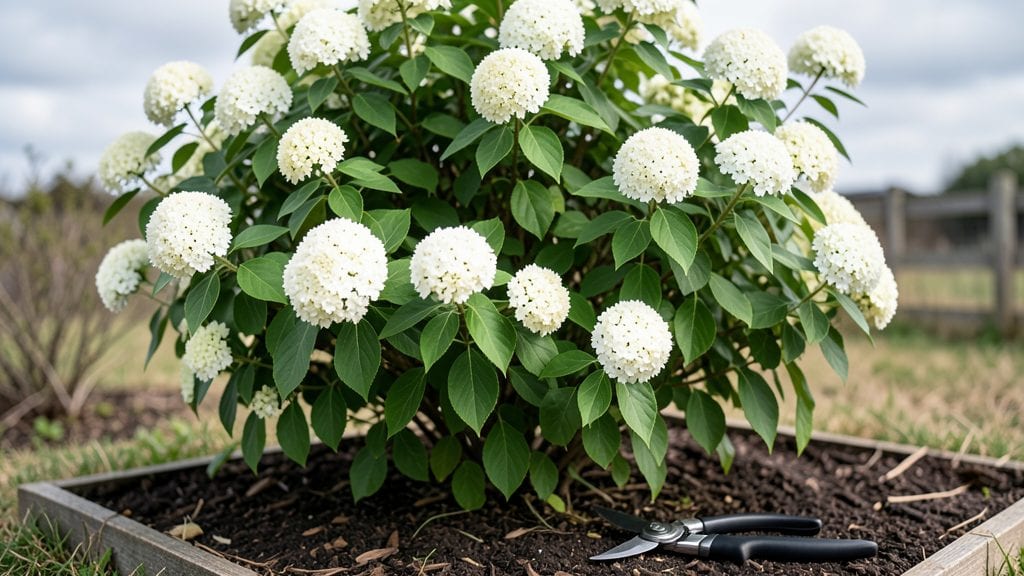
Pruning your snowball plant (Viburnum opulus) is the secret to keeping it lush and full of those iconic white clusters all year long.
I’ve been shaping mine for years, and the difference between a scraggly bush and a thriving, bushy specimen comes down to timing, technique, and a little patience. The right cuts encourage new growth while maintaining that classic rounded shape—no more bare stems or sparse blooms.
Most people prune at the wrong time, which leads to weak growth or even fewer flowers. The best approach is to do light pruning in late winter or early spring (just before buds swell) and a heavier shaping cut in late spring or early summer after flowering.
You’ll need sharp pruners, a pair of gloves, and about 20 minutes—that’s it. The key is removing one-third of the oldest stems at the base each year to keep the plant rejuvenated.
After pruning, your snowball plant will respond with vibrant new shoots and even more abundant blooms next season. The foliage stays dense, the branches fill out, and those snowball-like clusters become the star of your landscape.
Just avoid cutting into old wood in late summer—it won’t regrow properly. With this method, your plant will stay healthy, productive, and full for decades.
Works for both standard shrubs and dwarf varieties, and the same principles apply whether you’re dealing with a mature plant or a young one. Once you master the rhythm, pruning becomes second nature—and your neighbors will be asking for your secrets. Let’s get those shears ready!
Why it happens
Your Viburnum opulus (snowball plant) might be throwing a growth tantrum for reasons you haven’t considered yet. Understanding these triggers is the first step to reclaiming that lush, rounded shape you love. Let’s break down the science—and the sneaky culprits—behind why your plant acts up.
🌱 Overcrowded Roots: The Underground Struggle
When roots become congested, they can’t efficiently absorb water or nutrients. This stress forces the plant to compensate by sending out more shoots and branches—often in random directions—to access resources. Why it happens:
- Competition for space: If your snowball plant is planted too close to other shrubs, trees, or even its own offspring (from self-seeding), roots tangle and compete for moisture and minerals.
- Poor soil aeration: Compacted or clay-heavy soil restricts root expansion, triggering a "survival mode" where the plant prioritizes vertical growth over structured branching.
- Lack of pruning history: Older plants with decades of unchecked growth may have a dense root ball that’s never been disturbed, leading to chaotic above-ground behavior.
Actionable fix: Test your soil’s drainage and consider amending it with compost or gently loosening roots during transplanting (if needed). For mature plants, a root pruning session—where you trim 10–20% of the root mass—can reset growth patterns.
⏳ Skipped Pruning Windows: The "Catch-Up" Chaos
Snowball plants thrive on regular, strategic pruning, not just occasional "clean-ups." Missing the optimal timing disrupts the plant’s natural growth rhythm, leading to leggy, uneven, or overly bushy branches.
| Pruning Mistake | What Happens | Scientific Reason |
|---|---|---|
| Pruning after late spring blooms | Stunted flower buds for next year | Snowball plants set next year’s blooms on current season’s growth. Cutting too late removes potential flower nodes. |
| Neglecting winter pruning | Weak, sparse new growth in spring | Dormant-season pruning reduces stress and allows energy to focus on structural rather than random shoots. |
| Over-pruning in one session | Shock response: excessive water sprouts | Removing >30% of foliage at once triggers ethylene gas production, a plant stress hormone that spurs chaotic regrowth. |
Actionable fix: Schedule pruning in three key phases:
- Late winter/early spring: Remove dead wood and shape the canopy.
- Directly after blooming: Lightly trim to encourage next year’s flowers.
- Mid-summer: Pinch back overly vigorous shoots to redirect energy.
☀️ Sunlight Imbalance: The "Starvation" Effect
Snowball plants are adaptable but hate extremes. Too much sun or shade throws their growth hormones (like auxins) out of whack, causing:
- Too much sun: Auxins concentrate in shaded lower branches, stunting them while upper branches stretch wildly (a phenomenon called etiolation).
- Too little sun: Reduced photosynthesis forces the plant to compensate by elongating stems to reach light, weakening structure.
Actionable fix:
- 🔥 Morning sun lovers: If your plant gets harsh afternoon sun, provide 30–50% shade cloth in peak heat (12–4 PM).
- 🌳 Shade seekers: Gradually introduce 3–5 hours of direct sun over weeks to avoid shock.
- ✨ Pro tip: Rotate the plant quarter-turns every 2–3 weeks to ensure even light exposure.
💧 Watering Whiplash: The Thirsty or Drowned Plant
Water stress—whether from drought or over-saturation—disrupts the plant’s cytokinin-to-auxin ratio, hormones that control cell division and shoot growth. Here’s how it plays out:
- Underwatering: Auxins dominate, causing thick, woody stems with sparse leaves as the plant conserves energy.
- Overwatering: Roots suffocate, and ethylene builds up, triggering water sprouts (long, weak shoots) to escape the soggy soil.
Actionable fix:
- 🌡️ Check soil moisture: Stick your finger 2–3 inches deep. If dry, water deeply; if soggy, hold off for 3–5 days.
- 💡 Improve drainage: Amend soil with perlite or coarse sand (20% mix) if water pools after rain.
- 🎯 Mulch smartly: Use 2–3 inches of organic mulch (like shredded bark) to retain moisture without smothering roots.
Revive & Reshape Your Snowball Plant
Pruning your snowball plant (Viburnum opulus) isn’t just about trimming—it’s about revitalizing growth, fixing mistakes, and preventing future woes. Whether your plant is leggy, overcrowded, or just not thriving, these practical fixes will get it back on track.
Below, we’ve mapped common issues to step-by-step solutions, plus prevention tips to keep your snowball plant lush year-round.
Cause: Too little pruning, poor sunlight, or weak structure. Fix It:
- 🔪 Trim the Top – Cut back the tallest stems by ⅓ to encourage bushier growth. Use clean, sharp pruners to avoid tearing.
- 🌱 Thin Out Old Wood – Remove 2-3 oldest stems at the base to redirect energy to younger branches.
- 🌞 Boost Sunlight – If indoors, move it near a bright, indirect window. Outdoors? Ensure 6+ hours of sun per day.
- 🌱 Fertilize Lightly – Use a balanced 10-10-10 fertilizer in early spring to support new growth.
💡 Prevention Tip:
- Prune annually in late winter or early spring (before new growth starts).
- Avoid heavy pruning in fall—it can stress the plant before winter.
Cause: Too much growth in one area, leading to weak structure. Fix It:
- 📏 Map the Shape – Step back and visualize an open, rounded form. Remove branches that cross or rub against others.
- ✂️ Cut at the Base – For thick, tangled stems, prune all the way back to the main trunk (or a strong side branch).
- 🌿 Space Out Cuts – Don’t prune more than ⅓ of the plant at once. Space heavy cuts over 2-3 years if needed.
- 🌱 Redirect Growth – If branches grow inward, tie them outward with soft plant ties to train them.
💡 Prevention Tip:
- Prune young plants early to establish a strong framework.
- Avoid "lion’s tailing" (cutting all leaves off a stem)—this can shock the plant.
Cause: Freeze damage, disease, or pests weakening stems. Fix It:
- 🔍 Check for Life – Scratch a small section of bark. If it’s green underneath, the branch is alive. If brown/dry, it’s dead—remove it.
- ✂️ Prune Dead Wood – Cut just outside the branch collar (the swollen area where the branch meets the trunk).
- 🌱 Seal Cuts (If Needed) – For large wounds, apply pruning sealant (optional—most plants heal fine without it).
- 🌿 Protect Next Year – Mulch heavily around the base with wood chips to insulate roots.
- 🛡️ Watch for Pests – If branches are chewed or discolored, treat with neem oil or insecticidal soap.
💡 Prevention Tip:
- Prune in late winter (after frost risk passes) to avoid exposing fresh cuts to cold.
- Choose cold-hardy varieties (like Viburnum opulus ‘Roseum’) if you live in Zone 3 or colder.
Cause: Over-pruning, poor nutrition, or wrong timing. Fix It:
- 📅 Time It Right – Snowball plants flower on old wood. Prune right after blooming (late spring) to preserve next year’s flowers.
- 🌱 Feed for Blooms – Use a high-phosphorus fertilizer (like 5-10-5) in early spring to encourage flowering.
- 🌿 Thin Out Dense Areas – If branches are too packed, remove some inner stems to improve airflow and light penetration.
- 🌸 Deadhead Sparingly – Only remove spent flower clusters—don’t cut back entire stems unless they’re weak.
💡 Prevention Tip:
- Avoid heavy pruning in fall—this removes next year’s flower buds.
- Water deeply during dry spells to support blooming.
Cause: Poor airflow, overwatering, or humid conditions. Fix It:
- 🌿 Improve Airflow – Thin out dense branches to let light and air circulate.
- 💦 Adjust Watering – Water at the base (not overhead) and avoid soggy soil.
- 🧼 Clean Up Debris – Remove fallen leaves and dead wood where fungi hide.
- 🍄 Treat Fungus – Spray with copper fungicide or baking soda mix (1 tbsp baking soda + 1 quart water + a drop of dish soap).
- 🌱 Prune Infected Areas – Cut off blackened or mildewed branches and sterilize pruners with rubbing alcohol.
💡 Prevention Tip:
- Space plants 3-5 feet apart for better airflow.
- Water in the morning so foliage dries quickly.
If your snowball plant is severely overgrown or unhealthy, try a gradual reset: 1. 📅 Start in Early Spring – Remove ⅓ of the oldest, weakest stems at the base.
- 🌱 Step Back Each Year – Next year, trim another ⅓, and so on, until the plant is balanced and bushy.
- 🌿 Monitor Growth – Fertilize lightly and prune lightly in subsequent years to maintain shape.
✨ Pro Tip:
- Take cuttings from healthy stems to propagate new plants while you reset the old one!
Final Reminder: Pruning is easier than fixing neglect—stay consistent, and your snowball plant will reward you with vibrant blooms and lush foliage for years! 🌸✂️
Frequently asked questions
When is the best time to prune my snowball plant for maximum blooms?
Prune your snowball plant in late winter or early spring (just before buds swell) to shape the structure, then do a light pruning after flowering (late spring/early summer) to maintain shape. Avoid pruning in fall—this removes next year's flower buds since snowball plants bloom on old wood.
How much should I cut back my snowball plant each year?
Remove no more than one-third of the oldest stems at the base each year to rejuvenate growth. For shaping, trim back ⅓ of the longest branches to encourage bushier growth. This gradual approach prevents shock and maintains the plant's natural form.
Can I prune my snowball plant too much? What are the signs?
Yes! Over-pruning causes sparse growth, fewer flowers, or weak stems. Signs include excessive water sprouts (long, thin shoots), yellowing leaves, or no blooms next season. If you've pruned too aggressively, focus on light maintenance pruning for 1-2 years to recover.
Should I sterilize my pruners between cuts on my snowball plant?
Yes, especially if your plant shows signs of disease (like blackened stems or mildew). Wipe pruners with rubbing alcohol or a 10% bleach solution between cuts to prevent spreading pathogens. Healthy plants rarely need sterilization, but it's a good habit for overgrown or stressed shrubs.
How do I prune a snowball plant that's been neglected for years?
Reset it gradually! Start by removing dead or crossing branches, then trim ⅓ of the oldest stems at the base in early spring. Over 2-3 years, reduce another ⅓ each year until the plant is balanced. Avoid heavy pruning in one season—it can shock the plant.