Pruning
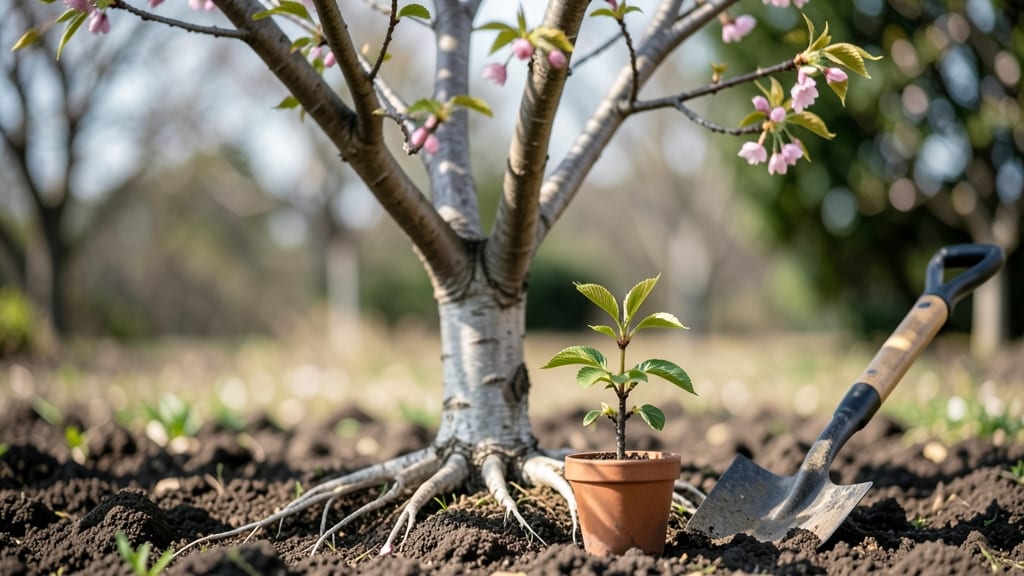
Planting a sakura tree isn't just about spring blooms—it's about creating a living canvas that transforms your yard into a seasonal masterpiece. ✨ I've planted mine in early autumn when the soil is still warm but the air has cooled, giving roots a head start before winter dormancy.
The right timing means fewer transplant shocks and stronger growth once those iconic pink blossoms arrive.
Start with well-draining soil mixed with compost—sakuras hate soggy roots—and choose a spot with at least 6 hours of sunlight daily. If your climate runs hot, afternoon shade helps prevent leaf scorch.
For containers, use a 15-gallon pot with drainage holes and replant every 3-4 years when roots crowd the space. The key is patience: young trees need consistent moisture but won't tolerate standing water.
What you'll get is a tree that rewards you year-round: delicate spring blooms, vibrant green foliage in summer, fiery fall colors, and even winter interest with bare branches against snow. Pruning in late winter (before buds swell) keeps the shape open and encourages next year's flowers.
My tree now stands as the centerpiece of my front yard, and neighbors ask how I got it to bloom so reliably.
Works in zones 5-8, though southern climates may need afternoon shade. Avoid planting too close to sidewalks—sakura roots spread wider than you'd expect. Here's where most people trip up: overwatering, poor drainage, or pruning at the wrong time. Let's get yours off to the right start.
📚 In This Guide
- What you need
- Instructions
- Tips and common mistakes
- Wrapping up and next steps
What you need
- ● Sakura tree sapling: Choose a Prunus serrulata (Japanese cherry) or hybrid variety (e.g., Kanzan or Somei-Yoshino). Buy from a reputable nursery (1-3 years old, 4-6 feet tall).
- ● Shovel or trowel: Medium-sized (12-18 inches wide) for digging holes.
- ● High-quality potting soil or native soil mix: 5-10 gallons, amended with compost (30% organic matter).
- ● Mulch (wood chips or bark): 2-3 inches thick, organic and weed-free.
- ● Watering can or hose with a gentle spray nozzle: For deep watering (1-2 gallons per watering).
- ○ Tree stake (optional but recommended for young trees): 1-2 stakes, 4-6 feet tall, to support the trunk.
- ● Tree guard or wire mesh: 3-4 feet tall, to protect from animals (e.g., deer or rabbits).
- ● Gloves: Heavy-duty gardening gloves to protect hands.
- ● Pruning shears: Sharp, bypass-style shears (for post-planting trimming).
- ● Measuring tape: To ensure proper planting depth (root flare should be 2-3 inches above soil).
- ● Fertilizer (slow-release, balanced 10-10-10): 1-2 pounds, applied 6-8 weeks after planting.
- ● Soil pH test kit: Sakura trees prefer slightly acidic soil (pH 5.5-6.5).
- ● Sunlight: Full sun (6+ hours daily) for optimal blooming.
- ● Well-draining soil: Avoid waterlogged areas; amend clay soil with sand or perlite.
- ● Spacious planting site: Minimum 20 feet from structures/walkways (sakura trees grow 20-30 feet tall).
- ● Local climate check: Hardy in USDA Zones 5-8; choose cold-hardy varieties for colder regions.
Instructions for planting and pruning a sakura tree
Here's how to plant your sakura tree for stunning spring blooms and maintain its health year-round.
🌱 Step 1: Choose the Perfect Planting Spot
Sakura trees thrive in full sun, so select a location with at least 6 hours of direct sunlight daily. I always look for a spot with well-draining soil—sakuras hate soggy roots. If your soil is heavy clay, amend it with compost or organic matter before planting to improve drainage.
Consider the tree's mature size—most sakuras grow 20-30 feet tall—so give it plenty of space to spread its branches. Avoid planting near sidewalks or driveways where roots could crack pavement as the tree grows. Dig a hole twice as wide as the root ball but no deeper.
🪴 Step 2: Plant Your Sakura Tree Properly
Gently remove the tree from its container and loosen any circling roots with your fingers. Place the tree in the hole so the top of the root ball sits 1-2 inches above ground level—this prevents water from pooling around the trunk. Fill the hole with soil, tamping it lightly as you go to remove air pockets.
Water deeply right after planting to settle the soil and eliminate air gaps. The soil should be moist but not waterlogged. Mulch around the base with 2-3 inches of organic mulch, keeping it 6 inches away from the trunk to prevent rot. This helps retain moisture and protect roots from temperature swings.
☀️ Step 3: Prune for Shape and Health
Prune your sakura tree in late winter or early spring, just before new growth begins. Remove any dead, diseased, or crossing branches first—these compete for energy and can weaken the tree. Use clean, sharp pruners to make cuts just outside the branch collar (the swollen area where the branch meets the trunk).
For shaping, focus on opening the canopy to allow light and air to reach the center. I like to remove about 20-30% of the previous year's growth to encourage bushier growth. Avoid heavy pruning in fall or summer—this stresses the tree and can reduce next year's bloom production.
⏰ Step 4: Maintain Year-Round Care
Water your sakura tree deeply once a week during the first growing season, more often if your area experiences drought. After establishment, sakuras are fairly drought-tolerant but still need 1-2 inches of water per week during dry spells. You'll know it's time to water when the top 2-3 inches of soil feel dry.
Fertilize in early spring with a balanced, slow-release fertilizer to support new growth and flowering. I avoid high-nitrogen fertilizers—they promote leafy growth at the expense of blooms. Watch for pests like aphids or spider mites, which can stress the tree. A strong spray of water usually removes them, but severe infestations may need insecticidal soap.
✂️ Step 5: Prepare for Spring Blooms
In late winter, inspect your tree for any winter damage—frost cracks or broken branches. Prune out any damaged wood immediately to encourage healthy regrowth. Sakura trees bloom on old wood, so avoid heavy pruning in fall or winter, which could reduce next year's flower production.
Apply a 2-3 inch layer of mulch around the base in early spring to retain moisture and regulate soil temperature. This is also a great time to aerate the soil if it's compacted. You'll see buds forming in late winter—these will open into stunning blossoms in spring, so keep an eye out for signs of pests or disease during this critical period.
Tips & tricks for perfect sakura tree planting
Here's what I've learned after helping plant and prune sakura trees for years—details that make all the difference between a thriving tree and one that struggles.
The Sunlight Secret: That 6 hours of direct sunlight isn't just a suggestion—it's non-negotiable for sakura trees. I've seen trees planted in partial shade produce fewer blooms and weaker growth. If your yard doesn't get full sun, consider planting near a south-facing wall or fence that reflects sunlight. In Step 1, mark the sunniest spot with stakes before digging—this prevents last-minute relocations that stress the tree.
Root Ball Placement: The 1-2 inches above ground level in Step 2 isn't just about drainage—it's about preventing rot. I learned this the hard way when a tree I planted too deeply developed trunk rot within two years. Use a level to check placement before backfilling. Pro tip: Mix a handful of mycorrhizal fungi into the planting hole to help roots establish faster.
Pruning Precision: When removing those 20-30% of branches in Step 3, focus on thinning rather than shearing. I always cut just outside the branch collar to prevent wounds that invite disease. For large branches, make the cut in three steps: first undercut, then top-cut, and finally remove the stub. This technique prevents bark tearing that can take years to heal.
Watering Wisdom: That 2-3 inches of mulch in Step 2 and Step 5 creates a moisture reservoir that reduces watering frequency. I water deeply every 5-7 days during establishment, checking soil moisture by pushing a screwdriver into the ground. If it goes in easily, wait another day—sakuras hate soggy roots but need consistent moisture during their first year.
Pro Tips for Sakura Tree Planting
- Here's what I've learned after helping plant and prune sakura trees for years—details that make all the difference between a thriving tree and one that struggles.
- The Sunlight Secret: That 6 hours of direct sunlight isn't just a suggestion—it's non-negotiable for sakura trees.
- Root Ball Placement: The 1-2 inches above ground level in Step 2 isn't just about drainage—it's about preventing rot.
Frequently asked questions
Got questions about planting and caring for your sakura tree? You’re not alone! Here are some of the most common concerns—plus expert-friendly answers to help you grow a stunning tree with minimal stress.
When is the best time to plant a sakura tree?
The ideal time to plant a sakura tree is in early spring or fall, when temperatures are mild. Spring (after the last frost) gives roots time to establish before summer heat, while fall (6-8 weeks before frost) allows for root growth before dormancy. Avoid planting in extreme heat or cold—your tree will thank you!
Can I plant a sakura tree in winter?
While possible, winter planting is not recommended unless you’re in a mild climate (like Zone 7+). Cold soil and frozen ground can stunt root growth, increasing transplant shock. If you must plant in winter, use root stimulator and mulch heavily to protect roots. Spring or fall are far safer bets!
How deep and wide should I dig the hole for my sakura tree?
The hole should be twice as wide as the root ball but only as deep as the root ball itself. This prevents burying the trunk (which can cause rot) while giving roots room to spread. Loosen the sides of the hole to encourage root growth—think of it as giving your tree’s roots a cozy, roomy nest!
What if my sakura tree isn’t blooming? Is it dying?
Not necessarily! Sakura trees need 5–7 years of maturity before they bloom reliably. If it’s young, be patient. Older trees may need full sun (6+ hours/day), proper pruning, and balanced fertilization. Check for pests/disease too—yellowing leaves or sparse foliage could signal stress. A little TLC often revives even the sleepiest sakura!
Are there dwarf sakura varieties for small yards?
If space is limited, try varieties like ‘Kanzan’ (Japanese Hill Cherry) or ‘Shidarezakura’ (Weeping Cherry), which stay compact (15–25 ft tall). Even these beauties thrive in containers for patios or balconies—just ensure they get enough sunlight and water. Small yard? No problem!
Wrapping up and next steps
Planting a sakura tree is a rewarding journey that brings year-round beauty—from delicate blooms in spring to vibrant foliage in summer and autumn. With the right pruning timing and care, your tree will thrive for decades, offering both aesthetic charm and ecological benefits.
Whether you're a seasoned gardener or just starting, every step you take strengthens your connection to nature.
Ready to make your mark? Roll up your sleeves and start planning your planting today—your future sakura awaits! 🌸
- Next step: Mark your calendar for early spring or fall planting and gather your tools.
- Bonus tip: Share your progress with fellow gardening enthusiasts for inspiration!