Pruning
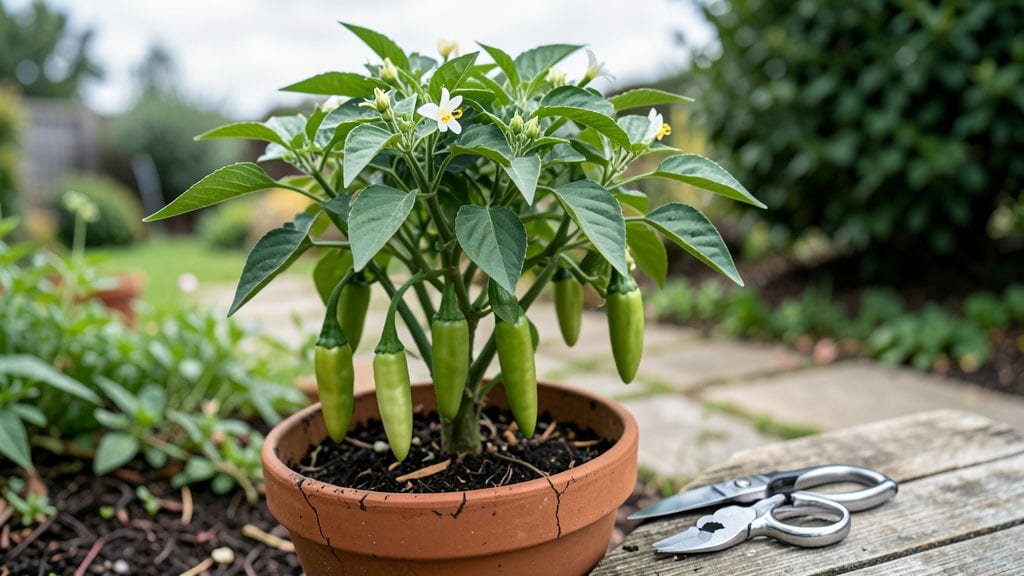
Pruning chilli plants transforms leggy, sparse bushes into dense, pepper-producing powerhouses. 🌱 I learned this the hard way when my first crop produced just three peppers on a 3-foot-tall plant—until I started pruning.
The right cuts don’t just shape your plant; they redirect energy to fruit production and keep diseases at bay.
You only need three tools: sharp pruning shears, a clean cutting surface, and a spray bottle with diluted rubbing alcohol (for sterilizing). The key cuts happen at three stages—early growth, flowering, and fruiting—each serving a different purpose.
Most gardeners skip the first two, which is why their plants look like twiggy trees instead of pepper factories.
By the time harvest rolls around, you’ll be picking glossy, plump peppers instead of a handful of shrunken ones. The plants stay compact, air circulates better, and you avoid the heartbreak of blight or mildew ruining your hard work.
Even my black thumb couldn’t mess this up once I got the timing right.
This method works for all chilli varieties—from tiny Thai peppers to massive bell types—whether you’re growing in pots or garden beds. Let’s get those shears ready and turn your plants into pepper-producing machines.
📚 In This Guide
- What you need
- Instructions
- Tips and common mistakes
- Wrapping up and next steps
What you need
- ● Pruning shears or scissors: Sharp, sterilized bypass pruners (avoid dull tools—they crush stems!). Recommended: Felco F-2 or similar (5–7 inches long).
- ● Gloves: Heavy-duty gardening gloves (chillies can be spicy! 🌶️). Opt for nitrile-coated for grip.
- ● Disinfectant: 70% isopropyl alcohol or a 10% bleach solution (1 part bleach to 9 parts water) to sterilize tools between cuts.
- ● Rubbing alcohol (70%): For wiping down tools and hands after pruning (trust us, it helps!).
- ● Trash bag or bucket: For collecting pruned debris (keep it contained to avoid pests!).
- ● Horticultural oil or fungicide: Treat cuts if your plant shows signs of disease (e.g., powdery mildew).
- ● Rooting hormone: If you’re propagating cuttings (great for multiplying plants!).
- ● Plant markers: Label cuttings or sections if you’re experimenting with different pruning techniques.
- ● Knee pad or stool: For comfort—pruning can take time, especially for tall plants!
Step-by-step guide to pruning chilli plants for maximum yield
Here’s how to shape your chilli plants into productive powerhouses—no guesswork, just proven cuts.
✂️ Step 1: Remove Suckers for Stronger Growth
Suckers are the small shoots that grow in the V-shaped fork where a branch meets the main stem. These energy vampires drain your plant instead of fueling pepper production. Use clean, sharp pruning shears to snip them off at the base—don’t leave stubs, or they’ll rot.
Start this when your plant is 12-18 inches tall and has at least 3-4 leaves. I check every 5-7 days during active growth, pinching off suckers before they grow more than 1 inch long. The goal? Redirect energy to the main stem and fruit-bearing branches.
✂️ Step 2: Prune Lower Leaves to Improve Airflow
Chilli plants need airflow to stay healthy, especially in humid climates. Remove 2-3 sets of the lowest leaves when the plant is 18-24 inches tall. This isn’t just about looks—it prevents fungal diseases like powdery mildew, which thrives in damp, shaded spots.
Use your fingers to gently twist leaves off (they’ll come cleanly) or cut just above the leaf node. Avoid tearing the stem. After pruning, I always give the plant a light watering to help it recover. You’ll notice new side branches forming where you removed leaves—that’s your plant compensating by growing more fruit-bearing stems.
🌿 Step 3: Trim Overcrowded Branches for Bigger Peppers
Once your plant has 5-6 main branches and starts flowering, focus on thinning. Look for branches that are too close together or growing inward—they compete for sunlight and nutrients, leading to smaller peppers. Cut these back to the nearest leaf node, leaving 2-3 strong branches per cluster.
This is the moment that matters: prune just as flowers begin to form. You’ll see buds opening along the remaining branches, and those will turn into your biggest, most flavorful peppers. Avoid heavy pruning after mid-summer—your plant needs all its energy to ripen existing fruit.
⏰ Step 4: Post-Pruning Care for Recovery
After pruning, your chilli plant will look a little rough—but that’s temporary. Give it 3-5 days of reduced watering to let wounds heal. I also add a balanced fertilizer (10-10-10) at half-strength to support new growth. Avoid heavy watering until you see new leaves emerging from the pruned areas.
Watch for yellowing leaves or wilting—these are signs of stress. If you see them, reduce pruning next time or wait until the plant recovers. A well-pruned chilli plant will bounce back with thicker stems, more flowers, and larger peppers than an unpruned one. Patience here pays off in harvest time.
Tips & tricks for pruning chilli plants
Here's what I've learned after pruning my chilli plants for years—these tricks will help you avoid common mistakes and maximize your harvest.
The Timing Secret: Start pruning suckers when your plant is 12-18 inches tall—this is when they begin competing for energy. I've found that checking every 5-7 days during active growth prevents suckers from growing more than 1 inch long, which is when they start draining your plant's resources. Confession: I skipped this for years and wondered why my peppers stayed small.
Tool Tip: Use clean, sharp pruning shears for all cuts—dull tools crush stems and create entry points for disease. For leaves, I prefer twisting them off with my fingers (they come cleanly) rather than cutting, which prevents tearing. Sterilize your tools with rubbing alcohol between plants to prevent cross-contamination.
Airflow Strategy: When pruning lower leaves at 18-24 inches tall, focus on removing 2-3 sets of the lowest leaves to create space between branches. This isn't just about aesthetics—it's how you prevent fungal diseases like powdery mildew. I've seen plants go from healthy to covered in white powder in just a week when I skipped this step.
Post-Pruning Recovery: After your cuts, give your plant 3-5 days of reduced watering to let wounds heal. I've learned the hard way that overwatering stressed plants leads to yellowing leaves and stunted growth. A light watering right after pruning helps, but don't overdo it—wait until you see new leaves emerging before returning to normal watering.
Pro Tips for Pruning Chilli Plants
- Here's what I've learned after pruning my chilli plants for years—these tricks will help you avoid common mistakes and maximize your harvest.
- The Timing Secret: Start pruning suckers when your plant is 12-18 inches tall—this is when they begin competing for energy.
- Tool Tip: Use clean, sharp pruning shears for all cuts—dull tools crush stems and create entry points for disease.
Frequently asked questions
Got questions about pruning your chilli plants? You’re not alone! Here are some of the most common concerns—and straightforward answers—to help you grow like a pro.
When is the best time to prune chilli plants?
Prune your chilli plants after they’ve established at least 6-8 leaves and before flowering (if you want to encourage bushier growth). For hotter climates, late spring or early summer is ideal. Avoid pruning during cold snaps or extreme heat—wait for mild, dry weather to minimize stress on the plant. Pro tip: Morning pruning gives plants time to recover before evening.
How much can I cut back without harming the plant?
You can safely remove up to 30-40% of the plant’s foliage in one session, but avoid over-pruning. Focus on cutting back leggy stems, yellowing leaves, or branches growing toward the center. For young plants, stick to 1-2 cuts per session to avoid shocking the plant. Think of it like a haircut—gradual changes look best!
Will pruning reduce my chilli yield?
Not if done correctly! Pruning increases yield by redirecting energy to fewer, larger peppers. However, if you prune too late (during flowering or fruiting), you might stunt growth. Balance is key: prune early for bushiness, then switch to light maintenance trims (removing dead leaves or crossing branches) once flowers appear.
What should I do if my chilli plant looks stressed after pruning?
Stress is normal, but you can help your plant recover by:
- Watering deeply (but not excessively) to support root recovery.
- Avoiding fertilizer for 1-2 weeks to let the plant focus on healing.
- Providing partial shade if temperatures soar above 90°F (32°C).
- Monitoring for pests—stressed plants attract aphids or spider mites.
Can I prune chilli plants indoors or in containers?
Container-grown chillies respond well to pruning, but size matters. If your pot is small (<5 gallons), prune less aggressively to avoid root-bound stress. For indoor plants, ensure good airflow post-pruning to prevent mold. Bonus tip: Use the pruned stems for propagation—just dip in rooting hormone and plant in soil!
Wrapping up and next steps
Pruning your chilli plants isn’t just about trimming—it’s about unlocking their full potential! 🌱 By mastering those three key cuts, you’ll encourage bushier growth, more flowers, and bigger, juicier peppers all season long.
Whether you’re a beginner or a seasoned gardener, a little strategic pruning goes a long way in turning your plants into pepper powerhouses.
Ready to see the results? Start with one plant this week—observe, experiment, and watch your chilli game level up! And don’t forget to share your progress (or your harvest) with fellow gardeners. Happy pruning!