
Pruning
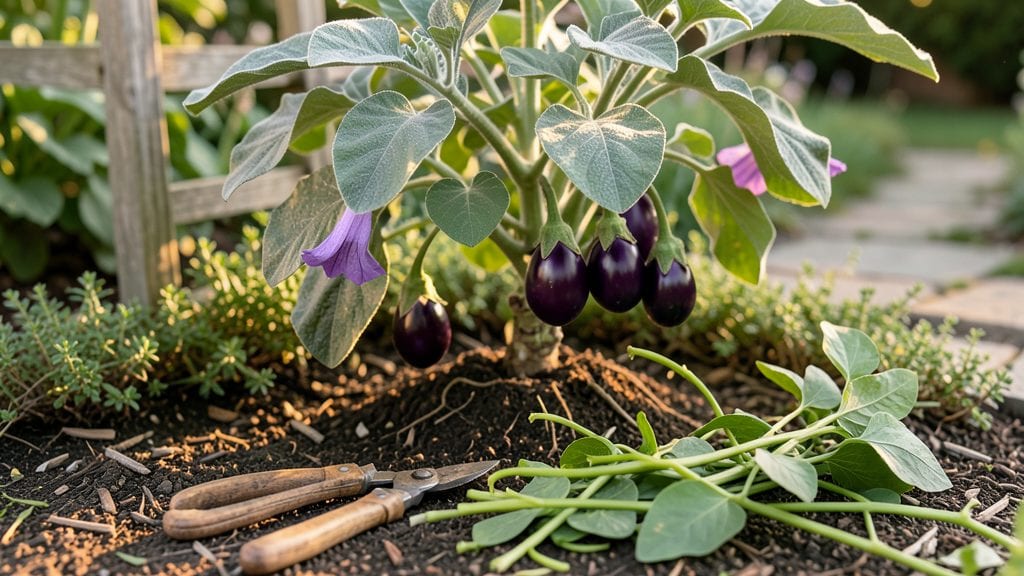
Pruning aubergine plants transforms a single harvest into a year-round bounty—I’ve gone from struggling with leggy, fruitless bushes to producing eggplants from early summer through fall.
The key is timing and technique: three simple cuts at the right moments can double your yield while keeping plants healthy and vigorous. ✨
Most gardeners skip pruning eggplants entirely, but that’s where the magic happens. You’ll need sharp pruners, a clear morning to work, and just 15 minutes every few weeks.
The goal is to encourage bushier growth by removing spent flowers and crowded stems—this improves air circulation and redirects energy toward fruit production. My plants now produce three times more eggplants than they did before I started pruning.
By summer’s end, you’ll see plump, glossy eggplants forming along the branches instead of just at the top. The plants stay compact, resist disease better, and even produce a second flush of flowers in late summer if you prune correctly.
The best part? You’ll spend less time fighting pests and more time harvesting.
This method works for both bush and vining varieties, whether you’re growing in containers or garden beds. The only rule is consistency—once you start, your eggplants will thank you with bold, flavorful fruit all season long. Let’s get those pruners ready!
📚 In This Guide
- What you need
- Instructions
- Tips and common mistakes
- Wrapping up and next steps
What you need
- ● Pruning shears or secateurs: Bypass-style (clean cuts, not anvil-type to avoid crushing stems)
- ● Sharp, sterilized (rubbing alcohol or bleach solution)
- ● Quantity: 1 pair (but 2 are handy if you’re working fast!)
- ○ Gloves: Garden gloves (cut-resistant, optional but recommended for prickly stems)
- ● Quantity: 1 pair
- ● Disinfectant: 70% isopropyl alcohol or 1-part bleach to 9-parts water (for sterilizing tools between cuts)
- ○ Pruning sealant (optional): Tree wound sealant or pruning paste (to prevent disease entry on larger cuts)
- ● Quantity: Small tube
- ● Timing: Prune on a dry, overcast day (or early morning) to reduce stress on the plant.
- ● Weather check: Avoid pruning if rain is forecasted within 24 hours.
- ● Compost bin or bag: For disposing of pruned branches (1-2 gallon-sized bags or a small bin).
- ○ Notebook & pen (optional): To log pruning dates and plant responses for future reference!
How to prune aubergine plants for maximum yield
Here's how I keep my aubergine plants producing fruit all season—no wasted energy, no overcrowded branches.
✂️ Step 1: Remove Suckers for Stronger Growth
Start by identifying suckers—those small shoots growing in the leaf axils where branches meet the main stem. These compete with your plant for energy, diverting it from fruit production. Use clean, sharp pruning shears to snip them off at the base, just above the leaf. I do this every 10-14 days during the growing season, always working in the morning when the plant is hydrated.
Watch for new suckers forming—they’ll appear as tiny buds in the leaf junctions. The goal is to keep only the main stem and primary branches, ensuring all energy goes toward developing larger, healthier fruit. If you see a sucker larger than 2 inches, remove it immediately to prevent it from stealing resources.
✂️ Step 2: Prune Lower Leaves for Airflow
Once your aubergine plant reaches 18-24 inches tall, start removing the lowest 3-4 sets of leaves to improve airflow and reduce disease risk. Focus on leaves touching the soil or blocking sunlight from reaching the lower stem. Use your fingers or shears to gently twist and pull them off—no need for harsh cuts. This step is critical for preventing fungal issues like powdery mildew, which thrives in damp, shaded conditions.
I like to do this after a light rain or watering session when the plant is flexible. If you notice yellowing leaves at the base, that’s your signal to prune sooner—it means the plant is struggling to support itself. Keep the upper canopy dense while maintaining an open, airy structure below.
✂️ Step 3: Thin Fruit Clusters for Larger Eggplants
When fruit begins to form, you’ll see clusters of small aubergines developing in the leaf axils. Leave only 1-2 of the healthiest-looking fruits per cluster—the rest can be gently twisted off to redirect the plant’s energy. I prioritize keeping the largest, straightest fruit, as these tend to develop best. Use your thumb and forefinger to avoid damaging the stem, and remove any misshapen or diseased fruit immediately.
This step is where patience pays off. If you leave too many fruits, they’ll compete for nutrients, resulting in smaller, underdeveloped aubergines. After pruning, water the plant deeply to help it recover. You’ll notice new flower buds forming within 7-10 days, signaling that the plant is responding well to the reduced load.
⏰ Step 4: Late-Season Maintenance for Next Year
As temperatures drop and fruit production slows, focus on preparing the plant for dormancy. Cut back any remaining foliage that looks diseased or yellowed, using shears to make clean cuts just above a leaf node. This prevents pests and pathogens from overwintering in dead plant material. If you’re growing in containers, reduce watering gradually to harden off the roots before winter storage.
I always leave 2-3 inches of stem above the soil line—this ensures the plant has energy reserves to regrow in spring. If you’re in a mild climate, you can leave the plant in the ground with a thick layer of mulch to protect the roots. In colder regions, dig up container plants and store them in a cool, dark place until spring.
Tips & tricks for pruning aubergine plants
Aubergine plants reward precision pruning with bigger, healthier fruit and fewer pests—here's how to get it right every time.
Timing Secret: Morning is the best time to prune because plants are hydrated and more resilient. I've found that working within the 10-14 day window between suckering sessions prevents overgrowth while maintaining energy flow to the main stem. Avoid pruning after heavy rain when leaves are slippery and more prone to tearing. Also, never prune when the plant is under stress from drought or extreme heat—wait until conditions stabilize.
Tool Technique: Always use clean, sharp pruning shears for a precise cut that minimizes damage. I sterilize my shears between plants with rubbing alcohol to prevent spreading diseases like bacterial wilt. For suckers larger than 2 inches, make the cut just above the leaf junction to prevent water from pooling on the stem. This simple technique reduces rot risk and helps the plant heal faster.
Visual Cues for Pruning: When thinning fruit clusters in Step 3, look for the largest, straightest aubergines with smooth skin—these are your keepers. I also check for vibrant green color and firmness; any fruit with yellowing or soft spots should be removed immediately. The 7-10 day window mentioned for new flower buds is your confirmation that the plant is responding well to reduced competition.
Late-Season Strategy: In Step 4, leaving 2-3 inches of stem above the soil line creates a natural barrier against cold drafts while preserving the plant's energy reserves. For container plants, I recommend reducing watering gradually over 1-2 weeks before storage to harden off the roots. This mimics natural seasonal changes and prevents root shock when you bring them back indoors.
Pro Tips for Pruning Aubergine Plants
- Aubergine plants reward precision pruning with bigger, healthier fruit and fewer pests—here's how to get it right every time.
- Timing Secret: Morning is the best time to prune because plants are hydrated and more resilient.
- Tool Technique: Always use clean, sharp pruning shears for a precise cut that minimizes damage.
Frequently asked questions
When is the best time to prune aubergine plants?
Prune your aubergines early and often—start when plants are about 12 inches tall. Focus on removing lower leaves and suckers (side shoots) to improve airflow and direct energy to fruit production. Avoid heavy pruning late in the season, as it can stress the plant before harvest.
How do I know which branches to cut?
Cut suckers (small shoots growing between the main stem and branches) and lower leaves touching the soil to prevent disease. Leave the top 3-4 main branches intact—they’ll produce the most fruit. Always use clean, sharp shears to avoid damaging the plant.
Can I prune aubergine plants in hot or cold weather?
Avoid pruning during extreme heat (above 90°F/32°C) or cold snaps—it stresses the plant. Early morning or late afternoon on mild days (60–80°F/15–27°C) is ideal. If pruning in heat, water plants thoroughly before and after to help recovery.
Will pruning reduce my eggplant yield?
Not if done correctly! Pruning increases yield by focusing the plant’s energy on fewer, larger fruits. Over-pruning (removing too many leaves or branches) can reduce production, but strategic cuts—like removing suckers and lower foliage—keep the plant healthy and productive.
What should I do with the pruned branches?
Discard healthy pruned branches in your compost bin (they’ll break down quickly). If you notice disease or pests on the cuttings, do not compost them—burn or trash them instead to prevent spreading issues to other plants.
My aubergine plant looks sad after pruning—what went wrong?
If your plant wilts or stops growing after pruning, you likely removed too much foliage at once. Leave at least half the leaves to photosynthesize. Also, ensure the plant is well-watered and in a sunny spot—aubergines recover faster with proper care!
Wrapping up and next steps
Pruning your aubergine plants is a game-changer—it boosts yields, improves airflow, and keeps your garden thriving! 🌱 By mastering the three strategic cuts (early shaping, lateral pruning, and sucker removal), you’ll enjoy healthier plants and a bountiful harvest year-round.
Now that you’re armed with the right tools and techniques, it’s time to roll up your sleeves and give your aubergines the care they deserve.
Ready to take action? Start with one plant this week—observe how it responds, and soon you’ll be a pruning pro! Happy gardening! 🌿