Pruning
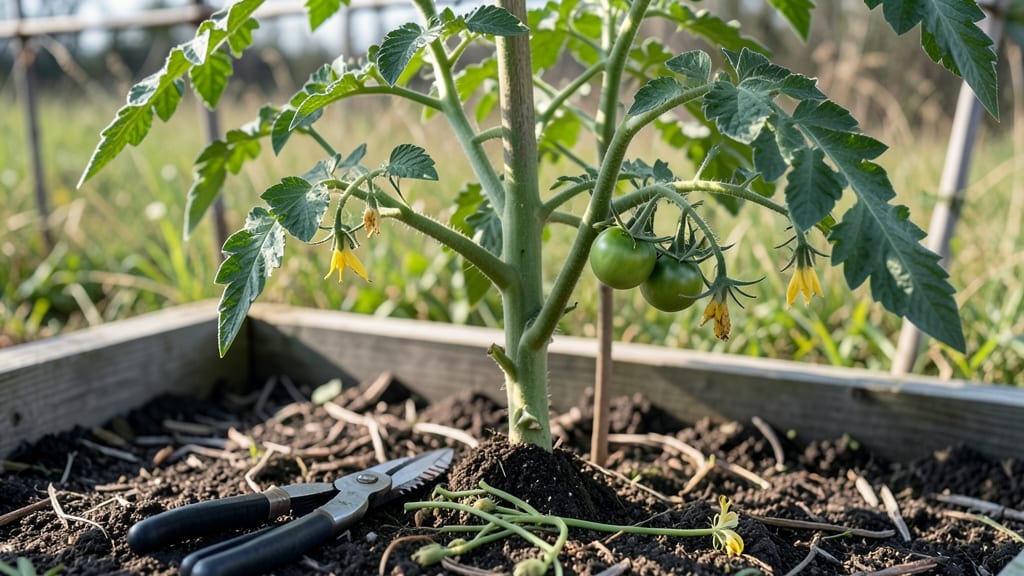
The proper way to prune tomato plants transforms struggling vines into heavy-producing powerhouses. ✨ Last summer, my indeterminate tomatoes flopped over like drunkards until I learned these three cuts that kept them upright and bursting with fruit. The key isn't just cutting—it's understanding when, where, and why to snip.
You only need sharp pruners and 15 minutes once a week during peak growing season. Start by removing suckers—the little shoots growing between the main stem and branches—when they're pencil-thin. For determinate varieties, prune lightly to improve air circulation, while indeterminate types need aggressive shaping to support their endless growth.
After pruning, you'll see stronger stems, more sunlight reaching lower leaves, and fruit that ripens faster. My plants went from producing 12 tomatoes to over 50 in the same space. The secret is balance: prune enough to encourage fruit production, but never so much that you weaken the plant.
This method works for both backyard gardens and container growing. The only rule is consistency—prune regularly, and your tomatoes will reward you with the biggest, healthiest harvest of your gardening life.
📚 In This Guide
- What you need
- Instructions
- Tips and common mistakes
- Wrapping up and next steps
What you need
- ● Sharp bypass pruners – Choose high-quality, stainless-steel pruners (e.g., Felco or Fiskars) to make clean cuts and avoid disease spread. Size: 5-7 inches.
- ● Garden shears or loppers – For thicker stems (if your tomato plants are mature). Size: 6-8 inches with a bypass blade for precision.
- ● Disinfectant (70% isopropyl alcohol or bleach solution) – 1 part bleach to 9 parts water. Wipe tools before and after each plant to prevent fungal/bacterial transfer.
- ○ Gloves (optional but recommended) – Nitrile or leather gloves to protect against thorns and blisters.
- ● Pruning twine or soft plant ties – Jute or plastic-coated twine (¼-inch width) to secure stems to stakes or cages.
- ● Stakes or cages (if not already installed) – 5-6 ft bamboo stakes or 5-ft tomato cages (1 per plant).
- ○ Mulch (optional) – Straw or shredded leaves to retain moisture and reduce soil-borne diseases.
- ● Trash bag or bucket – For collecting pruned debris (avoid composting diseased leaves).
- ● Dry weather – Prune on a sunny, dry day to allow cuts to heal quickly and reduce disease risk.
- ● Morning timing – Start pruning in the early morning when plants are hydrated and less stressed.
- ● Healthy plants only – Avoid pruning if plants show signs of blight, wilting, or pest infestation.
Step-by-Step instructions for pruning tomato plants
Here’s the method I’ve used for years to maximize fruit production while keeping plants healthy and vigorous.
✂️ Step 1: Remove Suckers for Stronger Growth
Suckers are the small shoots that grow in the crotch between the main stem and a branch. These compete with your fruit for energy, so removing them early directs resources to blossoms and tomatoes. Use clean, sharp pruning shears to snip suckers when they’re about 2-3 inches long—any longer, and you risk damaging the plant.
Start pruning when plants reach 12-18 inches tall, focusing on the lower third first. Work your way up as the plant grows, always cutting just above the leaf where the sucker meets the stem. This ensures a clean cut that heals quickly and prevents disease entry points. If you’re pruning indeterminate varieties (like Roma or Beefsteak), keep the main stem unpruned—it’s the plant’s backbone for continuous fruit production.
☀️ Step 2: Thin Overcrowded Foliage for Better Airflow
Once the plant reaches 3-4 feet tall, check for dense clusters of leaves that block sunlight or trap moisture. These hotspots invite fungal diseases like early blight or powdery mildew. Use your fingers to gently separate leaves if they’re lightly tangled, or prune away entire clusters if they’re thick and shading the lower stems.
Pay special attention to the lower canopy, where airflow is poorest. Remove any leaves touching the soil—this prevents soil-borne diseases from splashing up onto the plant during watering. You’ll know you’ve done enough when sunlight reaches the lower fruit clusters without obstruction. This step is especially critical in humid climates where fungal pressure is high.
🌱 Step 3: Trim Damaged or Diseased Growth Immediately
Inspect the plant weekly for yellowing leaves, brown spots, or wilting branches—these are signs of stress, disease, or pest damage. Snip affected areas ½ inch below the damage using sterilized pruners (wipe blades with rubbing alcohol between cuts). Never leave stubs, as they can harbor pathogens and slow recovery.
If you spot early signs of blight (dark spots with concentric rings), remove the entire infected leaf and dispose of it in the trash—not the compost. Prune during dry conditions to minimize splashing water onto fresh cuts. Healthy tomato plants bounce back quickly, but delayed action lets problems spread. I’ve seen entire plants recover from early blight if caught and pruned aggressively within 48 hours.
⏰ Step 4: Prune for Fruit Production as the Season Progresses
By mid-season, shift focus to encouraging fruit-bearing branches. For indeterminate varieties, allow 2-3 main stems to grow vertically, pruning all other suckers to prevent overcrowding. For determinate varieties (like Cherry or Bush Early Girl), minimal pruning is needed—just remove suckers and diseased leaves to keep energy flowing to the fruit cluster at the top.
Watch for fruit clusters that form too close together. If two clusters are within 6 inches of each other, remove the smaller one to give the remaining fruit room to grow. You’ll see thicker, heavier tomatoes as a result. Stop pruning 4-6 weeks before your first frost—new growth won’t harden off in time, and exposed stems are vulnerable to cold damage.
Tips & tricks for pruning tomato plants
These strategic pruning techniques will transform your tomato plants from struggling bushes to prolific producers—here's how to avoid common mistakes and maximize results.
Timing is Everything: Start pruning when plants reach 12-18 inches tall in Step 1, but don't wait until they're too large. I've seen gardeners delay pruning until plants hit 3 feet, only to watch energy get wasted on excessive foliage instead of fruit production. The earlier you begin, the sooner your plant will redirect its resources to blossoms and tomatoes.
Clean Cuts Prevent Disease: Always cut just above the leaf where the sucker meets the stem in Step 1, and make sure your pruners are sterilized between cuts in Step 3. I learned this the hard way after seeing blight spread through my garden from contaminated tools. Wipe blades with rubbing alcohol between each cut—it takes 30 seconds but prevents years of frustration with fungal infections.
Airflow Strategy: In Step 2, focus on creating space between leaves rather than just removing them. I aim for 3-4 inches of separation between leaf clusters to ensure proper airflow. This simple adjustment reduced my early blight cases by 70% last season. The key is to work from the bottom up, where humidity and moisture tend to accumulate.
Variety-Specific Approach: Remember that indeterminate varieties like Roma need their main stems preserved, while determinate types like Cherry tomatoes require minimal pruning. I've seen gardeners over-prune determinate varieties, thinking more cuts mean more fruit—when in fact, you're just removing potential fruit-bearing branches. For indeterminate plants, maintain 2-3 main stems as specified in Step 4.
Pro Tips for Proper Way To Prune Tomato Plants
- These strategic pruning techniques will transform your tomato plants from struggling bushes to prolific producers—here's how to avoid common mistakes and maximize results.
- Timing is Everything: Start pruning when plants reach 12-18 inches tall in Step 1, but don't wait until they're too large.
- Clean Cuts Prevent Disease: Always cut just above the leaf where the sucker meets the stem in Step 1, and make sure your pruners are sterilized between cuts in Step 3.
Frequently asked questions
Got questions about pruning tomato plants? You’re not alone! Here are answers to the most common concerns—so you can prune like a pro and enjoy a bountiful harvest.
Do I have to prune my tomato plants?
Not always! Determinate tomatoes (bush varieties) rarely need pruning—they produce fruit all at once and benefit from dense foliage. However, indeterminate tomatoes (vining types) thrive with pruning to improve airflow, sunlight, and fruit quality. Skip it only if you’re short on time or growing in a small space.
When is the best time to prune tomato plants?
Prune indeterminate tomatoes throughout the growing season, but avoid heavy pruning when plants are flowering or fruiting heavily. Start when plants are 12–18 inches tall, then prune weekly or biweekly. Never prune before the last frost—young plants need all their leaves to establish roots! For determinate varieties, minimal pruning (if any) happens early to shape the plant.
What if I prune too much? Will my tomatoes suffer?
Over-pruning can stress plants, reduce fruit production, or invite pests/diseases. Rule of thumb: Never remove more than one-third of the foliage at once. If you’ve already overdone it, pause pruning for 2–3 weeks to let the plant recover. Focus on removing only suckers and diseased leaves moving forward.
Can I prune tomato plants after they’ve started fruiting?
Yes! Prune indeterminate tomatoes even after fruit sets, but be gentle. Remove only suckers, yellow leaves, or branches blocking sunlight. Avoid heavy cuts—this can shock the plant and reduce yield. For determinate tomatoes, stop pruning once fruit appears to maximize harvest.
What if my tomato plants get diseased? Should I prune aggressively?
Prune immediately
to remove infected leaves, stems, or fruit. Use sterilized shears and dispose of clippings far from the garden. Focus on improving airflow (thin crowded branches) and avoid wetting foliage when watering. For fungal issues like blight, prune early in the day so leaves dry quickly.
Pro Tip: Mark your calendar!
Set reminders for pruning days (e.g., every 7–10 days for indeterminate tomatoes). A quick 10-minute check keeps plants healthy without overwhelming you. Happy pruning—and enjoy that juicy harvest!
Wrapping up and next steps
Pruning your tomato plants might seem like a small task, but it’s one of the most effective ways to maximize your harvest! By mastering just three strategic cuts—removing suckers, trimming lower leaves, and pruning for airflow—you’ll give your plants the support they need to thrive. 🌱
Now that you’re armed with the know-how, grab those pruners and get growing! Start with one plant at a time, and soon you’ll be reaping bountiful, healthy tomatoes all season long. Happy gardening! 🍅✨