
Propagation
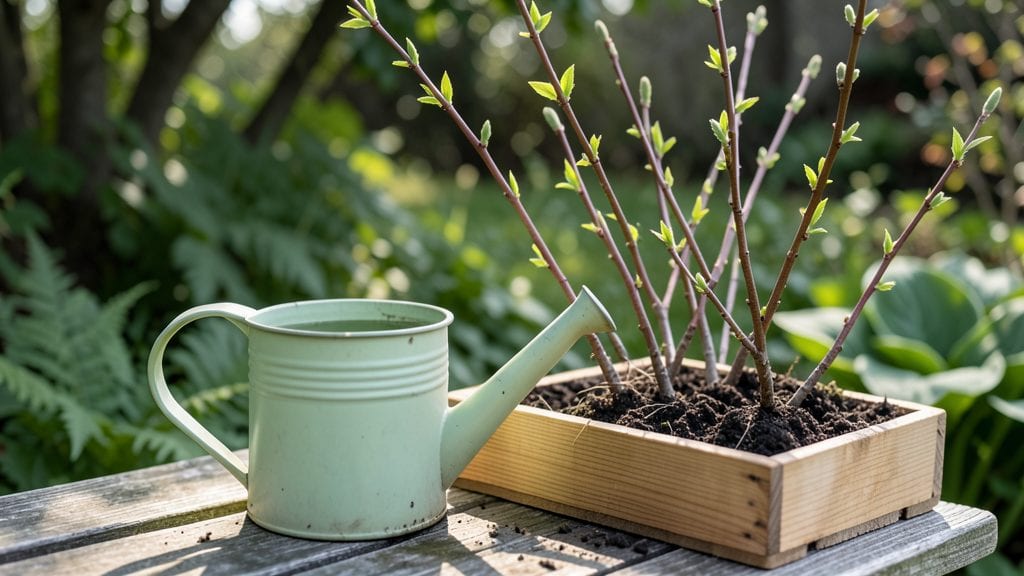
Planting willow cuttings is the easiest way to grow these fast-growing trees from scraps you’d normally toss. 🌿 I’ve turned old branches into thriving willows just by sticking them in water or soil—no fancy tools or green thumb required.
The secret lies in timing, a sharp cut, and patience as roots form in just a few weeks.
You’ll need 6-12 inch cuttings from dormant branches (late fall or early spring), clean water or moist soil, and a sunny spot. Willow cuttings root effortlessly, but the angle matters—cut at a 45-degree slant just below a node where roots will sprout.
For water rooting, change it weekly; for soil, keep it damp but not soggy.
Within 3-6 weeks, you’ll see fuzzy white roots emerging, and by spring, your cuttings will be ready to plant outdoors. These fast growers thrive along streams, in erosion-prone areas, or as ornamental screens. Just avoid overwatering—they hate soggy feet.
Perfect for beginners, willows grow almost anywhere. Use them to stabilize slopes, create privacy, or add drama to ponds. Once rooted, they’ll shoot up 6+ feet in a single season—nature’s fastest-growing trees. Let’s get those cuttings growing!
📚 In This Guide
- What you need
- Instructions
- Tips and common mistakes
- Wrapping up and next steps
What you need
- ● Willow cuttings: 12–18 inches long, pencil-thick, and harvested from healthy, dormant branches (late fall/winter or early spring). Aim for 5–10 cuttings per batch.
- ○ Rooting hormone (optional but helpful): A small bottle (3–4 oz) to boost root growth—look for a willow-friendly formula.
- ● Water (for water propagation): A clean container (jar, vase, or bucket) with 3–4 inches of water per cutting.
- ● Potting soil (for soil propagation): A 5-gallon bag of well-draining, sterile mix (e.g., 50% perlite + 50% peat moss or coconut coir).
- ● Containers: Water method: Clear jars or bottles (to monitor root growth).
- ● Soil method: 4–6-inch pots or a seed tray with drainage holes.
- ● Pruning shears or sharp knife: Sterilized to make clean cuts (avoid crushing the stems!).
- ● Spray bottle: With water to keep cuttings moist during planting.
- ○ Plastic wrap or humidity dome (optional): To retain moisture while roots establish (especially in soil).
- ● Grow lights or sunny windowsill: A bright, indirect light source for 6+ hours daily.
- ● Label markers: To track cutting types/dates (e.g., Weeping Willow vs. Pussy Willow).
- ● Temperature: Ideal range of 60–75°F (15–24°C)—avoid frost or extreme heat.
- ● Humidity: High humidity (70%+) speeds up rooting. A humidifier or pebble tray helps.
- ● Patience: Roots may take 2–6 weeks to appear—consistency is key!
Step-by-step instructions for planting willow cuttings
Here's the foolproof method I've used to grow willow trees from cuttings—whether you're rooting in water or soil.
🌱 Step 1: Select and Prepare Healthy Cuttings
Choose 4-6 foot long willow branches in late winter or early spring when the tree is still dormant. Look for 1-inch thick stems with smooth bark—these root best. Cut just below a node (the small bump where leaves or buds form) using clean, sharp pruners. This ensures your cutting has the energy reserves needed for root development.
Strip the lower 6 inches of leaves from each cutting to prevent rot. If the bark is rough or damaged, trim it away—smooth bark roots more reliably. Store cuttings in a cool, dark place until you're ready to plant, but no longer than 2-3 days. Willow cuttings are impatient; the sooner you root them, the better.
💧 Step 2: Root in Water or Soil (Choose Your Method)
Water Method: Place each cutting in a glass jar filled with room-temperature water, ensuring the stripped lower 6 inches are submerged. Change the water every 2-3 days to prevent bacterial growth. You'll see fine white roots emerging in 2-4 weeks—this is your signal to transplant. Willow cuttings root quickly in water, but they can become root-bound if left too long.
Soil Method: Fill a container with well-draining potting mix and plant each cutting at a 45-degree angle, burying half its length (about 3 inches deep). Press the soil gently around the stem to eliminate air pockets. Water lightly until the soil is evenly moist but not soggy. Keep the container in partial shade for the first 2 weeks to reduce stress.
☀️ Step 3: Provide Ideal Conditions for Root Growth
Willow cuttings thrive in bright, indirect light—never direct sun at first. If rooting in water, place the jar near a south-facing window where light is strong but filtered. For soil-rooted cuttings, keep them in a humid environment (like a greenhouse or under a plastic tent) to mimic their natural wetland habitat. Maintain 60-70°F temperatures—cooler rooms slow rooting, while heat above 75°F can cause rot.
Check moisture daily. Water-rooted cuttings need fresh water every 2-3 days; soil-rooted ones should stay consistently damp (stick your finger in—top 1 inch should feel moist). Overwatering is the biggest mistake here—wilting cuttings often recover, but mushy stems mean it's too late.
⏰ Step 4: Transplant When Roots Are Established
For water-rooted cuttings, wait until roots are 2-3 inches long before transplanting. Gently remove the cutting from the jar, avoiding root damage, and plant it in moist potting mix at the same 45-degree angle. Water thoroughly to settle the soil. Soil-rooted cuttings are ready when new leaves appear (usually 4-6 weeks after planting).
Once transplanted, move your young willow to a sunny outdoor spot (full sun is fine now). Keep the soil evenly moist for the first month, then gradually reduce watering as roots establish deeper. You'll know it's thriving when new shoots appear at the top—this means the roots are actively growing.
🌿 Step 5: Maintain and Encourage Growth
Prune any weak or leggy growth in early spring to encourage a strong, bushy shape. Willow trees grow fast, so stake tall cuttings if they topple in wind. Fertilize lightly in spring and summer with a balanced organic fertilizer—willows don’t need much, but a little boost helps them bulk up.
By year two, your cuttings will be 6-10 feet tall if given space. If you planted multiple cuttings, space them 10-15 feet apart to prevent crowding. Willow trees love water, so if you're near a pond or stream, they’ll thrive even more—just don’t let them take over your garden!
Tips & tricks for perfect willow cuttings planting
These game-changing tips will help you avoid the most common pitfalls when rooting willow cuttings—whether you're working with water or soil.
The Timing Factor: Late winter or early spring is your ideal window for cutting willow branches, but don't wait too long. If you miss this dormant period, the cuttings may struggle to root. I've found that cutting just as buds begin to swell (but before leaves emerge) gives the best results. This timing ensures your cuttings have maximum energy reserves for root development. Remember, willow cuttings are impatient—don't store them longer than 2-3 days before planting, as they'll start to dry out and lose viability.
Root Development Watch: When rooting in water, you'll see fine white roots emerge in 2-4 weeks, but don't let them get too long before transplanting. Roots longer than 3 inches can become root-bound, which stunts growth. For soil-rooted cuttings, look for new leaves appearing after 4-6 weeks—this is your clear signal that roots have established. I always check for these visual cues rather than guessing, as willow growth varies depending on environmental conditions.
Environmental Control: Maintaining the right conditions is crucial for success. Willow cuttings thrive in bright, indirect light—never direct sun at first. I've had the best results with water-rooted cuttings placed near a south-facing window where light is strong but filtered. For soil-rooted cuttings, create a humid environment using a plastic tent or greenhouse to mimic their natural wetland habitat. The temperature sweet spot is 60-70°F; anything above 75°F can cause rot, while cooler temperatures slow rooting.
Transplanting Technique: When transplanting water-rooted cuttings, be gentle to avoid root damage. I always use a moist potting mix and maintain the same 45-degree angle from the water method. For soil-rooted cuttings, wait until you see new leaves before transplanting—this ensures the roots are strong enough to handle the move. After transplanting, keep the soil evenly moist for the first month, then gradually reduce watering as roots establish deeper. This gradual approach prevents transplant shock and encourages robust growth.
Pro Tips for Planting Willow Cuttings
- These game-changing tips will help you avoid the most common pitfalls when rooting willow cuttings—whether you're working with water or soil.
- The Timing Factor: Late winter or early spring is your ideal window for cutting willow branches, but don't wait too long.
- Root Development Watch: When rooting in water, you'll see fine white roots emerge in 2-4 weeks, but don't let them get too long before transplanting.
Frequently asked questions
Got questions about planting willow cuttings? You’re not alone!
Whether you're a beginner or a seasoned gardener, these answers will help you grow strong, root-bound willows with ease. Let’s dive in!
When is the best time to plant willow cuttings?
The ideal time is late winter to early spring (just as buds swell but before leaves appear) or early fall. Willow cuttings root quickly in water or soil during these periods because the tree isn’t dormant but isn’t yet stressed by heat. Avoid planting in scorching summer months—willows hate dry soil!
Can I plant willow cuttings directly in soil instead of water?
Willow cuttings thrive in either water or soil. For soil planting, bury 2-3 inches of the cutting (leaving the top exposed) in moist, well-draining soil. Keep it consistently damp (not soggy) for faster rooting. Pro tip: Use a rooting hormone to boost success rates!
Why aren’t my willow cuttings rooting in water?
Common culprits include:
- Dirty water: Replace stagnant water every 2-3 days.
- Low light: Place cuttings in bright, indirect sunlight.
- Overcrowding: Give each cutting space to breathe.
- Rot: Trim mushy stems and use fresh, clean water.
How long does it take for willow cuttings to root?
Willow cuttings are fast growers! In water, roots may appear in 1-3 weeks. In soil, expect roots in 3-6 weeks. Once roots reach 2-3 inches, they’re ready to transplant. Patience pays off—rushing can stress delicate new roots!
What’s the best willow variety for beginners?
Start with weeping willow (Salix babylonica) or pussy willow (Salix discolor)—both root easily from cuttings. Avoid hybrid willows (like Salix × sepulcralis) for propagation, as they can be finicky. Stick to hardy, fast-growing species for foolproof results!
Wrapping up and next steps
Planting willow cuttings is a rewarding way to grow these fast-growing, versatile trees with minimal effort! Whether you choose water or soil propagation, the key is patience, proper preparation, and a little creativity—your willow’s roots will thank you. 🌱
Ready to give it a try? Start small with just a few cuttings, experiment with different methods, and watch your garden transform. Next up: Share your progress or ask questions in gardening forums—your fellow green thumbs will love cheering you on!