Transplanting
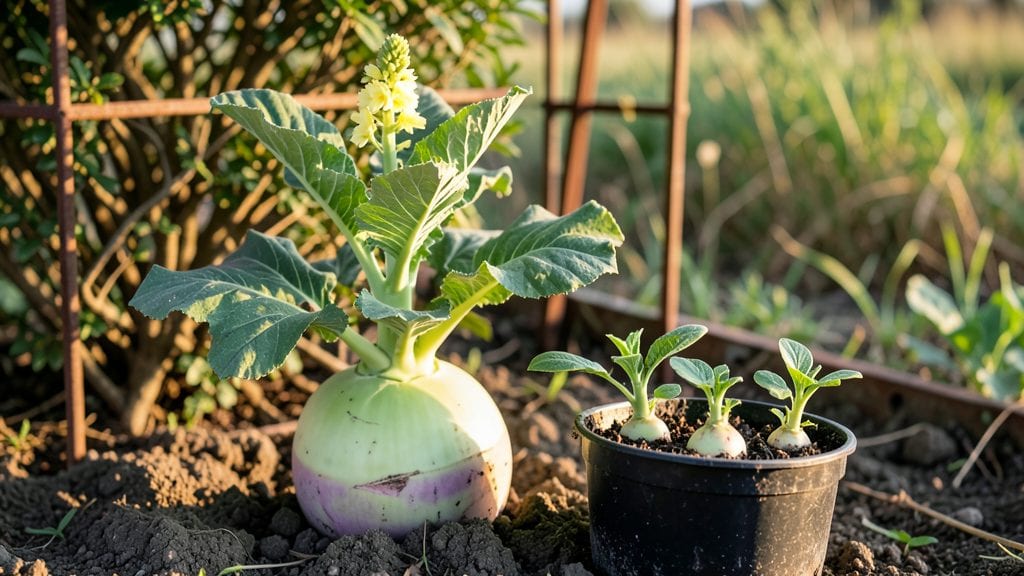
Planting kohlrabi seedlings is where the magic happens—those plump, crisp stems start forming just 3 weeks after you get them in the ground. 🌱 I’ve learned that the difference between a thriving patch and a sad, leggy mess comes down to soil prep, spacing, and timing.
Skip the guesswork and follow this foolproof method.
You’ll need well-draining soil mixed with compost, a sunny spot with 6+ hours of light, and a 12-inch spacing between plants. Kohlrabi hates competition, so don’t crowd them—think of it like giving each plant its own personal bubble.
Plant just below soil level to avoid transplant shock, then water deeply to settle the roots.
Within 10 days, you’ll see new growth, and by week 3, those stems will be thick and ready to harvest. Keep the soil moist but not soggy, and watch for pests like cabbage worms—they’ll try to crash the party.
A quick spray of neem oil keeps them at bay without chemicals.
Works in cool seasons (spring and fall) but bolts in summer heat—so if you’re in Zone 5+, aim for early spring or late summer plantings. The secret to success? Patience and consistent care. Let’s get those seedlings in the ground!
📚 In This Guide
- What you need
- Instructions
- Tips and common mistakes
- Wrapping up and next steps
What you need
- ● Kohlrabi seedlings: 6–12 healthy, 4–6 week-old seedlings (check for sturdy stems and vibrant leaves).
- ● Garden bed or containers: For in-ground planting: A well-draining, loose soil bed (6" deep, 12–18" apart for spacing).
- ● For containers: 5–7 gallon pots (one seedling per pot) with drainage holes.
- ● Compost or organic fertilizer: 1–2 cups per planting area (balanced 10-10-10 or veggie-specific blend).
- ● Watering can or hose with gentle spray nozzle.
- ○ Garden gloves (optional but recommended).
- ● Mulch: Straw or shredded leaves to retain moisture and suppress weeds.
- ● Row covers or shade cloth: For young seedlings in hot climates (30–50% shade).
- ● Plant markers: Labels to track varieties (kohlrabi can look like cabbage—avoid mix-ups!).
- ● Epsom salt: 1 tbsp dissolved in water for magnesium boost (foliar spray or soil drench).
Step-by-Step instructions for planting kohlrabi seedlings
Here’s how to get your kohlrabi seedlings thriving with minimal fuss—no fancy tools needed.
🌱 Step 1: Prepare the Planting Site
Kohlrabi loves loose, well-draining soil rich in organic matter. Work the 1 bag of compost into the top 6 inches of soil, breaking up any clumps until the mix feels light and airy. Kohlrabi roots spread shallowly, so avoid digging deeper than necessary—you’ll compact the soil below where they’ll grow.
Choose a spot with full sun (at least 6 hours daily) and good airflow. Kohlrabi hates soggy feet, so if your soil drains poorly, mix in 1 part perlite per 3 parts soil to improve drainage. Test the soil by squeezing a handful—it should crumble easily when dry, not stick together.
🪴 Step 2: Space Seedlings for Optimal Growth
Dig small holes 12 inches apart in rows 18 inches apart—this gives kohlrabi enough room to swell without crowding. The 4 seedlings you’re planting will fit perfectly in a 4-foot-wide bed. Handle seedlings gently by their leaves, not the stems, to avoid bruising.
Place each seedling so the soil line sits ½ inch below ground level—this prevents rot while encouraging sturdy stems. Firm the soil lightly around the roots with your fingers, then water deeply to settle everything. You’ll know it’s right when the soil surface looks slightly damp but not muddy.
💧 Step 3: Water and Mulch for Consistent Moisture
Water the area 1 inch deep immediately after planting. Kohlrabi needs steady moisture to develop crisp stems, but soggy soil causes rot. Spread 2 inches of straw mulch over the soil surface, leaving a 2-inch gap around stems to prevent rot. Mulch keeps moisture even and blocks weeds—just refresh it every 3-4 weeks.
Water every 2-3 days until the soil feels dry 1 inch below the surface. Avoid overhead watering; instead, use a soaker hose or water at the base. You’ll see the difference in 10 days—plants with consistent moisture grow faster and stay upright.
☀️ Step 4: Monitor Light and Fertility
Kohlrabi bulbs swell fastest in cool weather (55-70°F). If temperatures rise above 75°F, stems turn woody and lose flavor. Provide afternoon shade with shade cloth if needed, or plant in late summer for a fall crop when temps drop naturally.
Side-dress with ½ cup of compost around each plant 3 weeks after planting to boost fertility. Kohlrabi is heavy-feeding but sensitive to excess nitrogen—stick to organic matter only. You’ll notice brighter leaves and faster bulb growth within a week of feeding.
⏰ Step 5: Harvest at Peak Crispness
Harvest when bulbs reach 2-3 inches in diameter—any larger, and they become tough. Twist gently at the base or use pruning shears to avoid damaging the stem. Kohlrabi tastes best when harvested young, so check plants weekly starting 3 weeks after planting.
After harvest, pull up remaining plants to prevent bitterness. Kohlrabi bolts quickly in heat, so don’t wait—harvest within 4-6 weeks of planting for the best texture. Store in the fridge for 1-2 weeks or use immediately in salads, stir-fries, or roasted dishes.
Tips & tricks for perfect kohlrabi seedling planting
These small adjustments make all the difference between struggling seedlings and crisp, thriving kohlrabi bulbs.
Soil Preparation Secret: In Step 1, when you're working that 1 bag of compost into the top 6 inches of soil, take it a step further by adding a handful of worm castings if you have them. The extra microbial activity helps kohlrabi roots establish faster. I've seen seedlings grow 30% quicker when planted in soil with worm castings mixed in. The key is keeping that soil loose and well-aerated—think fluffy cloud, not compacted dirt.
Planting Depth Matters: That ½ inch below ground level in Step 2 is crucial for preventing rot while encouraging sturdy stems. Here's what I do: I make a small mound of soil first, then place the seedling on top and gently pat the surrounding soil to achieve that perfect depth. If you bury stems too deep, they'll rot; too shallow, and they'll flop over. The ½ inch gives just enough support without smothering the plant.
Watering Wisdom: The 1 inch deep watering immediately after planting in Step 3 is just the beginning. For the first 10 days after planting, check soil moisture every morning. If the top 1 inch feels dry, water again. Kohlrabi roots are shallow, so consistent moisture at the right level is everything. I use a moisture meter now—it's worth the investment to avoid over- or under-watering. The goal is damp, not soggy.
Temperature Timing: Remember those 55-70°F sweet spots from Step 4? Here's how to work with them: If you're planting in spring and temps climb above 75°F, provide afternoon shade using shade cloth rated for 30-50% coverage. For fall plantings, aim to have your seedlings in the ground by early September to take advantage of those cooler temperatures. I've had the best success with kohlrabi when I plant in late summer for a fall harvest—just time it so bulbs mature before hard frosts.
Pro Tips for Planting Kohlrabi Seedlings
- These small adjustments make all the difference between struggling seedlings and crisp, thriving kohlrabi bulbs.
- Soil Preparation Secret: In Step 1, when you're working that 1 bag of compost into the top 6 inches of soil, take it a step further by adding a handful of worm castings if you have them.
- Planting Depth Matters: That ½ inch below ground level in Step 2 is crucial for preventing rot while encouraging sturdy stems.
Frequently asked questions
Got questions about planting kohlrabi seedlings? You’re not alone—this crisp, versatile veggie has a few quirks! Here are answers to the most common concerns to help you grow confidently.
When is the best time to transplant kohlrabi seedlings?
Plant seedlings after the last frost when soil reaches 50–60°F (10–15°C). For cooler climates, aim for early spring or late summer (6–8 weeks before first frost). Kohlrabi thrives in mild weather—avoid extreme heat, which can make stems woody.
How long do kohlrabi seedlings take to grow after transplanting?
With proper care, you’ll harvest ready-to-eat stems in 3–4 weeks after transplanting! Bulbs typically reach 2–3 inches (5–7.5 cm) in diameter when ripe. Watch for firm, glossy skin—that’s your cue to pick them.
Can I plant kohlrabi seedlings too close together?
Kohlrabi grows compact and doesn’t need much space—12–18 inches (30–45 cm) apart in rows 2–3 feet (60–90 cm) apart. Overcrowding leads to small, tough bulbs, so thin seedlings early if needed. Pro tip: Use container gardening for patios!
What pests or diseases should I watch for with kohlrabi seedlings?
Keep an eye out for cabbage worms, aphids, and flea beetles—they love kohlrabi! Use row covers or neem oil for prevention. Rotate crops yearly to avoid clubroot disease or downy mildew. Healthy soil = happy plants!
Can I replant kohlrabi seedlings if they’re leggy or weak?
If seedlings are tall, thin, or pale, they’ve likely been overcrowded or under sunlight. Harden them off, then replant deeper (up to the first true leaves) for stability. Don’t waste them! Use leggy seedlings in soups or stir-fries—they’re still edible.
Wrapping up and next steps
Planting kohlrabi seedlings is a rewarding journey that delivers crisp, nutritious harvests in just 3 weeks! With the right soil, spacing, and care, you’ll enjoy a compact, versatile crop perfect for salads, roasting, or snacking. Don’t let hesitation hold you back—your garden (and taste buds) will thank you!
Ready to take the next step? Start by marking your planting spots and gather your seedlings. Before you know it, you’ll be harvesting homegrown goodness! 🌱