
Propagation
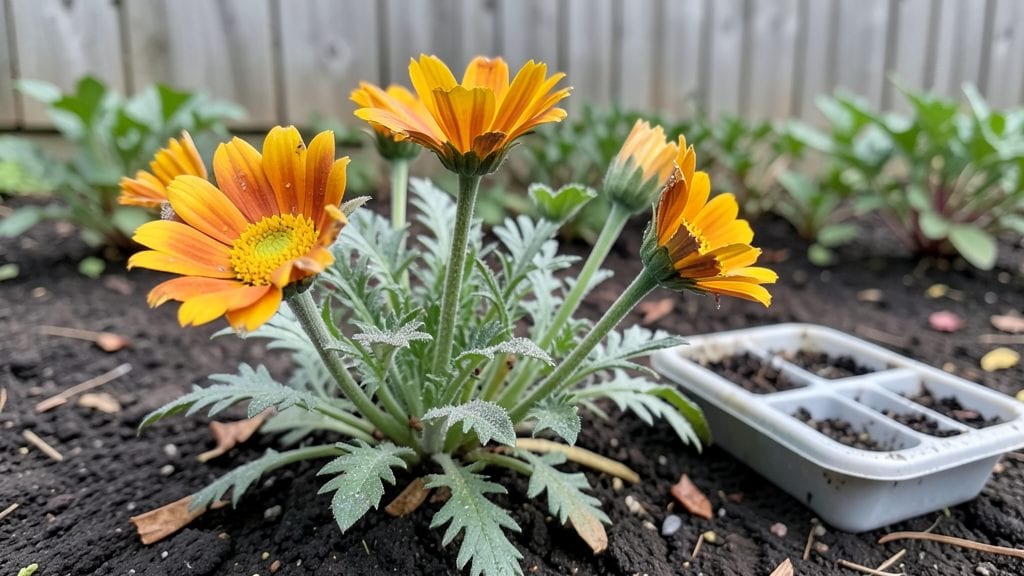
Planting gazania seeds is how I turn my summer garden into a sunlit explosion of color—bright blooms that stay open all day, even when the sun dips low.
The key isn't complicated: start them indoors 6-8 weeks before your last frost, and they'll be ready to spill over garden edges by early summer. I've learned that these seeds need warmth to germinate, so a sunny windowsill or seedling heat mat makes all the difference.
You'll need a shallow tray, well-draining potting mix, and patience for the 10-14 days it takes those first green shoots to appear. The trick is keeping the soil consistently moist but never soggy—gazania seeds rot faster than they sprout if you overwater.
Once they've got their first true leaves, they'll grow fast, and you can transplant them outside after the danger of frost has passed.
By day 60, you'll have plants covered in daisy-like flowers that open at dawn and close only when the sun sets. The secret to keeping them blooming is deadheading spent flowers and giving them full sun—at least 6-8 hours daily.
They're drought-tolerant once established, so don't fuss over watering after that first critical month.
Here's where most beginners trip up: planting too deep or crowding the seedlings. These seeds should sit just below the soil surface, and spacing them 12 inches apart gives them room to spread.
The payoff? A garden that looks like it belongs in a postcard, with almost no maintenance required once they're settled in.
📚 In This Guide
- What you need
- Instructions
- Tips and common mistakes
- Wrapping up and next steps
What you need
- ● Gazania seeds: 1–2 packets (50–100 seeds per packet). Choose heat-loving varieties like 'Gazania rigens' or 'Gazania hybrid' for best results.
- ● Seed-starting mix: 1–2 bags (10–15 quarts). Use a lightweight, well-draining mix (e.g., 50% peat moss, 30% perlite, 20% vermiculite).
- ● Containers: 2–4 shallow trays (with drainage holes) or 4-inch pots (1–2 per seed packet). Clear plastic or biodegradable pots work great!
- ● Watering can or spray bottle: 1 with a fine mist nozzle to avoid disturbing seeds.
- ● Grow lights or sunny windowsill: Access to 6+ hours of indirect light daily (or a LED grow light for 12–14 hours/day).
- ○ Plastic wrap or humidity dome: 1 sheet to retain moisture (optional but helpful for germination).
- ● Plant labels: 10–20 (to track varieties and planting dates).
- ● Tweezers or seedling flat: 1 pair to gently place tiny seeds.
- ○ Fertilizer (optional): 1 bottle of balanced liquid fertilizer (10-10-10) or fish emulsion for post-germination care.
- ○ Heat mat (optional): 1 (70–75°F range) to speed up germination in cooler climates.
- ● Transplanting tools: Small shovel or spoon (for moving seedlings outdoors later).
Step-by-Step instructions for planting gazania seeds
Here's how I get bright, long-lasting gazania blooms every season with minimal effort.
Prepare Containers and Soil for Germination
Fill clean 3-inch deep seedling trays or small pots with a light, well-draining seed-starting mix. Gazania roots need air—pack the soil too tightly, and they'll rot before blooming. I like to mix in a little perlite to ensure proper drainage. Moisten the mix until it holds together when squeezed but doesn’t drip water.
Press the soil down gently with your fingers to create a firm but not compacted surface. This prevents seeds from sinking too deep during watering. The goal is a fine, even layer where seeds can make contact with moisture without being buried. A flat, level surface ensures even germination across the tray.
Sow Seeds at the Right Depth and Spacing
Sprinkle 2-3 seeds per cell or lightly scatter them across the tray surface. Gazania seeds are tiny, so I use a toothpick to place them individually for better control. Press each seed just below the soil surface—no deeper than 1/8 inch. Planting too deep slows germination, and gazania seeds won’t push through heavy soil.
Cover the tray with a clear plastic dome or plastic wrap to retain moisture and warmth. Place it in a warm spot, ideally between 70-75°F. You’ll see sprouts in 7-14 days, depending on your home’s warmth. Avoid overwatering now—the dome traps enough moisture that the soil stays damp without daily watering.
Provide Light and Thin Seedlings
As soon as seedlings emerge, remove the dome immediately to prevent fungal growth. Place the tray under bright, indirect light for the first week—direct sun can scorch tender new leaves. After a week, move seedlings to a south-facing window or under grow lights for 12-14 hours of light daily.
When seedlings reach 1 inch tall and have their first true leaves, thin them to the strongest plant per cell. Use small scissors to snip weak seedlings at soil level—don’t pull them, or you’ll disturb the roots of the remaining plants. This step ensures each gazania has room to grow strong stems and vibrant blooms.
Harden Off and Transplant Young Plants
Two weeks before your last frost date, start hardening off seedlings by placing them outside in a sheltered spot for 1-2 hours the first day. Gradually increase their outdoor time by 1 hour daily until they can stay out all day. Gazania thrives in full sun, so this prepares them for their final location.
Transplant seedlings outdoors after all danger of frost has passed, spacing them 6-8 inches apart in well-draining soil. Dig holes slightly deeper than the root ball and water deeply after planting. Mulch lightly with 1 inch of organic mulch to retain moisture and suppress weeds, but keep mulch away from the stems to prevent rot.
Maintain for Continuous Blooms
Water gazania at the base once a week or when the top inch of soil feels dry. These plants hate soggy roots—yellowing leaves mean you’re overwatering. Deadhead spent blooms by pinching them off at the base to encourage more flowers. I do this every 2-3 weeks during the growing season.
Fertilize lightly with a balanced, water-soluble fertilizer every 4-6 weeks during the growing season. Too much fertilizer leads to lush foliage but fewer blooms. Gazania is drought-tolerant once established—let the soil dry between waterings to build resilience.
Tips & tricks for planting gazania seeds
These simple strategies will help you avoid common pitfalls and maximize your gazania's vibrant blooms from the very first planting.
Soil Preparation Secret: In Step 1, when mixing your seed-starting mix with perlite, aim for about a 1:1 ratio for optimal drainage. I find that using a fine mesh strainer helps distribute the perlite evenly without creating pockets where seeds might get buried too deeply. This ensures consistent moisture contact while preventing waterlogging that could rot delicate gazania roots. The soil should crumble easily when dry but hold its shape when lightly squeezed.
Seed Placement Precision: For Step 2, using a toothpick isn't just about control—it's about consistency. Place each seed just below the surface, making a tiny dimple with the toothpick before dropping it in. This ensures seeds make proper soil contact while staying at that critical 1/8-inch depth. I label each cell with a pencil to track which seeds I've planted, especially when working with multiple trays.
Light Transition Strategy: When moving seedlings from indirect light to direct sun in Step 3, do it gradually over 3-4 days rather than all at once. Start with morning sun only, then progress to afternoon exposure. This gradual hardening helps prevent sunburn on tender leaves. I place my trays on an east-facing windowsill first, then rotate to south-facing as the seedlings mature.
Transplanting Timing Tip: For Step 4, check your local frost dates and add 10 days to that timeline before starting your hardening process. Gazania is frost-sensitive, so rushing this step can shock your plants. I test soil temperature with a small thermometer—wait until it consistently stays above 55°F before transplanting outdoors. The 6-8 inch spacing gives each plant room to develop its signature daisy-like blooms without competition.
Pro Tips for Planting Gazania Seeds
- These simple strategies will help you avoid common pitfalls and maximize your gazania's vibrant blooms from the very first planting.
- Soil Preparation Secret: In Step 1, when mixing your seed-starting mix with perlite, aim for about a 1:1 ratio for optimal drainage.
- Seed Placement Precision: For Step 2, using a toothpick isn't just about control—it's about consistency.
Frequently asked questions
Got questions about planting gazania seeds? You’re not alone—let’s tackle the most common ones so your blooms can thrive with confidence!
When’s the best time to plant gazania seeds?
Gazanias love warmth! Start seeds indoors 6–8 weeks before your last frost date (late spring is ideal). If you’re in a warm climate, you can sow directly outside after the soil warms to at least 60°F (15°C)—usually mid to late spring. They hate frost, so wait until danger has passed!
How deep should I plant gazania seeds?
Tiny seeds need just a light covering! Press them gently into the soil (about ⅛ inch deep) and mist with water. Don’t bury them—they need sunlight to germinate. A clear plastic dome or humidity tray helps keep them moist without drowning them.
Can I grow gazanias from store-bought plants instead of seeds?
If you prefer instant color, buy young gazania plants at a nursery and transplant them after the last frost. Just ensure they’re healthy (no wilting or pests) and acclimate them to outdoor light over 3–5 days. Seeds are cheaper and more fun, but transplants give you a head start!
Why aren’t my gazania seeds germinating?
No germination? Check these fixes:
- Light: Gazanias need full sun (6+ hours daily)—move seedlings to a sunnier spot.
- Heat: Warm soil (70–85°F) speeds up growth. Use a heat mat if indoors.
- Moisture: Keep soil damp but not soggy—overwatering rots seeds.
- Freshness: Seeds lose viability in 1–2 years; try new ones.
How do I prevent pests from attacking my young gazanias?
Slugs, aphids, and spider mites love tender seedlings. Stay ahead with these tricks:
- Use row covers (light fabric) to block pests while seedlings grow.
- Spray with neem oil (natural and safe) if pests appear.
- Encourage beneficial insects like ladybugs—they eat pests!
- Water in the morning so leaves dry faster (pests avoid damp foliage).
Wrapping up and next steps
Planting gazania seeds is your ticket to a burst of sunshine in your garden—no green thumb required! 🌻 With just a little patience and these simple steps, you’ll enjoy vibrant blooms in just 60 days.
Whether you’re a beginner or a seasoned gardener, gazanias reward effort with bold colors and low-maintenance charm.
Now that you’re armed with tips and tricks, take the plunge! Start with a small batch, experiment with containers or garden beds, and watch your confidence—and your garden—flourish. Ready to grow your green journey? Grab those seeds and let the fun begin! 🌱