
Planting
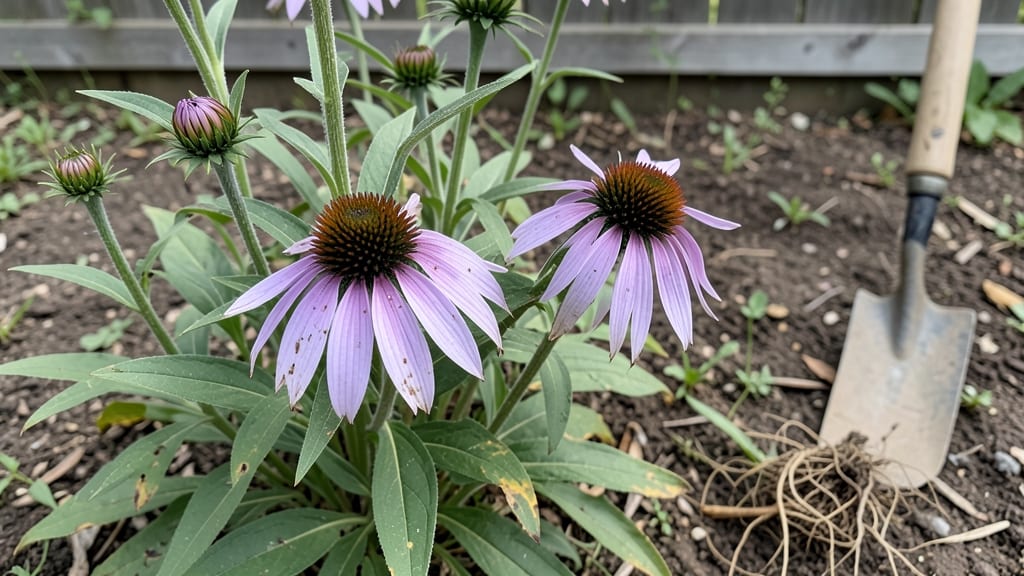
Planting echinacea in fall gives you a head start on next summer’s blooms—those bold purple cones that hummingbirds adore. I’ve found that fall-planted echinacea establishes roots before winter, so they burst into flower earlier than spring starts.
The key is timing: aim for 4–6 weeks before your first frost, when soil’s still warm enough to encourage growth but cool enough to avoid stress.
You’ll need well-draining soil (mix in compost if yours is heavy), a sunny spot with at least 6 hours of light, and space—18–24 inches apart for full-sized plants. Dig holes twice as wide as the root ball but no deeper, then water deeply after planting.
In colder zones (USDA 3–6), a 2–3 inch mulch layer protects roots from freeze-thaw cycles, while warmer zones (7+) can skip it unless you get dry winters.
By spring, you’ll see lush green foliage pushing up through the mulch, often weeks before spring-planted echinacea. The plants handle drought better too, since their roots grow deep over winter. Deadhead spent blooms in summer to encourage more flowers, and you’ll have cutting gardens full of long-stemmed blooms by July.
Fall planting works best in zones 3–8, but if you’re in zone 9+, wait until late fall to avoid winter rains. The trade-off? Fewer weeds competing for space in spring, and stronger stems that don’t flop in summer storms. Worth the extra effort for those reliable, showstopping blooms every year.
📚 In This Guide
- What you need
- Instructions
- Tips and common mistakes
- Wrapping up and next steps
What you need
- ● Echinacea plants: 3–6 healthy nursery-grown plants (bare-root or potted), depending on desired coverage. Choose varieties like 'Magnus' or 'Hot Papaya' for vibrant blooms.
- ● Well-draining soil: A mix of native soil + 2–3 inches of organic compost (e.g., aged manure or leaf mold). Test pH (aim for 6.0–7.0).
- ● Mulch: 2–3 inches of shredded bark, straw, or wood chips to insulate roots and retain moisture.
- ● Watering can or hose: With a gentle spray nozzle for even moisture distribution.
- ● Gloves & knee pads: To protect hands and knees during planting.
- ● Garden trowel or shovel: For digging holes (6–8 inches deep and wide).
- ● Pruners: To trim dead foliage or adjust plant size.
- ● Organic fertilizer: Balanced 10-10-10 or slow-release granular (apply lightly at planting).
- ● Plant tags: To label varieties and track planting dates.
- ○ Row cover or frost cloth: For extra protection in colder climates (optional but helpful).
- ● Soil moisture meter: To monitor root-zone hydration (pro tip for drought-prone areas).
Step-by-step instructions for planting echinacea in fall
Fall planting gives echinacea roots time to establish before summer’s heat, ensuring stronger blooms next season.
Choose the Right Location and Soil Conditions
Echinacea thrives in full sun—select a spot receiving at least 6-8 hours of direct sunlight daily. If your site has afternoon shade, choose a shorter variety like 'White Swan' to prevent leggy growth. The soil should drain well; echinacea roots rot easily in soggy conditions, so amend heavy clay with 2-3 inches of compost to improve aeration.
Test the soil pH—echinacea prefers a slightly acidic to neutral range (6.0-7.0). If your soil is alkaline, mix in 1-2 inches of peat moss per planting hole to lower the pH gradually. Avoid fresh manure or high-nitrogen fertilizers, which encourage leafy growth at the expense of blooms. Instead, work in a balanced 10-10-10 fertilizer at planting time for steady root development.
Prepare Planting Holes and Transplant Carefully
Dig holes twice as wide as the root ball but only as deep—planting too deep suffocates the crown, while too shallow leaves it exposed to winter heaving. Gently loosen the roots of container-grown plants to encourage outward growth; for bare-root specimens, soak roots in lukewarm water for 10-15 minutes before planting to revive them.
Place each plant so the top of the root ball sits level with the surrounding soil. Fill the hole with native soil, pressing lightly to eliminate air pockets. Water deeply to settle the soil and remove the plant tags to prevent them from acting as wicks, drawing moisture away from the roots. Mulch with 2-3 inches of shredded bark or straw, keeping it 3 inches away from the crown to prevent rot.
Water and Protect Through Winter Establishment
Water newly planted echinacea deeply once a week unless rainfall provides 1 inch of moisture. Overwatering in fall can drown roots before they harden off, so check soil moisture by inserting your finger 2 inches deep—water only when dry. In regions with freezing temperatures below 10°F, add a 4-inch layer of mulch in late fall to insulate the crown and prevent heaving.
Skip fertilizing until spring—fall feeding encourages tender new growth that won’t survive winter. Instead, focus on root development by ensuring consistent moisture and avoiding foot traffic near the planting area. You’ll know the plants are establishing well when new basal leaves appear in early spring, signaling successful overwintering.
Prune and Monitor for Spring Readiness
In late winter or early spring, cut back dead stems to 2-3 inches above the soil line using clean, sharp pruners. This removes debris that could harbor fungal diseases and allows sunlight to reach the crown. Avoid pruning in fall, as it reduces the plant’s ability to store energy for winter survival.
Watch for new shoots emerging from the base—this is your cue that the echinacea has survived winter. If you notice yellowing leaves in early spring, it’s often due to overwatering or compacted soil; amend with 1 inch of compost and reduce irrigation until the soil warms. By mid-spring, you should see buds forming, confirming the plant is ready for a light application of 5-10-10 fertilizer to promote blooming.
Tips & tricks for planting echinacea in fall
Fall planting sets echinacea up for robust growth, but these nuances make all the difference between thriving plants and struggling ones.
Location and Sunlight Precision: While the instructions specify 6-8 hours of sunlight, I've found that morning sun paired with afternoon shade works surprisingly well in hot climates—just choose shorter varieties like 'White Swan' to compensate. The key is avoiding midday sun when temperatures exceed 85°F, which can stress newly planted roots. Consider installing temporary shade cloth if your site gets intense afternoon sun.
Root Revival Technique: For bare-root specimens, the 10-15 minute lukewarm water soak is non-negotiable—this jumpstarts root activity before planting. I've learned to use distilled water for this step to prevent chlorine damage. After soaking, gently squeeze out excess water to prevent waterlogged planting holes, which can suffocate roots immediately after transplanting.
Mulching Strategy for Extreme Cold: In zones with temperatures dropping below 10°F, the 4-inch mulch layer becomes critical. I recommend using straw rather than leaves for better insulation, as leaves can compact and trap moisture. The mulch should extend outward from the crown but never touch it directly—this prevents rot while still insulating the root zone. In particularly harsh winters, I've added a layer of burlap over the mulch for extra protection.
Spring Readiness Indicators: Those emerging basal leaves in early spring are your best gauge of winter survival. I've found that plants with at least three new leaves by mid-March typically produce the strongest blooms. If you notice yellowing leaves, don't automatically assume overwatering—sometimes it's a sign of compacted soil. A simple soil test or the "squeeze test" (grab a handful of moist soil; if it forms a tight ball, it's too compact) can reveal the issue.
Pro Tips for Planting Echinacea In Fall
- Fall planting sets echinacea up for robust growth, but these nuances make all the difference between thriving plants and struggling ones.
- The key is avoiding midday sun when temperatures exceed 85°F, which can stress newly planted roots.
- Root Revival Technique: For bare-root specimens, the 10-15 minute lukewarm water soak is non-negotiable—this jumpstarts root activity before planting.
Frequently asked questions
Got questions about planting echinacea in fall? You’re not alone! Here are answers to the most common concerns—so you can dive in with confidence.
When is the best time to plant echinacea in fall?
Plant before the first hard frost (typically 4–6 weeks before ground freezes) for ideal root establishment. Aim for late September to early November in most U.S. zones (4–9). If frost hits early, delay until spring—roots can handle cold but not frozen soil. Pro tip: Mulch after planting to protect roots from temperature swings.
Can I plant echinacea from seed or should I use transplants in fall?
Transplants (nursery-grown plants) are far easier for fall planting—they establish faster and bloom sooner. Seeds need stratification (cold treatment) and take 2 years to flower. If using seeds, sow them in late fall (they’ll germinate in spring) or start indoors 8–10 weeks before your last frost date. Pro tip: Transplants thrive in 50–70°F soil temps.
How do I prepare the soil for fall echinacea planting?
Echinacea loves well-draining, slightly acidic soil (pH 6.0–7.0). Amend heavy clay with compost or sand, and avoid soggy spots (they rot roots!). Work in 2–3 inches of compost or aged manure before planting. Skip fresh fertilizer—it can burn tender roots. Pro tip: Test soil pH with a kit; adjust with lime (to raise) or sulfur (to lower) if needed.
What’s the best spacing for echinacea plants in fall?
Give mature plants 18–24 inches apart in rows (or 24–36 inches for full sun exposure). Overcrowding leads to pests, disease, and weak blooms. If planting in containers, use 1-gallon pots per plant with drainage holes. Pro tip: Skimpy spacing? Thin seedlings in spring to avoid competition.
Why aren’t my echinacea plants blooming after fall planting?
Fall-planted echinacea may take 1–2 years to bloom—patience is key! Common culprits: poor soil, overcrowding, or lack of sunlight. Ensure full sun (6+ hours/day) and deadhead spent blooms in spring to encourage reblooming. Pro tip: Feed lightly with low-nitrogen fertilizer (like 5-10-10) in early spring.
Are there any fall planting alternatives for echinacea?
If fall planting feels risky, try these low-stress options:
- Spring planting: Transplants go in after last frost (soil temps ≥50°F). Blooms arrive faster.
- Container growing: Plant in pots with fast-draining mix; move indoors in winter (zones <7).
- Division: Split mature clumps in early fall (before hard frost) for instant blooms.
Wrapping up and next steps
Fall is the perfect time to plant echinacea—its cold-hardy nature and early root growth mean stunning blooms next spring! By choosing the right variety, prepping your soil, and timing your transplant just right, you’ll set your garden up for years of vibrant color and pollinator-friendly beauty. 🌸
Ready to dive in? Grab your gloves and start planting! If you’re new to echinacea, consider this beginner’s guide for extra tips, or check out our seasonal care calendar to keep your plants thriving all year. Happy gardening—your future blooms will thank you! 🌿✨