Trees
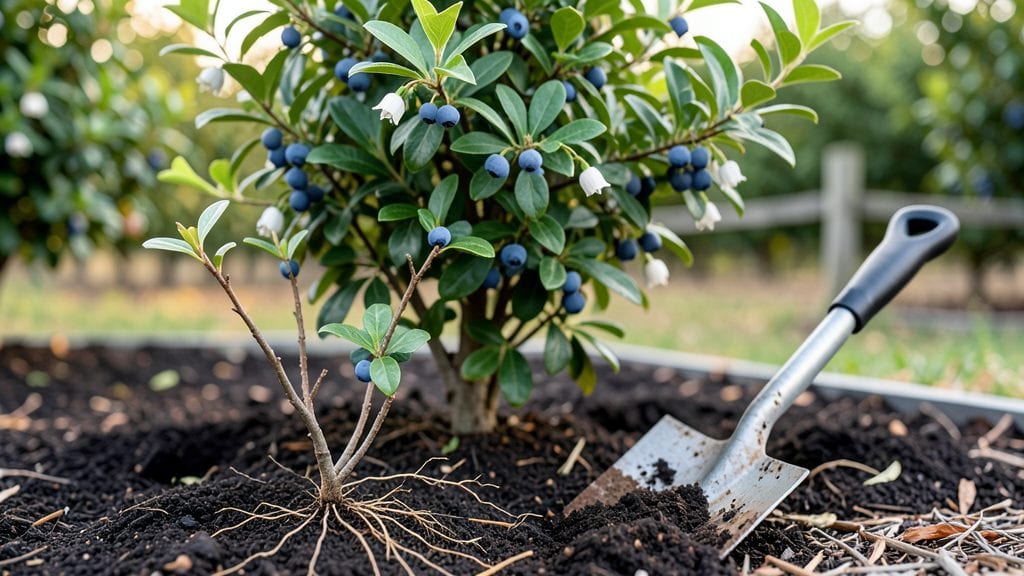
Planting blueberry trees gives you a lifetime of tart-sweet harvests—if you get the soil and placement right. 🌿 I learned the hard way that regular garden soil won’t cut it; these finicky bushes demand acidity levels below 5.5, and they’ll sulk or even die if ignored.
The payoff? A mature bush can produce 5-10 pounds of berries per season with proper care.
Start with the right variety for your climate: highbush thrives in warmer zones (5-7), while lowbush loves cooler regions (3-6). Both need 4-6 hours of sun daily and well-draining soil mixed with peat moss or pine bark to keep that acidity in check.
Spacing matters too—6 feet apart for highbush, 3 feet for lowbush, to give roots room to spread without competing.
The planting window is short but critical: fall (October-November) or early spring (March-April) before buds swell.
Dig a hole twice as wide as the root ball but no deeper, then amend the native soil with sulfur or aluminum sulfate to adjust pH. Water deeply after planting, and mulch with pine needles to maintain acidity naturally.
First-year maintenance is simple: water weekly during dry spells (1-1.5 inches per week), prune out dead wood in late winter, and avoid fertilizers with lime. The real magic happens in year 3—when your bushes finally fruit.
Patience pays off with berries that taste nothing like store-bought, and the process gets easier every season.
📚 In This Guide
- What you need
- Instructions
- Tips and common mistakes
- Wrapping up and next steps
What you need
- ● Blueberry seedlings or bare-root plants: 3–5 plants (choose varieties like Rabbiteye, Southern Highbush, or Northern Highbush based on your climate zone).
- ● Well-draining, acidic soil (pH 4.5–5.5): Test your soil or amend with peat moss, pine bark fines, or sulfur if needed.
- ● Organic mulch: 2–3 inches of pine straw, wood chips, or leaves (avoid cedar mulch—it’s toxic!).
- ● Fertilizer: Start with a balanced 10-10-10 fertilizer, then switch to acid-loving plant food (e.g., Miracle-Gro Azalea, Camellia & Rhododendron) after planting.
- ● Watering can or hose with a gentle nozzle: Blueberries need consistent moisture, especially in their first year.
- ● Garden gloves & pruners: Sterilized pruners (sharp and clean!) for trimming.
- ○ Stakes & twine (optional but helpful): If planting in windy areas, use 2–3 stakes per plant.
- ● Soil pH test kit: Ensures your soil is in the perfect range for blueberries.
- ● Drip irrigation system: Automates watering for busy gardeners.
- ● Bird netting: Protects ripening berries from hungry birds.
- ● Compost or worm castings: Boosts soil health and nutrient uptake.
- ● Blueberry pollinator-friendly plants: Like bee balm or lavender, to attract pollinators.
Step-by-Step instructions for planting blueberry trees
Here's the method I've used to grow healthy, productive blueberry bushes that bear fruit for decades.
🌱 Step 1: Choose and Prepare the Planting Site
Blueberries thrive in acidic soil with a pH between 4.5 and 5.5. Test your soil first—if it's too alkaline, amend it with sulfur or peat moss (mix 2-3 pounds of sulfur per 100 square feet into the top 6 inches of soil 2-3 months before planting). They also need full sun—select a spot that gets at least 6-8 hours of direct sunlight daily. Avoid low-lying areas where cold air settles, as blueberries are sensitive to late frosts.
Dig a hole twice as wide as the root ball but no deeper. Loosen the sides of the hole to encourage root spread. If planting multiple bushes, space them 4-6 feet apart for dwarf varieties or 8-10 feet apart for standard-sized trees. This spacing ensures good airflow and reduces disease risk.
🪴 Step 2: Plant the Seedlings Correctly
Remove the seedling from its container and gently tease apart the roots if they're circling. Place the root ball in the hole so the top of the root flare (where the roots meet the trunk) sits 1-2 inches above the surrounding soil. This prevents the trunk from settling too deeply, which can suffocate the plant. Fill the hole with soil, tamping lightly to eliminate air pockets but avoiding compaction.
Water deeply right after planting to settle the soil and eliminate air gaps. You'll know it's enough when water drains freely from the bottom of the hole. Mulch around the base with 2-3 inches of pine needles or wood chips, keeping the mulch 6 inches away from the trunk to prevent rot. This mimics their natural forest-floor habitat and helps maintain soil acidity.
☀️ Step 3: Water and Fertilize for Establishment
Keep the soil consistently moist (not soggy) for the first 2-3 months after planting. Blueberries are shallow-rooted, so they rely on regular moisture. Water deeply 1-2 times per week, depending on rainfall, until new growth appears. You'll see this as dark green leaves emerging from the branches. Overwatering or letting the soil dry out completely can stress the plant and reduce fruit production.
Fertilize lightly in the first year with an acid-loving plant fertilizer (look for one with high nitrogen in the first number, like 10-5-5). Apply it in early spring just as new growth begins. Avoid high-phosphorus fertilizers—they can raise soil pH. I use ½ pound per plant for the first year, spreading it evenly around the drip line (the edge of the plant's canopy). Water thoroughly after applying to help distribute nutrients.
✂️ Step 4: Prune and Maintain for Long-Term Health
Prune in late winter or early spring before new growth begins. Remove dead, diseased, or crossing branches first, cutting back to the main trunk or a healthy side branch. Then thin the center of the bush to improve airflow—aim for an open vase shape that lets sunlight reach the interior. You'll know you've pruned correctly when you can see light through the center of the bush. Never remove more than one-third of the plant in a single year.
Monitor for pests like blueberry maggots or aphids, which can defoliate plants. If you spot them, spray with neem oil or insecticidal soap in the evening to avoid harming pollinators. Also watch for powdery mildew—a white fungal growth on leaves. Improve airflow by pruning and avoid overhead watering to prevent this. Healthy bushes produce white or pink flower buds in early spring, which will develop into fruit by summer.
⏰ Step 5: Harvest and Plan for Next Year
Blueberries ripen in late spring to early summer, depending on your climate. Pick them when they're deep blue and slightly soft to the touch—they should pull away from the stem easily. Harvest in the morning after dew has dried but before the heat of the day to preserve quality. Store them in the refrigerator for up to 2 weeks or freeze for long-term storage.
After harvest, add a 1-inch layer of fresh mulch around the base of the plant to replenish organic matter and maintain acidity. In late fall, spread ½ pound of ammonium sulfate (a slow-release nitrogen source) around the drip line and water it in. This prepares the plant for next year's growth. Mark your calendar for next spring's pruning—consistent care ensures your bushes thrive for decades.
Tips & tricks for perfect blueberry tree planting
A few strategic moves will help your blueberry bushes thrive from day one—these are the lessons I learned after planting my first batch and watching them flourish over the years.
Soil pH is non-negotiable: While the instructions call for testing your soil's pH and amending with sulfur or peat moss, I can't stress enough how critical this is. Blueberries absolutely refuse to thrive in alkaline soil. If your test shows a pH above 5.5, don't rush—take the full 2-3 months to properly amend the top 6 inches of soil. I've seen firsthand how plants struggle in marginal soil, so invest the time upfront. Pro tip: Use a soil test kit with a color chart—it's more accurate than guessing, and you'll know exactly how much sulfur to add per 100 square feet.
Root care makes all the difference: When planting, pay special attention to Step 2's root flare placement—this is where many gardeners go wrong. The root flare should sit 1-2 inches above the surrounding soil to prevent suffocation. I've seen too many bushes planted too deeply, which leads to poor growth. Also, that deep watering after planting isn't just about settling soil—it's about eliminating air pockets that can strangle new roots. Water until it drains freely from the bottom of the hole; this ensures proper root contact with the amended soil.
Mulching strategy matters: The 2-3 inches of pine needles or wood chips specified isn't just decoration—it's essential for maintaining that critical acidity and moisture balance. But here's what nobody tells you: Keep that mulch 6 inches away from the trunk to prevent rot. I learned this the hard way when my first bushes developed fungal issues. Also, refresh that mulch layer annually after harvest—it breaks down quickly and loses its effectiveness. Think of it as your blueberry's natural blanket that regulates temperature and moisture year-round.
Pruning precision prevents problems: The instructions mention pruning in late winter, but timing is everything. If you prune too early, you risk exposing tender new growth to late frosts. Wait until you see those white or pink flower buds appear in early spring—that's your cue. And when you're shaping that open vase, remember: you can't see light through the center? You're not done yet. This airflow is what prevents powdery mildew, and trust me, you don't want to deal with that white fungal growth on your precious leaves.
Pro Tips for Planting Blueberry Trees
- A few strategic moves will help your blueberry bushes thrive from day one—these are the lessons I learned after planting my first batch and watching them flourish over the years.
- Soil pH is non-negotiable: While the instructions call for testing your soil's pH and amending with sulfur or peat moss, I can't stress enough how critical this is.
- Root care makes all the difference: When planting, pay special attention to Step 2's root flare placement—this is where many gardeners go wrong.
Frequently asked questions
Got questions about growing your own blueberry bushes? You’re not alone! Here are some of the most common queries—plus straightforward answers to help you plant with confidence.
When is the best time to plant blueberry trees?
Plant bare-root blueberries in late fall or early spring (before buds swell) for ideal root establishment. Container-grown bushes can go in anytime the soil isn’t frozen, but spring is safest. Avoid summer heat, which stresses young plants.
How long does it take for blueberry trees to bear fruit?
Patience is key! Dwarf varieties may produce berries in 2–3 years, while standard bushes take 3–5 years. Healthy soil, proper pruning, and consistent watering speed up the process. Pro tip: Use mulch to retain moisture and nutrients.
Do blueberry trees need acidic soil? What if mine isn’t?
Yes! Blueberries thrive in soil with a pH of 4.5–5.5. Test your soil—if it’s too alkaline, amend with peat moss, sulfur, or pine needles. For quick fixes, top-dress with cottonseed meal annually. Warning: Over-acidifying can harm roots.
What pests or diseases should I watch for?
Common threats include blueberry maggots, aphids, and fungal diseases (like mummy berry). Prevent issues with row covers, neem oil, or copper fungicides. Prune for airflow, and remove fallen fruit to stop mold. Pro tip: Inspect leaves weekly during blooming season.
Can I grow blueberries in containers? What size pot do I need?
Use pots at least 18–24 inches deep and wide with drainage holes. Dwarf varieties (like ‘Top Hat’) work best. Mix 50% peat moss, 30% perlite, and 20% compost for ideal soil. Move containers to full sun in summer and partial shade in winter.
Wrapping up and next steps
Planting blueberry trees is a rewarding journey that blends patience with delicious results! 🌱 From selecting the right seedlings to nurturing them with proper soil, sunlight, and care, you’re well on your way to a thriving bush.
Remember, consistency is key—whether it’s mulching, pruning, or protecting against pests, your efforts will soon be rewarded with juicy, homegrown blueberries.
Now that you’re armed with knowledge, take the first step today—grab your tools, pick a sunny spot, and get planting! With time and care, your blueberry trees will flourish, offering years of fresh, antioxidant-rich fruit. Happy growing! 🍇✨