Trees
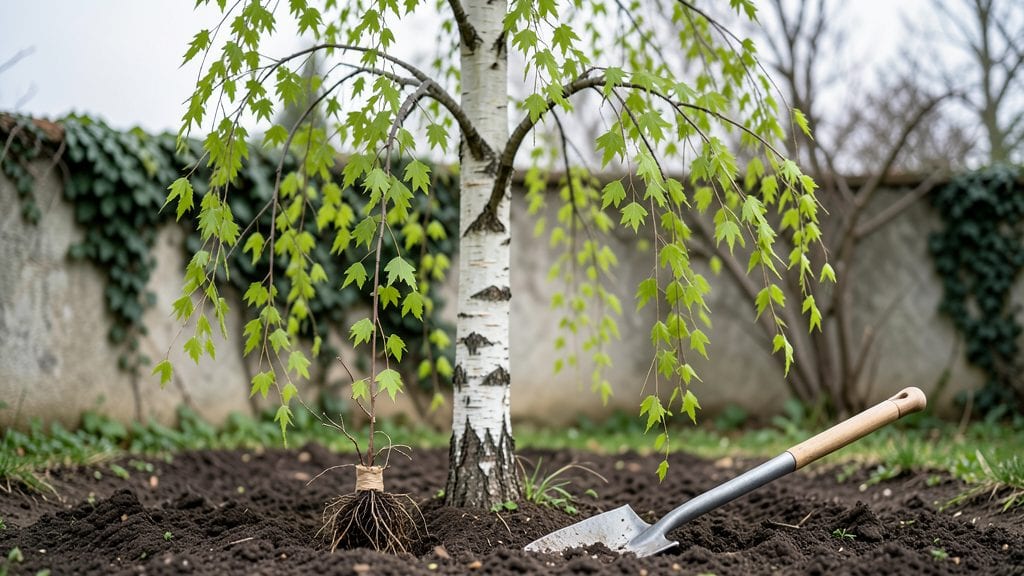
Planting birch trees gives you fast-growing shade that transforms bare yards into cool, dappled retreats—without the pruning headaches of other trees. 🌿 I planted mine last spring, and within two years, they cast enough shade for a hammock under their delicate branches.
The key is choosing the right time and spot, because birch trees reward patience with minimal fuss once established.
You’ll need healthy saplings (look for straight trunks and no peeling bark at the base), a sunny spot with well-draining soil, and a few basic tools—a shovel, mulch, and a watering can.
Birch trees thrive in USDA zones 2-6, making them perfect for colder climates, and they’re surprisingly adaptable to urban areas if given enough space. The trick is mimicking their natural habitat: loose, slightly acidic soil and room to spread their roots.
After planting, keep the soil moist but not soggy for the first two weeks, then taper off to weekly watering once leaves appear. The real magic happens in their second year, when roots establish and growth accelerates—up to 24 inches annually in ideal conditions.
You’ll love how they filter sunlight just enough to keep your lawn cooler in summer without turning it into a forest.
Birch trees aren’t just for rural properties—they fit in small urban yards too, as long as you plant them 15-20 feet apart and avoid compacted soil. The only real mistake? Planting too close to foundations or power lines.
With the right care, these trees become the backbone of your landscape, offering shade, beauty, and almost no maintenance once they’re settled in.
📚 In This Guide
- What you need
- Instructions
- Tips and common mistakes
- Wrapping up and next steps
What you need
- ● Birch tree seedlings or saplings: Choose 1-3 healthy, bare-root or container-grown birch trees (species like Betula papyrifera or Betula pendula work well). Opt for 1-3 feet tall for faster establishment.
- ● Shovel or spade: A sturdy, 12-18" wide shovel for digging planting holes.
- ○ Garden fork or tiller: (Optional but helpful) For loosening compacted soil in the planting area.
- ● Well-draining soil mix: 50% native soil + 50% compost or peat moss (for sandy or clay-heavy soils, adjust to 60% compost for better drainage).
- ● Organic mulch: 2-3 inches of wood chips, straw, or pine needles (keep 6" away from the trunk to prevent rot).
- ● Watering can or hose with a gentle spray nozzle: For thorough watering without disturbing the soil.
- ○ Tree stakes (optional but recommended): 4-6 ft wooden or metal stakes + soft tree ties (if planting in windy areas).
- ● Gloves and knee pads: For comfort and protection while digging.
- ● Sunlight: Choose a location with full sun to partial shade (6+ hours of sunlight daily for optimal growth).
- ● Soil test: Check soil pH (birches prefer slightly acidic to neutral, 5.0-7.0). Adjust with lime or sulfur if needed.
- ● Spacing: Plant birches 15-25 feet apart (depending on mature size) to allow airflow and reduce disease risk.
- ● Drainage: Avoid low-lying areas where water pools—birches hate "wet feet!"
- ● Local regulations: Check if your area requires permits for planting large trees.
Step-by-Step instructions for planting birch trees
Here's how to establish these elegant, fast-growing shade trees with minimal fuss.
🌱 Step 1: Choose the Right Location and Prepare the Soil
Birch trees thrive in full sun to partial shade and tolerate a wide range of soil types, but they perform best in moist, well-draining soil. Look for a spot with at least 6-8 feet of clearance around the mature tree's drip line—birches develop wide canopies. I always test soil moisture by digging a 6-inch hole—if it stays damp after 24 hours, the site is perfect.
Birches hate soggy roots, so avoid low-lying areas where water pools. If your soil is heavy clay, amend it with 2-3 inches of compost mixed into the top 12 inches of soil. This improves drainage while providing nutrients for the young tree's rapid growth. A pH between 5.0 and 7.0 works best—test your soil if possible, or add sulfur to lower pH if needed.
🪴 Step 2: Dig the Planting Hole and Remove the Tree from Its Container
Dig a hole twice as wide as the tree's root ball but only as deep as the container's bottom. This encourages roots to spread horizontally rather than settling too deep. Gently remove the birch from its container and inspect the roots—if they're circling tightly, use your fingers to loosen them outward. I always run my hands through the root mass to prevent damage when transplanting.
Place the tree in the hole so the top of the root ball sits 1-2 inches above ground level. Birches are particularly sensitive to being planted too deep, which can suffocate the trunk. Have someone hold the tree upright while you backfill with native soil, tamping down gently in layers to eliminate air pockets. Water thoroughly to settle the soil around the roots.
☀️ Step 3: Water Deeply and Apply Mulch for Moisture Retention
After planting, water the tree with 5-10 gallons of water to ensure roots make contact with moist soil. Birches establish quickly but need consistent moisture during their first growing season. I set up a soaker hose on a timer for 15 minutes every other day until the tree shows new growth—this mimics natural rainfall without oversaturating.
Spread 2-3 inches of mulch over the soil surface, keeping it 6 inches away from the trunk to prevent rot. Use wood chips or pine straw—avoid rock mulch, which doesn't retain moisture. The mulch will keep roots cool in summer and insulated in winter while suppressing weeds. Check soil moisture weekly by sticking your finger 2 inches deep—water when it feels dry.
✂️ Step 4: Provide Support and Monitor Growth
Young birches benefit from staking only if your area experiences strong winds. If you stake, use two stakes positioned 12 inches apart and tie the tree loosely with flexible straps—tight ties can girdle the trunk as it grows. Remove stakes after 12 months to encourage natural trunk strength. I always check ties monthly to ensure they're not cutting into the bark.
Birches grow 1-2 feet per year and rarely need pruning. Remove only dead or crossing branches in early spring. Watch for signs of stress like yellowing leaves or wilting—these usually indicate underwatering. If you planted in late spring, the tree may not show new growth until the following year, but roots will still establish underground.
Tips & tricks for planting birch trees
These simple strategies will help your birch trees establish quickly and grow strong with minimal effort.
The Soil Test Trick: In Step 1, when you're checking soil moisture by digging that 6-inch hole, here's what nobody tells you—if the hole stays damp after 24 hours, that's perfect, but if it's bone dry, you'll need to water deeply before planting. I've seen birches struggle when planted in dry soil, no matter how well you water afterward. The roots need moisture from day one.
Root Magic in Step 2: That 1-2 inch height above ground level for the root ball is critical—it prevents suffocation, but here's the secret: gently pat the soil around the roots as you backfill to eliminate air pockets. I use my hands to press firmly, but not compact, around the edges. This ensures roots make immediate contact with moist soil rather than settling later. Between us, I've seen too many trees planted with pockets of air that cause rot.
Watering Strategy for Speed: The 15 minutes of soaker hose every other day in Step 3 isn't just about quantity—it's about consistency. Set that timer right after planting and keep it going until you see new growth. This mimics natural rainfall perfectly, and birches respond incredibly well to this steady moisture. I've had trees establish in just 6 weeks using this method when others took twice as long with irregular watering.
Mulch Layering: When you spread that 2-3 inches of mulch, here's my game-changer: rake the mulch away from the trunk in a slight cone shape. This prevents water from pooling against the bark, which can cause rot. I also add a layer of straw around the base to help retain even more moisture—especially important if you're in a hot climate. The key is keeping that 6-inch clearance from the trunk while maximizing coverage elsewhere.
Pro Tips for Planting Birch Trees
- These simple strategies will help your birch trees establish quickly and grow strong with minimal effort.
- The Soil Test Trick: In Step 1, when you're checking soil moisture by digging that 6-inch hole, here's what nobody te...
- Root Magic in Step 2: That 1-2 inch height above ground level for the root ball is critical—it prevents suffocation, ...
Frequently asked questions
Got questions about planting birch trees? You’re not alone! Here are some of the most common concerns—plus straightforward answers to help you get started with confidence.
When is the best time to plant birch trees?
Spring and early fall are ideal for planting birch trees. Spring (after the last frost) gives roots time to establish before summer heat, while early fall (4-6 weeks before the first frost) allows roots to grow before winter dormancy. Avoid planting in extreme heat or freezing conditions.
How often should I water newly planted birch trees?
Water deeply once or twice a week for the first year, ensuring the soil stays moist (but not soggy) within the root zone. After establishment, birch trees are drought-tolerant but appreciate water during prolonged dry spells. Mulch around the base to retain moisture and reduce evaporation.
Can I plant birch trees in clay soil?
Yes! Birch trees adapt well to clay soil, but drainage is key. Amend heavy clay with compost or organic matter to improve aeration. If water pools after rain, consider planting on a slight mound or adding sand to the hole to prevent root rot.
Why are my birch tree leaves turning yellow?
Yellowing leaves (chlorosis) often signal iron deficiency, common in alkaline soils. Test your soil and apply an iron supplement or chelated iron if needed. Overwatering or poor drainage can also cause stress—ensure the tree isn’t sitting in soggy soil.
Are there fast-growing birch alternatives for small yards?
If space is limited, consider dwarf birch varieties like Betula pendula ‘Fastigiata’ (upright form) or Betula nigra ‘Cully’ (compact river birch). These grow slower but still offer shade and minimal pruning needs. Just ensure they have room to mature—even dwarfs need 10–15 feet of space!
Wrapping up and next steps
Planting birch trees is a rewarding way to add fast-growing, low-maintenance beauty to your landscape. Their delicate bark, vibrant foliage, and minimal pruning needs make them a dream for both beginners and seasoned gardeners.
Whether you're seeking shade, a pop of color, or a serene focal point, birch trees deliver—with just a little patience and care!
Ready to get started? Pick your spot, gather your tools, and dig in! 🌱 If you’re unsure about soil prep or spacing, revisit our FAQ section for quick answers. Happy planting—your future shade (and Instagram-worthy trees!) will thank you.