Pruning
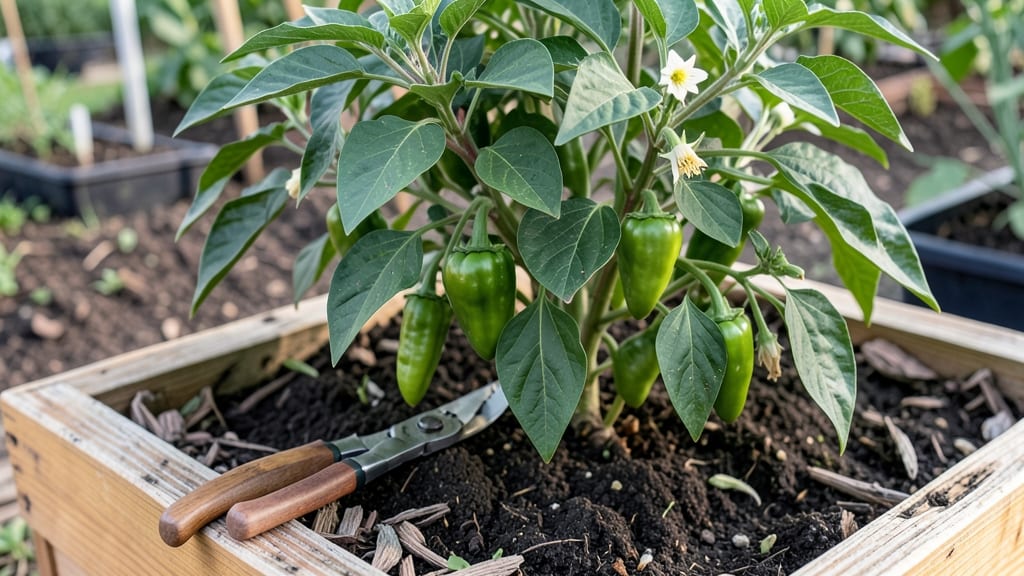
Trimming jalapeño plants turns a single harvest into a year-round pepper bonanza. 🌱 Last summer, I went from one measly harvest to a steady supply by simply snipping the right spots—it’s all about encouraging the plant to focus its energy on producing more peppers instead of just growing taller.
The key isn’t just cutting; it’s knowing when and where to make those cuts so the plant stays healthy and keeps blooming.
You only need a few basic tools: sharp pruning shears, gloves (jalapenos can sting!), and a bucket for trimmings. The best time to trim is right after harvest, when the plant has energy to recover.
Focus on removing spent flowers and any leggy growth that’s shading the lower branches—this opens up the plant for better air flow and sunlight, which means more peppers and fewer pests.
With the right trimming, your jalapeños will grow bushier and produce peppers for months instead of just one big flush. You’ll notice new side shoots forming within days, and the plant will start looking fuller and more productive.
The trimmed sections? Toss them in compost or try propagating them for new plants—waste nothing in the garden!
This method works for both container-grown and in-ground jalapeños, and it’s especially useful if you’re growing in warm climates where peppers keep producing all season. Once you see the difference, you’ll never let a plant go untrimmed again.
📚 In This Guide
- What you need
- Instructions
- Tips and common mistakes
- Wrapping up and next steps
What you need
- ● Pruning shears or scissors: Sharp, clean, and sterilized (70% isopropyl alcohol works great). Avoid dull tools—they can damage plants.
- ● Gloves: Heavy-duty gardening gloves (jalapeños can be spicy and irritate skin!). Opt for nitrile-coated for extra protection.
- ● Disinfectant: Rubbing alcohol (70% or higher) or a commercial pruning disinfectant to prevent disease spread between cuts.
- ○ Garden twine or plant ties: (Optional but helpful) For supporting branches if your jalapeños grow tall or leggy.
- ● Healthy plants: Only trim when jalapeños are at least 6–8 inches tall and showing signs of new growth (3–4 true leaves).
- ● Good weather: Choose a mild, dry day (avoid extreme heat or rain) to minimize stress on the plant.
- ● Sunlight access: Ensure your workspace has bright, indirect light so you can spot growth patterns clearly.
- ● Compost bin or trash bag: For disposing of pruned stems (or compost them if disease-free!).
- ● Plant growth regulator: Like seaweed extract or kelp meal to encourage bushier growth post-trimming.
- ● Markers or labels: If you’re experimenting with different trimming techniques, label branches for tracking.
- ● Camera: Snap before-and-after photos to monitor progress over time!
Step-by-Step guide to trimming jalapeño plants
Here's how I keep my jalapeños producing all season—bushier, healthier, and packed with peppers.
✂️ Step 1: Identify and Remove Suckers
Suckers are the small shoots that grow in the crotch between a main stem and a branch. These little guys drain energy from your plant instead of letting it focus on peppers. Pinch them off with your thumb and forefinger when they're about 1-2 inches long—they're easier to remove then.
Work your way around the plant, checking every branch. I like to do this in the morning when the plant is turgid (full of water) and suckers are easier to spot. If you miss one, it'll grow into a leggy branch that steals nutrients from your pepper production.
🌿 Step 2: Prune Leggy Growth and Yellow Leaves
Leggy growth happens when your plant stretches toward light. Cut these long, thin stems back to a leaf joint that's growing outward. Use clean, sharp pruners to make a clean cut just above the leaf node—this encourages bushier growth from that spot.
Also remove any yellow or brown leaves. These aren't contributing to your harvest and can attract pests. Snip them off at the base where they meet the stem. I always sterilize my pruners with rubbing alcohol between cuts to prevent spreading disease.
☀️ Step 3: Encourage Airflow and Light Penetration
After removing suckers and leggy growth, step back and look at your plant's shape. You want an open, rounded bush that lets sunlight reach all sides. Cut back any branches that are growing inward or crossing over others—these block light and airflow.
Focus on the lower branches first. These often get shaded out by the plant's top growth. Trim them back to expose the lower stems to light, which helps the whole plant photosynthesize more efficiently. This is when your jalapeño starts looking like a proper, productive bush instead of a lanky stick.
⏰ Step 4: Maintain Regular Trimming Schedule
Trim your jalapeño plants every 2-3 weeks during the growing season. This keeps them from getting overgrown and encourages continuous pepper production. After the first flush of peppers, you'll notice new flower buds forming—this is your cue to step up your trimming game.
In late summer, when days start shortening, reduce trimming to every 4-6 weeks. The plant will naturally slow down, but you still want to remove any dead or diseased growth. I always make a final light trim in early fall to clean up the plant before winter—just enough to keep it tidy without stressing it.
Tips & tricks for perfect jalapeño plant trimming
Keeping your jalapeño plants productive all season takes a few key tricks—here's how to maximize your harvest without overstressing your plants.
Timing Tip: In Step 1, when removing those 1-2 inch suckers, I've found that morning trimming works best. The plant's natural turgidity makes suckers easier to spot and pinch off cleanly. If you're working with multiple plants, start with the largest ones first—they'll have more suckers to remove. This approach prevents you from missing any sneaky little growths hiding among the branches.
Tool Technique: For Step 2, I can't stress enough how important clean pruners are. After each cut, I wipe my pruners with rubbing alcohol—this prevents spreading any potential diseases between cuts. If you don't have alcohol, boiling water works in a pinch. I also like to keep a small spray bottle of diluted bleach solution (1 part bleach to 9 parts water) nearby for quick sterilization between plants.
Plant Shape Strategy: When you reach Step 3 and are shaping your plant, think of it like sculpting a bushy topiary. The goal is to create an open center that lets light reach all branches. I like to visualize an upside-down cone shape—broad at the base and narrowing toward the top. This shape maximizes light exposure while maintaining structural integrity. Focus on removing any branches that grow toward the plant's center first.
Seasonal Adjustments: The 2-3 week trimming schedule in Step 4 works beautifully during peak growing season, but I've learned to adjust as seasons change. In early spring, when new growth is just starting, I trim every 3 weeks to encourage bushier development. In late summer, when days shorten, I extend to 4-6 weeks as the plant naturally slows down. This seasonal flexibility prevents over-trimming during slower growth periods.
Pro Tips for Trimming Jalapeno Plants
- Keeping your jalapeño plants productive all season takes a few key tricks—here's how to maximize your harvest without...
- Timing Tip: In Step 1, when removing those 1-2 inch suckers, I've found that morning trimming works best. The plant's...
- Tool Technique: For Step 2, I can't stress enough how important clean pruners are. After each cut, I wipe my pruners ...
Frequently asked questions
Got questions about trimming your jalapeño plants? You’re not alone! Here are some of the most common concerns—and their answers—to help you keep your plants thriving and productive all season long.
When is the best time to trim jalapeño plants?
Trim your jalapeños early and often—start when plants are about 6–12 inches tall. Focus on removing suckers (side shoots) and spent flowers to encourage bushier growth. Avoid heavy pruning late in the season, as it can delay fall harvests. Pro tip: Morning trims reduce stress on the plant!
How much should I cut off when trimming?
Remove no more than 1/3 of the plant’s foliage at once to avoid shocking it. For suckers (those small shoots in the leaf axils), snip them off just above the leaf junction. Over-trimming can stress the plant, so prioritize healthy, balanced cuts over aggressive pruning.
Will trimming jalapeño plants increase yield?
Trimming encourages more peppers and bushier growth by redirecting energy to fruit production. Removing suckers and spent blooms also prevents overcrowding, which can lead to disease. Think of it like a haircut: A little maintenance = happier, more productive plants!
Can I trim jalapeños in winter or cold climates?
If your jalapeños are indoor plants or in a greenhouse, you can trim year-round—but slow down in winter. Outdoor plants should be trimmed lightly (if at all) until spring, as cold stress can weaken them. Wait until temps stay above 50°F (10°C) for best results.
What should I do with the trimmings?
Don’t toss those clippings! Use them for compost or propagate new plants by rooting suckers in water. You can also ferment or dry the peppers for later use—just avoid overwatering the trimmings to prevent mold.
My jalapeños look sad after trimming—what went wrong?
If your plant wilts or stops producing, you may have over-pruned or trimmed at the wrong time. Give it a week to recover, then resume light trimming. Ensure it gets full sun, water, and balanced fertilizer (like 10-10-10) to bounce back faster.
Wrapping up and next steps
Trimming your jalapeño plants isn’t just about keeping them tidy—it’s the secret to bigger yields, healthier growth, and year-round harvests! 🌱 By mastering the art of pruning, you’ll encourage bushier plants, reduce disease risks, and even boost fruit production.
Whether you’re a seasoned gardener or just starting, these hacks make the process simple and rewarding.
Now that you’re armed with the know-how, roll up your sleeves and give your plants the care they deserve. Grab those pruners, head outside, and watch your jalapeños thrive—one snip at a time! 🌶️✨