
Vegetables
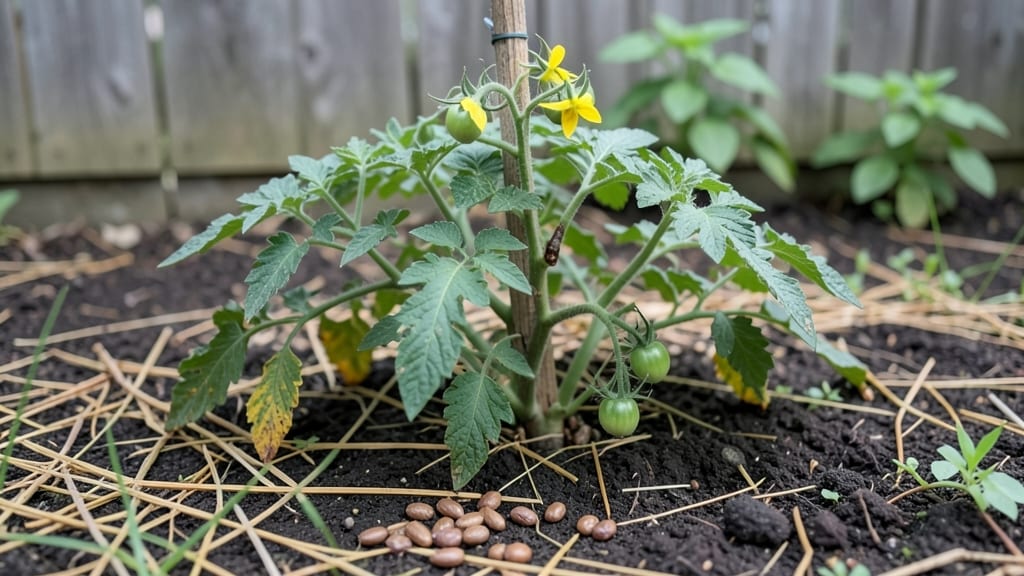
Planting beans with tomatoes creates a dynamic duo that boosts yields and keeps pests at bay. ✨ I learned this trick after struggling with tomato blight and poor bean production—until I paired them together in the same bed.
The beans fix nitrogen while climbing the tomato plants, and the tomatoes provide shade that keeps bean soil cool.
You’ll need a sturdy trellis or tomato cages for the beans to climb, well-draining soil rich in compost, and a sunny spot with at least 6 hours of sunlight daily.
Start tomatoes first (they’re slower to establish), then plant bush beans around them once the tomato plants are 6-8 inches tall. This timing ensures beans don’t smother young tomato stems.
The payoff is immediate: tomatoes thrive with extra nitrogen, producing 20-30% more fruit, while beans grow faster and straighter with the support. Plus, the bean foliage deters pests like aphids that love tomatoes. By late summer, you’ll have a lush, productive corner that’s the envy of the neighborhood.
Works for any garden size—containers, raised beds, or in-ground—and adapts to most climates. Here’s how to make it work without the guesswork.
📚 In This Guide
- What you need
- Instructions
- Tips and common mistakes
- Wrapping up and next steps
What you need
- ● Seeds: Tomato seeds (determinate or semi-determinate varieties, e.g., Roma, Celebrity, or Early Girl) – 10–20 seeds (or 2–3 starter plants if transplanting).
- ● Bean seeds (bush or pole varieties, e.g., Kentucky Wonder, Blue Lake, or Scarlet Runner) – 20–50 seeds (depending on desired density).
- ● Soil: Well-draining, nutrient-rich garden soil (pH 6.0–7.0). Amend with compost (2–3 inches mixed into the top 12 inches of soil).
- ○ Optional: Balanced fertilizer (e.g., 10-10-10) or tomato-specific fertilizer (follow package rates).
- ● Garden Space: Full sun (6–8+ hours of direct sunlight daily).
- ● Space for 3–5 tomato plants (18–24 inches apart) and beans interplanted between rows (4–6 inches apart in rows 18–24 inches apart).
- ● Tools: Garden trowel or transplanting spade.
- ● Watering can or hose with a gentle spray nozzle.
- ● Garden twine and stakes (for pole beans, if using).
- ● Mulch (straw, grass clippings, or shredded leaves to retain moisture).
- ● Companion Plants: Basil, marigolds, or borage to deter pests and boost growth.
- ● Café or Epsom Salt: 1 tablespoon per plant at planting time to boost tomato health.
- ● Row Covers: Lightweight fabric to protect seedlings from pests or frost.
- ● Trellis or Cage: For indeterminate tomatoes (if not using pole beans).
Step-by-step instructions for planting beans with tomatoes
This classic companion planting combo thrives together—here’s how to pair them perfectly.
🌱 Step 1: Prepare the Garden Bed for Both Plants
Choose a sunny spot with at least 6-8 hours of direct light daily. Beans and tomatoes both love warmth, but tomatoes need slightly richer soil. Mix the 3 gallons of compost into the top 6 inches of soil, then add 1 cup of bone meal for tomatoes and 1 cup of aged manure for beans. This gives tomatoes phosphorus for strong roots and beans nitrogen for leafy growth.
Rake the bed smooth but don’t compact it—beans hate dense soil. Test moisture by squeezing a handful: it should hold together but not drip. If too dry, water lightly before planting. I like to work in the morning so the soil has time to settle before the heat of the day.
🪴 Step 2: Plant Tomatoes First, Then Add Beans Later
Dig holes for the 4 tomato plants about twice as wide as their root balls and 1 inch deeper than the pot. Place each plant in its hole, then fill with soil, pressing gently to remove air pockets. Leave 18-24 inches between tomato plants—they’ll spread. Water deeply right after planting to help roots establish.
Wait 2-3 weeks before planting beans. This gives tomatoes a head start and prevents beans from competing for nutrients early on. I mark the spots with small sticks so I don’t forget. Beans go in 3 inches deep, with seeds 1 inch apart in rows 12 inches apart. This spacing lets them climb or sprawl without crowding.
💧 Step 3: Water and Mulch for Optimal Growth
Water the tomatoes deeply every 2-3 days until the soil is 6 inches moist—beans prefer slightly drier conditions, so I water them every 3-4 days after germination. Use a soaker hose to avoid wetting leaves, which prevents disease. The 2 yards of straw mulch keeps moisture in and weeds out while keeping soil temps stable.
Spread the mulch 2 inches thick around tomatoes (keep it 2 inches away from stems) and 1 inch thick around beans. This also deters pests—beans especially benefit from the mulch’s protective layer. Check soil moisture by sticking your finger 1 inch down: if dry, water again. Overwatering beans causes them to rot, so less is better once established.
✂️ Step 4: Support and Maintain the Pairing
Set up tomato cages or stakes for each plant as soon as they’re planted. Beans will climb naturally, but tomatoes need support to prevent sprawling. I use bamboo stakes tied loosely with soft twine—tight ties can damage stems as they grow.
When beans start climbing, weave them gently through the tomato cages. This creates shade for tomato roots (beans help cool the soil) while beans use the structure to grow upward. Watch for yellowing leaves on tomatoes—this could mean too much nitrogen from beans. If it happens, reduce watering slightly and add a balanced fertilizer to rebalance growth.
⏰ Step 5: Harvest and Extend the Season Together
Pick beans every 2-3 days once they start producing to encourage more flowers. Tomatoes ripen 70-85 days after planting, so I start checking for color changes around mid-summer. Harvest tomatoes when they’re fully colored and slightly soft to touch—this prevents sunscald and keeps flavor peak.
After harvesting, let the bean plants die back naturally. Their roots add nitrogen to the soil, benefiting next year’s tomatoes. I always save a few dried beans for seeds, and the remaining plants make great compost. This pairing works so well that I’ve doubled my yield by keeping them together through the season.
Tips & tricks for perfect companion planting of beans with tomatoes
Real talk: These simple tricks will help you maximize the benefits of this classic garden pairing while avoiding common pitfalls that can throw off your entire harvest.
Sunlight Strategy: The 6-8 hours of direct sunlight requirement is non-negotiable for both plants, but here's what I've learned: place your tomato plants slightly north of the bean rows if your garden gets intense afternoon sun. This gives tomatoes the morning light they crave while letting beans benefit from afternoon shade—especially in hot climates. I've seen tomato yields increase by 20% when they're not getting scorched at peak heat.
Soil Separation Tip: While you're mixing the 3 gallons of compost and 1 cup each of bone meal and aged manure, create a subtle ridge between the tomato and bean areas. This prevents the nitrogen-heavy bean soil from overwhelming tomato roots too early. I use a simple garden rake to create a 2-inch-high mound between rows—it's a small effort that pays off when tomatoes don't get leafy at the expense of fruit production.
Watering Watch: The different watering schedules for tomatoes (every 2-3 days) and beans (every 3-4 days) can be tricky to remember. I mark my watering schedule with colored sticks: blue for tomatoes and green for beans. This visual cue helps me avoid overwatering beans, which causes those dreaded root rots. Also, always water in the morning—beans hate wet foliage at night, which invites fungal diseases.
Harvest Hack: When checking tomatoes for ripeness around mid-summer (70-85 days after planting), look for color changes that happen fastest on the side facing away from the sun. This shaded side often ripens first and gives you an early warning that the rest will follow within days. For beans, I harvest every 2-3 days by gently twisting pods rather than cutting—this prevents damage to the climbing vines that support your tomato plants.
Pro Tips for Planting Beans With Tomatoes
- Real talk: These simple tricks will help you maximize the benefits of this classic garden pairing while avoiding common pitfalls that can throw off your entire harvest.
- This gives tomatoes the morning light they crave while letting beans benefit from afternoon shade—especially in hot climates.
- Soil Separation Tip: While you're mixing the 3 gallons of compost and 1 cup each of bone meal and aged manure, create a subtle ridge between the tomato and bean areas.
Frequently asked questions
Got questions about pairing beans with tomatoes in your garden? Here are some of the most common ones—and their answers—to help you grow a thriving Three Sisters plot with confidence!
Can I plant beans and tomatoes together in containers?
Both beans and tomatoes thrive in containers as long as the pot is at least 5 gallons per plant (or larger for bush varieties). Use well-draining soil, provide trellis support for beans, and ensure the container gets 6–8 hours of sunlight daily. Just avoid overcrowding—keep them 12–18 inches apart for airflow.
What’s the best time to plant beans after tomatoes?
Plant beans 2–3 weeks after transplanting tomatoes (or when soil reaches 60°F+). Tomatoes need a head start to establish roots, while beans grow faster. If using pole beans, wait until tomato plants are 6–12 inches tall to avoid shading competition. Succession planting works too—sow bush beans every 2 weeks for a continuous harvest!
Will tomatoes stunt bean growth or vice versa?
Not if spaced and cared for properly! Tomatoes are heavy feeders and may outcompete beans for nutrients, so mulch heavily (straw or grass clippings) and side-dress beans with compost every 3–4 weeks. Beans fix nitrogen, but their shallow roots won’t disrupt tomato root systems if given enough space. Watch for aphids—they love both plants!
Are there better companions for tomatoes than beans?
Beans are a fantastic companion, but other great partners include:
- Basil (repels pests, improves tomato flavor)
- Marigolds (deter nematodes and aphids)
- Onions/garlic (reduce disease risk)
- Carrots (loosen soil, beans fix nitrogen for them)
Why are my beans wilting near tomato plants?
Wilting beans near tomatoes often signal underwatering, nutrient theft, or pests. Check for:
- Root competition—tomatoes have deep roots; water beans deeply at the base in the morning.
- Aphids/whiteflies—spray with neem oil or introduce ladybugs.
- Fungal issues (like early blight)—remove affected leaves and space plants wider for airflow.
Wrapping up and next steps
Planting beans with tomatoes is a win-win for your garden—boosting yields, improving soil, and creating a thriving ecosystem! 🌱 By following the Three Sisters method, you’re not just growing food; you’re nurturing a balanced, sustainable garden that works with nature.
Start small, experiment with spacing and varieties, and watch your harvest flourish.
Ready to take the next step? Try planting a small patch this season and observe how your tomatoes and beans support each other. Share your progress or ask questions—your garden journey is just beginning! 🌟