Watering
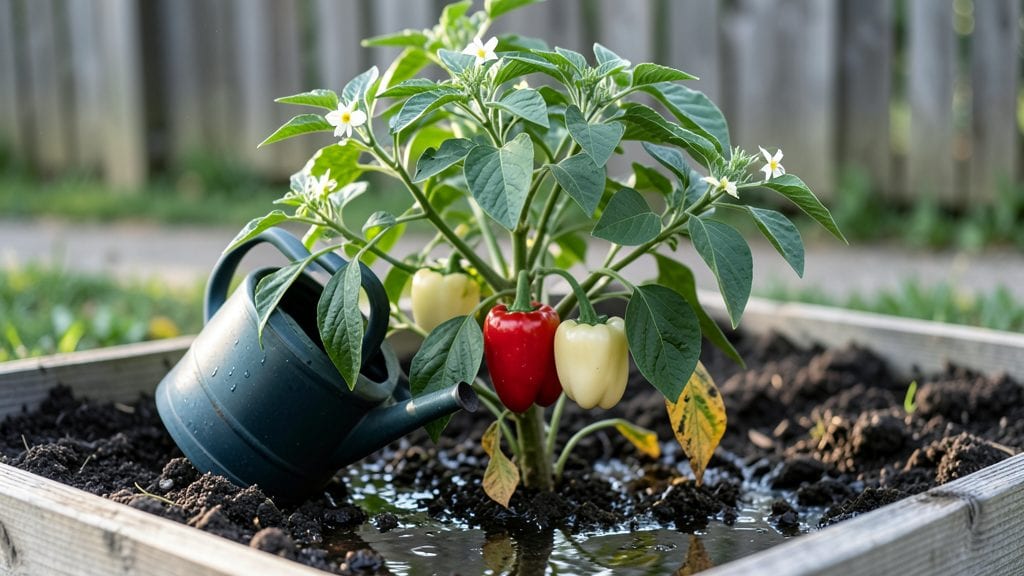
Overwatering pepper plants turns your thriving garden into a soggy mess faster than you think. 🌱 I’ve seen healthy plants wilt in days just from too much water—yellow leaves, mushy stems, and roots that can’t breathe. The good news? You can bring them back with simple adjustments.
Most gardeners overdo it because peppers hate soggy feet. Check the soil first: stick your finger 1–2 inches deep—if it’s damp, wait. Improve drainage by adding perlite or sand to heavy soil, and use pots with drainage holes. Even container plants need airflow at the roots.
Reviving starts with cutting back on water. Let the top inch dry out between waterings, and prune any blackened stems. Within a week, you’ll see new green growth as the roots recover. The key is consistency—peppers prefer steady moisture, not drenched soil.
Prevention is easier than cleanup. Water in the morning so leaves dry quickly, and mulch to keep moisture even. With these tweaks, your peppers will bounce back—and stay healthy all season. Let’s get your plants thriving again!
Common Causes Of Excess Moisture
Overwatering pepper plants is a classic gardening mistake, but understanding the root causes can help you avoid it. Whether you're a seasoned gardener or just starting, these factors often lead to soggy soil and stressed plants. Let’s break down why it happens—and how to fix it.
Pepper plants thrive in well-draining soil, but if your containers or garden beds lack proper drainage, water pools instead of flowing away. This creates a waterlogged environment where roots suffocate.
- Why it happens: Clay pots, dense soil, or compacted garden beds trap excess moisture, preventing oxygen from reaching the roots. Without oxygen, roots rot instead of absorbing nutrients.
- Actionable fix:
- Use pots with drainage holes (at least 2-3 per container).
- Amend heavy soil with perlite, vermiculite, or coconut coir (20-30% by volume).
- Test drainage: Fill a pot with water, then tip it over. If water drains in 1-2 minutes, it’s good. If it pools, improve drainage.
Pepper plants don’t need daily watering—even in hot weather. Overwatering based on guesswork (like "every morning") instead of soil conditions leads to soggy roots.
- Why it happens: Many gardeners assume plants need water just because it’s sunny or follow rigid schedules. But pepper plants (especially in pots) dry out faster than you think. Frequent light watering tricks plants into thinking they’re always wet, while deep roots stay drowned.
- Actionable fix:
- Check soil moisture before watering: Stick your finger 1-2 inches deep. If it’s dry, water; if damp, wait.
- Water deeply but infrequently: Aim for 1 inch of water per week (adjust for heat/rain). Let the top 2-3 inches of soil dry out between waterings.
- Use a moisture meter for accuracy—no more guesswork!
Pepper plants hate soggy, nutrient-poor soil. If your growing medium holds too much water (like pure peat or garden soil without amendments), roots drown even with "light" watering.
- Why it happens: Heavy soils (clay, loam without amendments) or peat-based mixes clump when wet, blocking airflow. Without organic matter (like compost or coconut coir), water can’t evaporate, and roots suffocate.
- Actionable fix:
- Use a pepper-specific mix: 60% potting soil + 20% perlite + 20% compost or coco coir.
- Avoid garden soil—it compacts and drains poorly.
- Add worm castings (5-10%) to improve aeration and microbial activity.
Small pots or crowded roots create a trapped water scenario. When roots fill a container, they can’t spread, leading to water buildup and root rot.
- Why it happens: Pepper plants need 5-gallon pots minimum (or larger for mature plants). In tiny containers, water evaporates slowly, and roots circle the pot, strangling themselves. Over time, this causes anaerobic (oxygen-free) conditions, where harmful bacteria thrive.
- Actionable fix:
- Upgrade pots gradually: Start with 1-gallon pots for seedlings, then move to 5-gallon pots by flowering stage.
- If repotting, choose containers 2-3 inches wider than the current root ball.
- Use fabric grow bags for better aeration if drainage is a concern.
Rain, high humidity, or cool nights can trick gardeners into thinking their peppers need less water—when they actually need even less.
- Why it happens: Humid air slows evaporation, so soil stays damp longer. If you water on a rainy day or in high humidity (like 70%+), the soil may never dry out. Similarly, cool weather reduces transpiration (water loss through leaves), making roots waterlogged faster.
- Actionable fix:
- Adjust watering for weather:
Condition Watering Adjustment Rainy/humid days Skip watering; check soil first. Hot, dry days Water deeply in the morning. Cool nights Reduce frequency; let soil dry more. - Use a rain gauge to track outdoor water input.
- Adjust watering for weather:
💡 Pro Tip: If your peppers show signs of overwatering (yellow leaves, mushy stems, or foul-smelling soil), act fast. Move the plant to a shady spot, let the soil dry completely, and repot in fresh, dry mix if needed. Prevention is key—always check before you water!
Revive Your Plants Now
Overwatering can feel like a death sentence for your pepper plants, but don’t panic—most cases are salvageable with the right steps. Below, we’ll map out practical fixes for the most common signs of overwatering, paired with prevention tips to keep your plants thriving.
Think of this as your emergency guide to turning soggy soil into a pepper paradise.
Cause: Roots suffocate from excess moisture, starving the plant of oxygen. Solution:
- Stop watering immediately—let the soil dry out completely (this may take 3–7 days, depending on humidity).
- Repot if needed 🌱:
- Gently remove the plant from its pot and inspect the roots. Healthy roots are firm and white; mushy or black roots are rotting and must be trimmed with sterilized scissors.
- Refresh the potting mix with a well-draining blend (60% coco coir or peat moss, 30% perlite, 10% compost).
- Boost airflow by spacing plants 12–18 inches apart and pruning crowded foliage.
Prevention Tip: 🌡️ Use your finger to check soil moisture—top 1–2 inches should be dry before watering again. A moisture meter (under $10) takes the guesswork out.
Cause: Overwatering disrupts calcium uptake, leading to weak cell walls in developing peppers. Solution:
- Apply calcium-rich amendments to the soil:
- Mix 1 tablespoon of crushed eggshells or calcium nitrate (follow package instructions) into the top 2 inches of soil.
- Water lightly to activate.
- Adjust your watering schedule:
- Water deeply but infrequently (e.g., 1–2 times per week) instead of daily shallow drinks.
- Use drip irrigation or soaker hoses to deliver water directly to the roots, avoiding leaf wetness.
Prevention Tip: 💡 Mulch heavily (2–3 inches of straw or wood chips) to retain moisture without drowning roots. This keeps soil consistently hydrated but prevents calcium leaching.
Cause: Overwatering creates a damp, fungus-friendly environment. Solution:
- Remove infected leaves or fruit immediately with clean pruners and dispose of them in the trash (not compost).
- Apply a fungicide (organic options like neem oil or baking soda spray work well):
- Mix 1 teaspoon baking soda + 1 quart water + a few drops of dish soap (as a surfactant). Spray on leaves, avoiding fruit.
- Improve drainage:
- Elevate pots with feet or saucers to prevent water pooling.
- Add perlite or vermiculite (20–30%) to heavy soils to break up compaction.
Prevention Tip: ✨ Water in the morning so foliage dries quickly. Avoid overhead watering—use a watering wand with a gentle spray or drip system instead.
Cause: Overwatering stresses the plant, diverting energy away from growth and flowering. Solution:
- Fertilize lightly with a balanced, water-soluble fertilizer (10-10-10 or 5-5-5) diluted to half-strength. Focus on phosphorus (middle number) to encourage blooming.
- Adjust light exposure:
- Pepper plants need 6–8 hours of direct sunlight daily. Move them to a sunnier spot if possible, or supplement with grow lights 12–14 hours/day.
- Prune strategically to redirect energy:
- Trim yellow or damaged leaves to reduce water loss.
- Pinch off new flowers if the plant is still weak—let it recover first.
Prevention Tip: 🎯 Monitor soil pH (ideal range: 6.0–6.8). Overwatering can lower pH, locking out nutrients. Test kits are cheap and worth it!
If your plant is leaning, falling over, or has black, foul-smelling roots, act fast:
- Trim all rotted roots with sterilized scissors (dip in rubbing alcohol).
- Repot in fresh, sterile soil (sterilize soil by baking it at 200°F for 30 minutes or using a commercial mix).
- Hold off on fertilizing for 2 weeks to avoid burning the stressed roots.
- Move to a shaded, humid spot (like a greenhouse or under a cloth cover) to reduce transpiration while roots recover.
Prevention Tip: 🔥 Never let peppers sit in saucers of water—empty saucers immediately after watering.
Final Pro Tip: 🌿 Observe your plants daily—healthy peppers should have deep green leaves, firm stems, and a slight crunch when squeezed. Adjust watering based on their cues, not a rigid schedule!
With these fixes, your peppers will bounce back in 2–4 weeks, stronger and more resilient. Stay patient, and soon you’ll be harvesting juicy, disease-free peppers!
Frequently asked questions
How do I know if my pepper plants are overwatered?
Check for yellowing leaves (especially lower ones), mushy black stems, or soil that smells foul when wet. If the leaves feel limp but the soil is damp, that’s a classic overwatering sign. Also watch for slow growth or peppers that drop prematurely.
Can I save a pepper plant with root rot from overwatering?
Yes, but act fast! Trim away all black, mushy roots with sterilized scissors, then repot in fresh, dry soil with perlite (30%) for drainage. Hold off on watering for 3–5 days to let roots recover. Keep the plant in bright, indirect light during recovery.
Why do my pepper plants wilt even when the soil feels dry?
This often means root rot from past overwatering. The roots can’t absorb moisture even if the topsoil looks dry. Check roots—if they’re brown and smelly, repot immediately. If roots are healthy but wilting persists, your plant may need more sunlight or better airflow.
How often should I water pepper plants in containers?
Let the top 1–2 inches of soil dry out between waterings. In summer, this might be every 2–3 days; in cooler weather, stretch it to 5–7 days. Always water deeply until it drains from the bottom—no soggy bottoms!
What’s the best soil mix to prevent overwatering?
Use a blend of 60% potting soil, 20% perlite, and 20% compost for perfect drainage. Avoid garden soil—it compacts and holds too much water. For containers, add a handful of coarse sand to break up clumps.