Watering
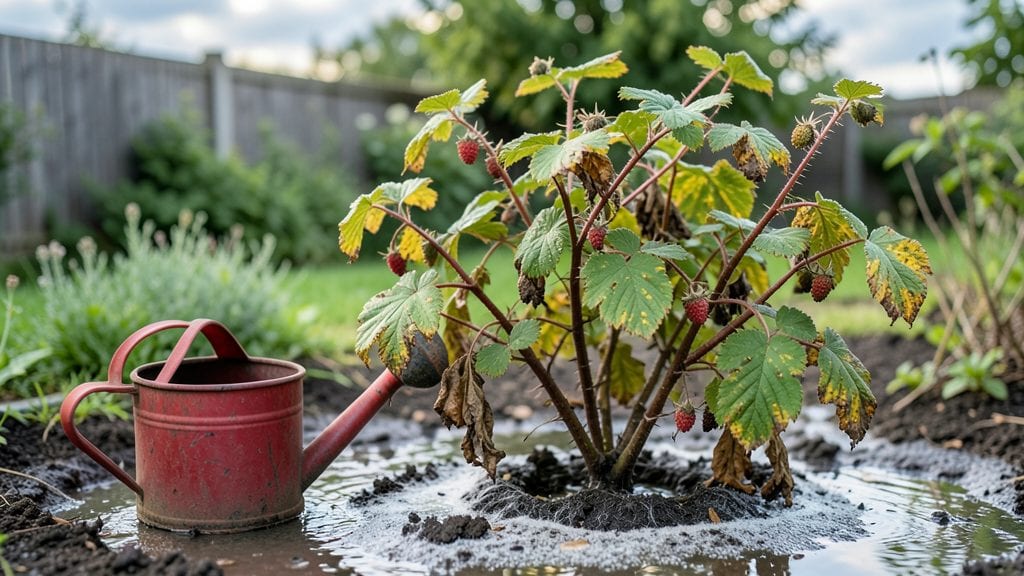
When your raspberry plant’s leaves turn yellow and droop despite your best efforts, you’re likely dealing with overwatering—something I’ve learned to spot within 48 hours of the first signs.
The telltale clues are soft, mushy stems and roots that smell foul when you peek beneath the soil, not to mention the way those once-vibrant canes suddenly sag like overripe fruit.
Honestly, I’ve drowned more raspberry plants than I’d like to admit, but there’s a clear path back to healthy growth.
The root of the problem (literally) is usually too much water sitting in compacted soil or a container without drainage holes. Raspberries need their roots to breathe—think of it like giving them a well-drained sponge to live in, not a swamp. My first fix?
Adjusting the watering schedule to wait until the top 2 inches of soil feel dry to the touch, which for my Pacific Northwest garden means watering every 5-7 days in summer instead of daily. That small change stopped the rot within weeks.
What you’ll end up with is a raspberry bush that bounces back with fresh, deep-green leaves and sturdy canes ready to produce fruit. The key is acting fast—prune away the mushy stems, loosen the soil around the roots, and add a handful of perlite or coarse sand to improve drainage.
Within 2-3 weeks, you’ll see new growth pushing through, and the plant will start looking like it’s back in its prime.
This method works for both backyard patches and container-grown raspberries, though you’ll need to monitor soil moisture more closely in pots. The lesson I’ve learned? Raspberries are tougher than they look, but they’ll forgive you faster if you catch the problem early.
Let’s turn that soggy mess into a thriving bush—here’s exactly how.
Root Causes Of Soggy Soil
When your raspberry plants start looking more like a swamp than a thriving garden, the issue almost always boils down to water management. Raspberries are hardy plants, but they’re not equipped to handle excess moisture—especially when it lingers.
Let’s break down the most common reasons your raspberry bushes are drowning in their own overwatering.
Raspberries thrive in well-draining soil, but if your garden bed or containers lack proper drainage, water pools around the roots instead of flowing away. Here’s why this happens:
- Clay-heavy soil: Clay retains water like a sponge, suffocating roots by cutting off oxygen. If your soil feels dense or hard when dry, it’s likely the culprit.
- Compacted soil: Foot traffic, machinery, or even heavy rain can compress soil, reducing pore space for water to escape.
- Improper container drainage: Pots without drainage holes act like bathtubs, trapping water at the bottom where roots can’t breathe.
💡 Pro Tip: Test your soil’s drainage by digging a 6-inch hole, filling it with water, and timing how long it takes to drain. If it takes more than 4 hours, your soil needs amending with compost or sand.
Raspberries need consistent moisture, but frequency matters more than volume. Many gardeners make these mistakes:
- Watering on a strict clock: Even if the soil is already moist, sticking to a daily schedule can lead to soggy roots.
- Ignoring weather conditions: Heavy rain followed by watering doubles the moisture, drowning the plant.
- Shallow watering: A light sprinkle doesn’t penetrate deep roots, encouraging surface evaporation and forcing you to water again soon.
🌡️ Science Note: Raspberries prefer 1–1.5 inches of water per week, including rainfall. Use a rain gauge or trowel test (dig 2 inches deep—if it’s damp, wait to water).
Mulch is a gardener’s best friend—when used correctly. Too much or the wrong type can smother roots and trap moisture. Common mulch mistakes:
- Piling mulch too high: A 3–4 inch layer is ideal; anything thicker suffocates the soil and blocks airflow.
- Using water-retentive mulches: Materials like grass clippings or wet leaves decompose into a waterproof mat.
- Mulching without soil prep: Fresh mulch on compacted or poorly draining soil worsens the problem.
✨ Fix It: Pull back mulch from the plant’s base (keep it 2–3 inches away from the stem) and use organic mulch like straw or wood chips—they improve drainage over time.
Potted raspberries are especially vulnerable because containers have limited space for roots to escape excess water. Key issues:
| Problem | Why It Happens |
|---|---|
| No drainage holes | Water sits at the bottom, causing root rot. |
| Small pot size | Roots fill the container quickly, leaving no room for oxygen. |
| Cheap or non-breathable pots | Plastic or glazed pots trap heat and moisture, accelerating rot. |
🔥 Solution: Upgrade to fabric grow bags or terracotta pots (they breathe better) and ensure they’re at least 18 inches deep for mature raspberry roots.
Revive Your Raspberry Bush Now
Overwatering can feel like a death sentence for your raspberry plants, but with the right steps, you can nurse them back to health—even if the roots are soggy and the leaves are wilting.
The key is acting fast, adjusting your watering habits, and giving your plants the space they need to breathe. Below, we’ll break down the fixes based on the most common signs of overwatering and how to prevent future mistakes.
The first rule of reviving an overwatered raspberry plant? Cut off the excess water. Keep the soil dry for at least 2–3 days to allow it to drain and prevent root rot from spreading.
If the ground is still saturated, consider: - Skipping watering entirely until the top 1–2 inches of soil feel dry to the touch. - Using a moisture meter (if available) to check soil moisture levels accurately. - Avoiding rainwater if possible—cover the plant with a tarp or move it to a sheltered area.
> 💡 Pro Tip: Overwatering is often a habit, not a one-time mistake. If you’re unsure whether your plant needs water, stick your finger in the soil—if it’s damp past 1 inch deep, wait another day.
Raspberry plants hate "wet feet," and poor drainage is the #1 reason overwatering becomes a disaster. Here’s how to fix it:
🔧 Quick Fixes for Compacted or Heavy Soil
- Add organic matter: Mix in compost, coconut coir, or well-rotted manure to loosen the soil and improve aeration.
Work it into the top 6 inches of soil around the plant. - Raise the plant bed: If your raspberries are in a container or in-ground, consider elevating them slightly (even 2–3 inches) to help water drain away faster. - Use gravel or sand: For containers, add a 1-inch layer of gravel or perlite at the bottom before repotting to create a drainage layer.
🌦️ Long-Term Soil Solutions
- Test your soil: If drainage is chronically poor, a soil test kit (available at garden centers) can help you determine if you need to adjust pH or add amendments like gypsum (for clay soil) or peat moss (for sandy soil).
- Mulch wisely: Use straw or wood chips (not thick layers of bark) to retain moisture without suffocating the roots.
Keep mulch 2–3 inches away from the plant stem.
Yellowing, mushy leaves and stems are red flags for overwatering. Prune them to:
- Prevent disease spread (fungal infections love damp, rotting leaves).
- Redirect the plant’s energy toward healthy growth.
✂️ How to Prune Correctly
- Snip yellow or blackened leaves at the base with sterilized scissors (wipe with rubbing alcohol between cuts).
- Remove soft, mushy stems—these are already rotting and won’t recover.
- Avoid heavy pruning unless necessary; raspberries are delicate, and over-pruning can stress them further.
> 🎯 Prevention Tip: After pruning, disinfect your tools and remove all clippings from the garden to prevent reinfection.
Once your raspberry plant is on the mend, you’ll need a new watering routine to keep it thriving without drowning it. Here’s the ideal approach:
| Season | Watering Frequency | How Much? | Best Time to Water |
|---|---|---|---|
| Spring/Summer | Every 2–3 days | 1–1.5 inches per week | Early morning (6–9 AM) |
| Fall | Every 4–5 days | 0.75–1 inch per week | Late afternoon (4–6 PM) |
| Winter | Rarely (if at all) | Only if soil is bone-dry | Avoid watering if frost is expected |
💧 Smart Watering Hacks
- Drip irrigation (better than overhead watering) delivers moisture directly to the roots and reduces evaporation.
- Self-watering pots (for container raspberries) help maintain consistent moisture without guesswork.
- Check the weather: If rain is forecasted, skip watering for 24–48 hours to avoid over-saturating the soil.
If your raspberry plant is severely overwatered (roots are black/mushy or the plant is toppling over), you may need to repot or replant:
- Gently remove the plant from the soil, shaking off excess dirt to inspect roots.
- Trim away mushy, dark roots with clean pruners—only keep firm, white/yellow roots.
- Repot in fresh, well-draining soil (mix garden soil with perlite or vermiculite).
- Hold off on watering for 3–5 days to let roots recover before resuming a light watering schedule.
> ✨ Last Resort Tip: If the plant is beyond saving, propagate healthy canes by cutting 6-inch sections with at least 3 buds and rooting them in water or moist soil.
Once you’ve revived your plant, prevent future overwatering with these habits:
- Water deeply but infrequently—raspberries have deep roots and prefer dry spells between waterings.
- Choose the right location—raspberries need full sun (6+ hours/day) and well-draining soil (avoid low spots where water pools).
- Upgrade your containers—if growing in pots, ensure they have drainage holes and are large enough (minimum 12 inches deep).
- Monitor soil moisture—stick your finger in the soil before watering; if it’s damp, wait.
By following these steps, your raspberry plant should bounce back within 2–4 weeks, with new growth signaling its recovery. The key is patience and consistency—overwatering is fixable, but rushing the process can make things worse. Now, grab your pruners and get to work! 🌱💦
Frequently asked questions
How do I know if my raspberry plant is overwatered?
Check for yellowing leaves, especially on the lower canes, and stems that feel soft or mushy when touched. If the soil smells foul or the plant wobbles easily when pulled gently, it’s likely drowning in water. Root rot is the biggest danger—dig carefully to inspect roots for black, slimy areas.
Can I save my raspberry plant if the roots are rotting?
Yes, but act fast! Trim away all mushy, black roots with clean scissors, then repot in fresh, well-draining soil mixed with perlite or sand. Hold off watering for 3-5 days to let roots recover. For severe cases, propagate healthy canes in water to grow new plants while the original recovers.
What’s the best way to water raspberries to avoid overwatering?
Water deeply but infrequently—aim for 1-1.5 inches per week during growing season, including rainfall. Use your finger to check soil moisture: if the top 2 inches are dry, it’s time to water. Early morning watering reduces evaporation, and drip irrigation delivers moisture directly to roots without wetting leaves.
Why does my container-grown raspberry plant keep getting overwatered?
Containers dry out faster but also trap moisture if they lack drainage. Use pots with drainage holes and upgrade to terracotta or fabric grow bags for better airflow. Add a 1-inch gravel layer at the bottom before repotting, and never let water sit in saucers—empty them after watering.
How long does it take for an overwatered raspberry plant to recover?
With proper care, you’ll see new growth in 2-4 weeks. Focus on pruning damaged foliage, improving drainage, and adjusting your watering schedule. Patience is key—raspberries are resilient, but recovery depends on how quickly you address the root issues (literally!). Monitor soil moisture closely during this period.