
Watering
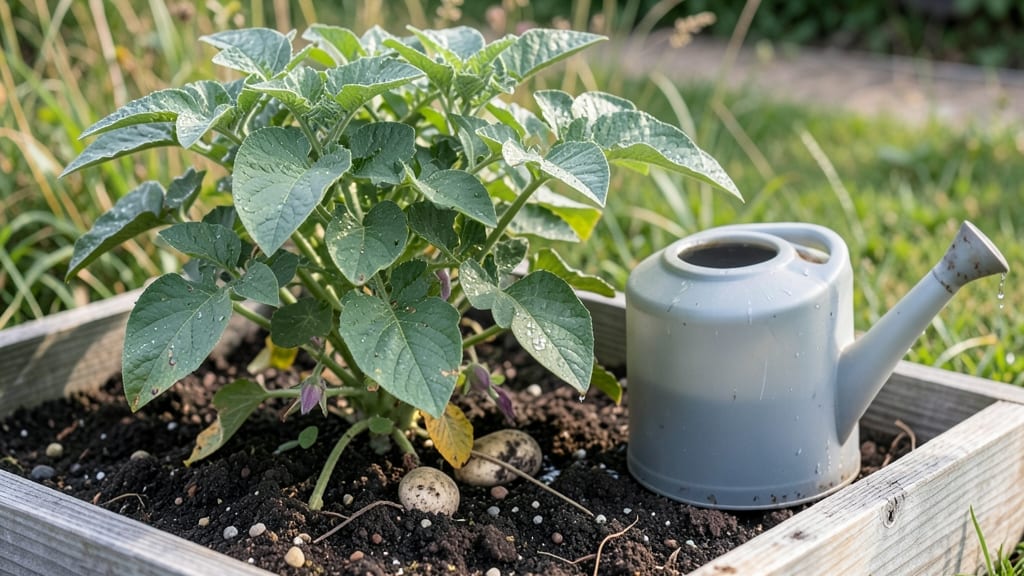
Overwatered potato plants can turn your harvest into a soggy mess, but I’ve revived plants from this exact problem using just three straightforward adjustments.
The first time we saw seedlings sprout from our own seeds, we also learned the hard way that too much water drowns roots faster than pests ever could. Now, I check soil moisture with my finger before watering—no guesswork, just facts.
Yellowing leaves, wilting stems, and that dreaded musty smell aren’t just signs—they’re warnings your potatoes are drowning. The fix starts with cutting back water immediately and improving drainage, whether you’re growing in raised beds or containers.
Even in backyard gardens, amending soil with compost helps roots breathe again. Within a week, you’ll see new green shoots pushing through, proving your plants aren’t beyond saving.
Long-term, the secret is consistency: water only when the top inch of soil feels dry, and always aim for well-draining soil. Mulch helps too—it keeps moisture steady without suffocating roots.
By midseason, your plants will bounce back with stronger stems and more tubers, rewarding your patience with a harvest that actually tastes homegrown.
For container growers, this works just as well—just swap heavy garden soil for a mix with perlite or sand. And yes, even if your plants look desperate now, they’ll recover. We’ve nursed back plants that looked ready for the compost pile, and with these steps, you will too.
Common Causes Of Soggy Tubers
When your potato plants look more like a swamp than a thriving garden, overwatering is usually the sneaky villain behind the scenes. But why does this happen? Let’s dig into the science—and the mistakes—behind soggy soil and sad spuds.
Potatoes are hardy, but they’re not aquatic plants. Overzealous watering—whether from automatic timers, rain, or well-meaning gardeners—disrupts the soil’s natural balance. Here’s how:
- Poor Drainage: Clay-heavy or compacted soil traps water like a sponge, suffocating roots. Without airflow, roots can’t absorb oxygen, leading to anaerobic conditions—a fancy term for "drowning."
- Frequent Light Waterings: Drizzling daily keeps the topsoil wet but doesn’t encourage deep root growth. Potatoes need 1–1.5 inches of water per week, delivered in deep soakings (not sips).
- Ignoring Weather: Watering on rainy days or after heavy dew doubles the moisture, turning soil into a breeding ground for fungal diseases like blight.
Pro Tip: 🌡️ Stick your finger 2 inches deep into the soil. If it’s damp, wait. If it’s bone-dry, water slowly until it drains from the bottom of the pot or bed.
Not all soil is created equal—and some is downright hostile to potatoes. If your garden soil is:
- Clay-Based: Holds water like a dam, cutting off oxygen to roots. Solution: Mix in compost or perlite to improve aeration.
- Sandy or Loamy Without Amendments: Drains too quickly, but if overwatered, it can still lead to nutrient leaching and weak roots.
- Lacking Organic Matter: Compacted soil repels water, creating waterlogged pockets where roots rot.
Fix It: 🔥 Before planting, amend soil with aged compost or coconut coir to balance moisture retention and drainage. Test your soil’s percolation rate—if water pools after 6 hours, you’ve got a drainage issue.
Potatoes have three critical phases, each with different water needs. Overwatering at the wrong time throws the whole cycle off:
| Stage | Watering Goal | Overwatering Risk |
|---|---|---|
| Sprouting (First 3 Weeks) | Keep soil consistently moist (not soggy). | Roots rot before tubers form. |
| Tuber Formation (Weeks 4–8) | Deep watering 1–2x per week (soil should dry slightly between sessions). | Excess moisture = scabby or hollow tubers. |
| Maturity (Last 2–3 Weeks) | Reduce water to dry slightly to toughen skins. | Overwatering = greening (toxic solanine) and poor storage. |
Key Takeaway: 🎯 Less is more as plants mature. If you’re watering on a set schedule, adjust for the season—summer heat? Water less often but deeper.
Next up: How to Spot Overwatered Potatoes Before It’s Too Late.
Quick fixes for soggy soil struggles
If your potato plants are drowning in their own moisture, don’t panic—revival is just a few steps away! Overwatering can stunt growth, invite pests, and even rot tubers, but with the right approach, you can turn things around fast.
Below, we’ve mapped out practical solutions based on the most common causes of overwatering, plus tips to keep your spuds thriving long-term.
Cause: Too much water + poor drainage = oxygen starvation for roots. Solution:
- 🌱 Stop Watering Immediately – Let the soil dry out for 2–3 days. Stick your finger 2 inches deep; if it’s damp, wait longer.
- 🏗️ Improve Drainage – Mix coarse sand or perlite into the soil around the base (avoid disturbing roots). For containers, add drainage holes if missing.
- ✂️ Prune Damaged Foliage – Snip yellow or mushy leaves to redirect energy to healthy growth. Sterilize scissors with rubbing alcohol first!
Prevention Tip: 💡 Water in the morning so excess moisture evaporates by evening. Use a moisture meter to avoid guesswork.
Cause: Waterlogged soil = rot or hollow hearts in potatoes. Solution:
- 👨🍳 Dig Up & Inspect – Gently unearth a few tubers to check for rot. If they’re firm but small, they’ll recover with better care.
- 🌡️ Adjust Watering Schedule – Potatoes need 1–1.5 inches of water per week (including rain). Use a drip system to deliver water slowly at the base.
- 🔪 Remove Affected Tubers – If rotten, compost them (away from the garden to prevent spread). Healthy tubers can replant in drier soil.
Prevention Tip: ✨ Hill soil around stems every 2 weeks to encourage deeper root growth and reduce surface moisture.
Cause: Overwatering creates a damp paradise for slugs, aphids, and blight. Solution:
- 🔪 Handpick Pests – Check under leaves at dawn for slugs or aphids. Drop them in soapy water.
- 🌿 Use Organic Barriers – Surround plants with diatomaceous earth or crushed eggshells to deter pests.
- 💦 Space Out Waterings – Instead of daily sprinkles, water deeply 2–3 times per week to discourage fungal growth.
Prevention Tip: 🎯 Rotate crops—never plant potatoes in the same spot two years in a row to break pest cycles.
Cause: Pots trap moisture, accelerating root rot. Solution:
- ⏰ Empty & Dry Containers – Remove plants, let soil air out for 24 hours, then repot with fresh, well-draining mix.
- 🌿 Choose Larger Pots – Upgrade to containers with at least 12-inch depth and multiple drainage holes.
- 💧 Use Self-Watering Tricks – Bury a terracotta pot (unglazed) near the plant—it’ll wick away excess moisture.
Prevention Tip: 🔥 Line pots with landscape fabric to prevent soil compaction while allowing drainage.
With these fixes, your potato plants should bounce back in 2–4 weeks. Monitor soil moisture closely, and soon you’ll be harvesting plump, disease-free tubers! For extra insurance, test your soil’s pH (aim for 5.0–6.5)—healthy soil drains better and fights rot naturally.
Frequently asked questions about overwatered potato plants
How can I tell if my potato plants are overwatered vs. underwatered?
Check the leaves first: yellowing or wilting with soft stems signals overwatering, while crispy edges and dry soil mean underwatering. Dig 2 inches deep—if the soil smells musty or feels soggy, you're overdoing it. For underwatered plants, soil will be bone-dry and pull away from pot edges.
Can I save my potato plants if the tubers are already rotting?
You can still recover the plant itself! Remove any rotted tubers and compost them away from your garden. The remaining healthy tubers will regrow if you improve drainage and reduce watering. Focus on saving the foliage—new tubers will form from the remaining roots if conditions improve.
What's the best soil mix to prevent overwatering in containers?
Use a blend of 60% potting soil, 30% perlite or coarse sand, and 10% compost. This combo improves drainage while retaining enough moisture. For containers, ensure they have drainage holes and consider adding a layer of gravel at the bottom to prevent water pooling.
Will overwatered potatoes still produce a harvest?
Yes, but the quality may suffer. Overwatered plants often yield smaller, scabby, or hollow tubers. To maximize harvest, stop watering immediately, improve drainage, and focus on saving the remaining healthy foliage. With proper care, you can still get a decent crop—just expect fewer potatoes than ideal conditions would produce.