Watering
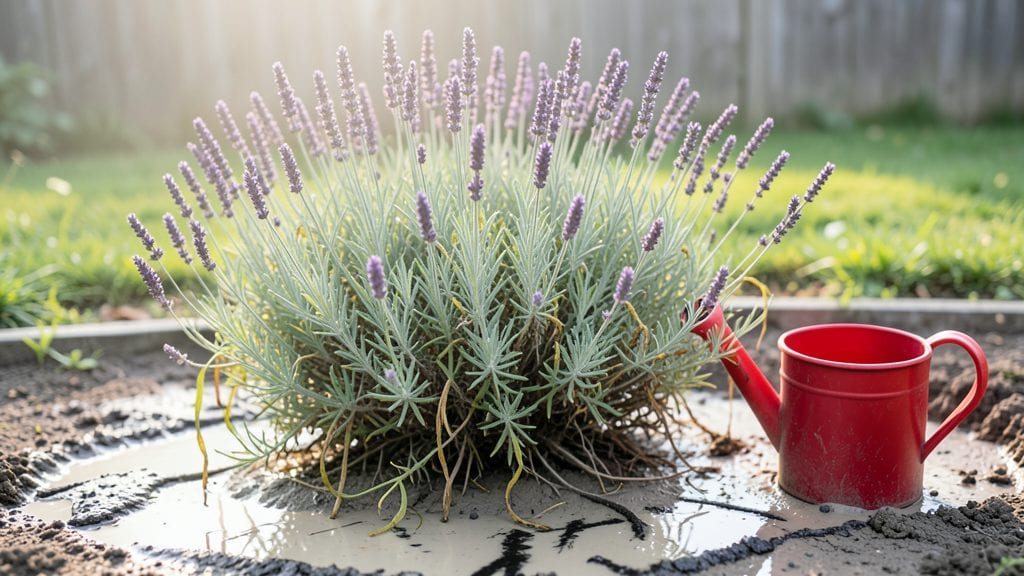
When your lavender plant looks more sad than silvery, overwatering is usually the culprit. ✨ I’ve rescued more than a few lavenders from soggy soil, and the key is acting fast—before those roots turn to mush.
The first sign? Yellowing leaves that feel squishy when you touch them, or stems that wilt despite your best efforts.
Lavender hates wet feet, so the fix starts with draining the excess. Pull the plant out, trim any blackened roots (they’re rotten), and replant in a pot with holes in the bottom—or a raised bed with fast-draining soil.
Mix in perlite or coarse sand to help water escape, and avoid compacted soil like the plague.
Once it’s back in dry soil, water only when the top inch feels bone-dry. Stick your finger in—if it’s damp, wait. Within 2-3 weeks, you’ll see new growth pushing through, and those signature lavender buds will return.
The best part? Your plant will remember this lesson and beg for less water next time.
This works for container lavenders, in-ground plants, or even those stubborn ones in terracotta pots that never dry out. The secret? Less water, more air—and a little patience while the roots recover. Trust me, your lavender will thank you with fragrance for years.
Root Causes Of Overwatered Lavender
Lavender thrives in dry, well-drained soils, but when it gets too much water, its delicate roots struggle to breathe. Understanding the why behind overwatering helps you fix the problem—and prevent it from happening again. Here’s a breakdown of the most common culprits, backed by science and actionable insights.
Lavender (Lavandula spp.) is a drought-tolerant Mediterranean native, meaning it evolved in rocky, sandy soils where water drains quickly. When planted in heavy clay, compacted, or poorly amended garden soil, excess water pools around the roots instead of seeping away.
This creates anaerobic conditions—a root’s worst nightmare.
- Why it happens:
- Clay soil holds water like a sponge, suffocating roots with oxygen deprivation.
- Lack of organic matter (like perlite, sand, or grit) disrupts the soil’s porosity, slowing drainage.
- Over-fertilizing (especially with nitrogen-rich amendments) encourages lush, water-hungry growth that demands more moisture than lavender can handle.
- Actionable fix: - Amend the soil with a 50/50 mix of native soil and coarse sand, perlite, or pumice to improve aeration. - Raise plant beds slightly to encourage faster runoff during watering. - Test your soil’s drainage by digging a 6-inch hole, filling it with water, and timing how long it takes to drain.
If it’s slower than 30 minutes, your soil needs help.
Lavender’s roots are shallow and fibrous, designed to absorb moisture quickly when it’s available—but they hate sitting in wetness. Many gardeners assume "less water" means occasional deep soaks, but overwatering in large doses can be just as damaging as frequent light watering.
- Why it happens:
- Overzealous deep watering (e.g., 1–2 gallons at a time) saturates the root zone for days, delaying evaporation.
- Lack of evaporation windows—if the soil doesn’t dry between waterings, fungal pathogens like Phytophthora thrive.
- Container-bound roots in pots without drainage holes trap excess water, leading to root rot within 48–72 hours.
- Actionable fix:
- Water only when the top 1–2 inches of soil are bone-dry (stick your finger in—if it’s damp, wait).
- Use the "drip test"—if water pools on the soil surface or drains slowly, you’re overdoing it.
- For containers, ensure pots have drainage holes and use terracotta or fabric pots (which dry faster than plastic).
Lavender’s natural habitat is sun-drenched and arid, but modern gardens often create unintended "greenhouse" conditions that trap humidity around the plant. Without proper airflow, excess moisture lingers, inviting root rot and fungal diseases.
- Why it happens:
- Shady or sheltered spots (e.g., under trees, near fences, or in low-lying areas) reduce evaporation, keeping soil damp longer.
- High humidity (common in coastal climates or after rain) slows soil drying, mimicking lavender’s worst enemy: persistent wetness.
- Mulching too heavily (especially with organic mulch like wood chips) can smother lavender’s shallow roots and retain moisture.
- Actionable fix:
- Plant lavender in full sun (6+ hours daily) and avoid shaded microclimates.
- Use gravel or pebbles (not thick mulch) around the base to reflect sunlight and improve airflow.
- Space plants 18–24 inches apart to reduce humidity buildup between foliage.
Lavender’s water requirements shift dramatically with the seasons. What works in summer (minimal water) can backfire in spring or fall when cooler temps slow evaporation.
- Why it happens:
- Spring awakening—new growth demands more water, but roots aren’t yet established to handle deep watering.
- Fall transition—cooler air reduces evaporation, so the same watering schedule as summer leads to soggy soil.
- Winter dormancy—some regions (like Zone 5+) need minimal water in winter, while others (Zones 7–9) may still require occasional drinks to prevent desiccation.
- Actionable fix:
- Water lightly in spring (just enough to keep soil from drying out completely) as roots grow.
- Reduce watering in fall—aim for half the summer volume as temps drop.
- Check soil moisture weekly in winter, watering only if the top inch is dry (unless in frost-prone zones).
Stress from pruning or moving lavender disrupts its root system, making it more vulnerable to overwatering as it recovers. Many gardeners unknowingly drown stressed plants in an attempt to "help them heal."
- Why it happens:
- Post-pruning shock—cutting back woody stems reduces the plant’s ability to regulate moisture loss.
- Transplant trauma—newly moved lavender has broken root tips, which can’t absorb water efficiently, leading to buildup.
- Well-meaning overcompensation—watering heavily after pruning can wash away beneficial microbes in the rhizosphere (the soil zone around roots).
- Actionable fix:
- Wait 3–5 days before watering after pruning to let cuts callus over.
- Water lightly after transplanting (just enough to settle soil), then wait until the soil is dry before the next watering.
- Apply a fungicide (like copper-based spray) post-transplant to prevent rot while roots recover.
Revive Your Drowning Lavender
Lavender thrives on neglect more than affection—especially when it comes to water. If your plant is suffering from overwatering, don’t panic! With the right steps, you can nurse it back to health and prevent future soggy soil disasters.
Below, we’ve mapped out practical fixes for common overwatering causes, along with prevention tips to keep your lavender happy and hydrated just enough.
Cause: Overwatering leads to waterlogged roots, cutting off oxygen and inviting rot.
Fix:
- 🔥 Pause Watering Immediately Let the soil dry out completely before watering again. Stick your finger 2 inches deep—if it’s damp, wait.
- 👨🍳 Improve Drainage Fast
- Repot if needed: If the soil stays soggy, move your lavender to a pot with drainage holes (or add a layer of pebbles at the bottom).
- Amend the soil: Mix in perlite, sand, or gravel (20-30%) to boost airflow.
- ⏰ Gradual Rehydration Once roots are stable, water only when the top 1-2 inches are bone-dry. Lavender prefers dry spells—think Mediterranean droughts, not rainforests!
Cause: Fungal infections (like root rot) thrive in wet conditions, turning leaves yellow and stems mushy.
Fix:
- 🔪 Trim the Damage Snip off yellow, brown, or mushy stems with clean scissors. Healthy stems should be firm and green.
- 🌡️ Fungal Treatment
- Hydrogen peroxide spray (3%): Dab on affected areas to kill fungus.
- Neem oil solution: Mix 1 tbsp neem oil + 1 tsp mild soap in 1 quart water. Spray weekly for 2 weeks.
- 🌿 Boost Recovery
- Move to bright, indirect light (lavender loves sun but needs a break to heal).
- Water lightly—only when the soil is completely dry.
Cause: Heavy, clay soil or poor drainage traps water, suffocating roots.
Fix:
- 🥘 Loosen the Soil Gently scratch the top 2 inches of soil with a fork to break up compaction. Add coarse sand or bark chips to improve texture.
- ✨ Mulch Right Use gravel or straw (not organic mulch, which retains moisture). Keep mulch 1-2 inches away from stems to prevent rot.
- 📊 Monitor Soil pH Lavender prefers neutral to slightly alkaline soil (6.0–7.5). Test your soil—amend with lime if too acidic.
- 🌡️ Water in the Morning: Lets excess moisture evaporate before night.
- 🎯 Use the "Finger Test": Never water on a schedule—check soil moisture first.
- 🔥 Choose the Right Pot: Terracotta (unglazed) wicks away moisture better than plastic.
- ✨ Elevate Pots: Place pots on feet or pebbles to prevent saucer water from seeping back in.
- Don’t fertilize a soggy plant—it burns roots faster.
- Avoid bottom-watering (water in saucers can drown roots).
- Skip the misting—lavender hates humidity!
With these fixes, your lavender should bounce back in 2–4 weeks. The key? Less water, more airflow, and patience. Once revived, your plant will reward you with fragrant blooms and a lesson in the power of "almost drought-proof" gardening! 🌿✨
Frequently asked questions
How do I know if my lavender is overwatered?
Check for yellowing leaves that feel mushy when touched, or stems that wilt despite soil moisture. Root rot is confirmed by pulling the plant—if roots smell foul or turn black, they’re drowning. Healthy lavender should have crisp, gray-green foliage and dry soil between waterings.
Can I save lavender with root rot?
Yes! Trim away blackened roots with clean scissors, then replant in a fast-draining mix (like 50% sand/perlite). Water only when the top 1-2 inches are bone-dry for 2-3 weeks to let roots recover. Avoid fertilizing until new growth appears—roots need time to heal.
Why does my lavender need so little water?
Lavender evolved in Mediterranean climates with rocky, sandy soils that dry quickly. Its shallow roots absorb moisture fast but hate sitting wet. Think of it like a cactus—it stores water efficiently but needs dry spells to thrive. Overwatering mimics a swamp, not its natural habitat!
What’s the best pot for lavender to prevent overwatering?
Use terracotta or fabric pots with multiple drainage holes—they dry faster than plastic. Elevate pots on feet or pebbles to prevent saucer water from seeping back in. For in-ground plants, raise beds slightly or mix in gravel to improve drainage.
How often should I water lavender in summer vs. winter?
In summer, water every 10-14 days (or when soil is dry 2 inches deep). In winter, cut back to monthly or less—cooler temps slow evaporation. Pro tip: Group lavenders together to create a microclimate that reduces water loss and mimics their natural dry conditions.