
Watering
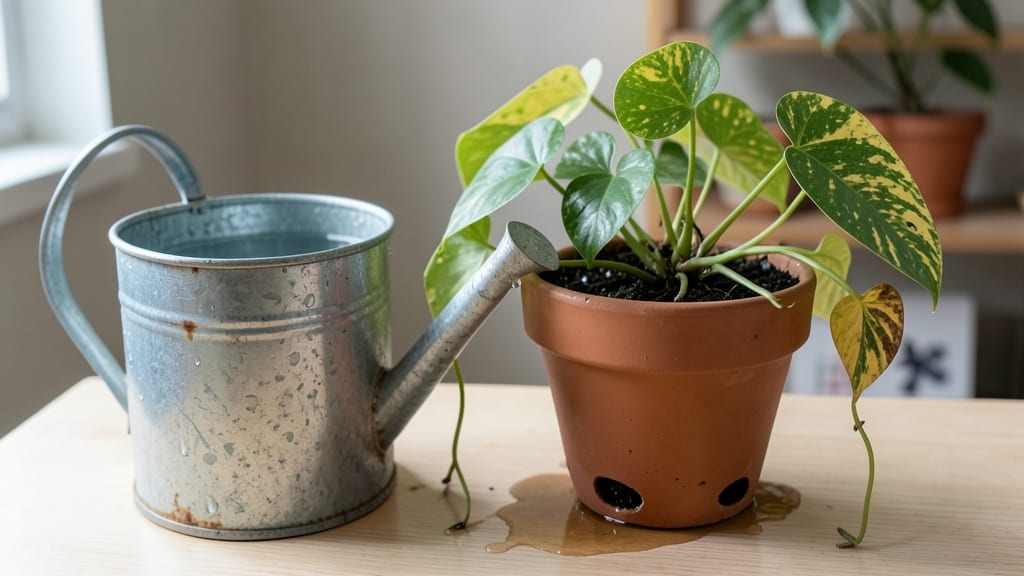
An overwatered indoor plant doesn’t have to be a death sentence—my fern nearly died from soggy soil last winter, but these steps brought it back to life. 🌱 The telltale signs are droopy leaves, yellowing foliage, and soil that smells sour, not earthy.
Most people panic when they see these symptoms, but the fix is simpler than you’d think.
First, stop watering immediately and let the soil dry out completely. Then, gently remove the plant from its pot and check the roots—if they’re black and mushy, trim them back to healthy white or light brown sections.
The key is improving drainage: use a pot with holes and add a layer of pebbles or perlite at the bottom to prevent future soggy roots.
Within a week, you’ll see new growth as the plant recovers its balance. Ferns bounce back fastest, but even succulents can revive if you act quickly. The trick is monitoring soil moisture with your finger before watering—if the top inch feels damp, wait another day.
This method works for almost any houseplant struggling from too much love.
For long-term success, adjust your watering schedule based on your home’s humidity and light levels. A south-facing window means more frequent watering than a north-facing one, and winter air is drier than summer.
Keep a small notebook to track what works best for each plant—it’s the simplest way to avoid overwatering again.
Root Causes Of Overwatering
Overwatering your indoor plants might seem like a harmless mistake, but it’s actually one of the most common ways to kill them—even with the best intentions. 🌱💦 When roots sit in soggy soil for too long, they struggle to breathe, leading to a cascade of problems.
Let’s break down the real reasons this happens, so you can avoid repeating the same mistakes.
Plants need water to survive, but too much disrupts their natural balance. When you water on a strict schedule—like every few days—without checking soil moisture, you risk drowning the roots. Here’s what happens:
- Oxygen deprivation: Soil pores fill with water, pushing out the air roots need to respire. Without oxygen, roots suffocate and start to rot.
- Nutrient lockout: Excess water washes away essential nutrients (like nitrogen, phosphorus, and potassium) before roots can absorb them.
- Fungal growth: Damp soil becomes a breeding ground for pathogens like Pythium or Phytophthora, which attack weakened roots.
Actionable fix: Always check the top 1–2 inches of soil with your finger. If it’s dry, water; if it’s still moist, wait. Most indoor plants thrive on less frequent, deeper watering.
Not all pots are created equal—and some are downright deadly for plants. If your container lacks drainage holes or uses heavy, compacted soil, water has nowhere to go but up (into the roots).
- Clay or ceramic pots without holes: These materials can trap moisture against the roots, especially if the plant is in a saucer without proper airflow.
- Sealed plastic containers: Common in propagation setups, these create a greenhouse effect, accelerating rot.
- Compacted or clay-heavy soil: These soils repel water instead of absorbing it, leading to surface pooling.
Actionable fix: Upgrade to pots with drainage holes and use a well-aerated potting mix (like a blend of peat, perlite, and coconut coir). If repotting isn’t an option, water less often and let excess drain completely.
Your home’s environment plays a huge role in how quickly soil dries out. High humidity or low temperatures can slow evaporation, making roots stay soggy for days—even if you’re not adding extra water.
- Humid climates or bathrooms: Moist air reduces the soil’s ability to dry between waterings. A fern in a bathroom might need watering once a week, while the same plant in a dry living room could handle biweekly watering.
- Cold drafts or AC units: Cool air near windows or vents can create a temperature gradient, causing water to evaporate unevenly and leaving pockets of wet soil.
- Overcrowded plants: When plants compete for space, their roots tangle and struggle to access oxygen, making them more susceptible to rot.
Actionable fix: Adjust your watering schedule based on your home’s humidity (use a hygrometer if needed). Group plants with similar needs together and avoid placing them near drafts or heating vents.
Not all plants have the same thirst levels—and forcing a tropical fern to survive on a "once-a-week" watering schedule is a recipe for disaster. Some species are naturally prone to overwatering if you don’t match their care needs.
- Tropical plants (e.g., Calatheas, Philodendrons): These love humidity but hate soggy roots. Their large leaves transpire quickly, but their shallow root systems dry out faster than you’d expect.
- Succulents and cacti: These store water in their leaves/stems, so they need very infrequent watering. Even a "light misting" can trigger rot.
- Bulbous plants (e.g., Peace Lilies, Alocasias): Their thick rhizomes store water, but they still need well-draining soil to prevent bacterial growth.
Actionable fix: Research your plant’s native habitat and mimic its conditions. For example, desert plants need gritty, fast-draining soil, while jungle plants thrive in consistently moist (but not waterlogged) environments.
Pro tip: 💡 If you’re unsure whether your plant is overwatered, gently tug on the stems. If they pull away from the soil easily, the roots are rotting—and it’s time to act fast!
Fix Your Plant’s Water Woes
Now that you know why your indoor plant is struggling from too much water, let’s turn things around with practical, step-by-step fixes tailored to the root cause.
Whether your plant is sitting in soggy soil, suffering from root rot, or just looking sad and droopy, these solutions will help it bounce back—without losing it for good.
If your plant’s soil is permanently soggy, it’s time to cut off the excess water and give its roots a breather.
🔥 Fix: The Drainage Rescue
- Skip the watering for at least 3–5 days (yes, really—let the soil dry out).
- Check moisture levels by sticking your finger 1–2 inches deep into the soil.
If it’s still damp, wait longer. 3. Repot if needed—if the soil is compacted or waterlogged, transfer your plant to a well-draining mix (see below for DIY tips).
💡 Pro Tip: Use a moisture meter (they’re cheap!) to avoid guesswork. If it reads "wet," hold off on watering.
If your plant has mushy stems, yellow leaves, or a foul smell, root rot may be setting in. Act fast—this is an emergency!
👨🍳 Fix: Root Rot Recovery
- Remove the plant gently from its pot and rinse the roots with water to wash away excess soil.
- Trim the bad roots—use sterilized scissors to cut away any black, mushy, or smelly roots (healthy roots are firm and white).
- Repot in fresh, dry soil—choose a lightweight, fast-draining mix (see recipe below).
- Water lightly only when the top 1–2 inches are dry, and avoid bottom-watering (which traps moisture).
🌡️ Pro Tip: After repotting, place the plant in bright, indirect light and skip fertilizing for 2–4 weeks—its roots need time to heal.
DIY Fast-Draining Soil Mix (For Waterlogged Plants) Mix these in equal parts:
- Cactus/succulent soil (or regular potting mix)
- Perlite or pumice (for aeration)
- Orchid bark or coconut coir (for chunkiness)
Now that your plant is on the mend, change how you water it to keep it thriving.
⏰ Fix: The Smart Watering Schedule
- Water only when the top 1–2 inches of soil are dry (use your finger as a guide).
- Water deeply but less often—aim for soaked soil that drains completely (no puddles!).
- Use the right pot—ensure it has drainage holes (if not, drill them or repot).
- Bottom-watering? Only do it occasionally—top-watering is usually safer for most plants.
🎯 Pro Tip: Group plants with similar needs together to streamline care. Overwatering often happens when we treat all plants the same!
If your plant is beyond saving (e.g., completely black stems, no new growth after weeks), it’s time to propagate and start fresh.
🌿 Fix: Propagate & Revive
- Take healthy cuttings from stems/leaves (if applicable—e.g., pothos, snake plants).
- Root in water or dry soil (follow plant-specific guides).
- Keep the parent plant in a dry, bright spot—sometimes it surprises you and regrows!
💡 Pro Tip: Even if the original plant dies, propagation lets you grow a new one from its "babies."
✅ Pot with drainage holes (non-negotiable!) ✅ Well-draining soil mix (never use garden soil indoors) ✅ Watering routine (stick to a schedule, not emotions) ✅ Check roots occasionally (if you’re unsure, dig in gently) ✅ Adjust for seasons (plants need less water in winter)
Final Thought: Overwatering is one of the easiest mistakes to fix—just drain, trim, and adjust. With these steps, your plant will be back to its happy, leafy self in no time! 🌿✨
Frequently asked questions
How do I know if my plant is overwatered instead of underwatered?
Check for yellowing leaves (especially lower ones), mushy stems, or a sour smell from the soil—these are red flags. Unlike underwatered plants (which have crispy, dry edges), overwatered ones often feel heavy in their pots and may wilt despite wet soil. Gently tug on the stems: if they pull away easily, the roots are rotting.
Can I save a plant with root rot?
Yes! First, remove the plant from its pot and rinse the roots under cool water to wash away excess soil. Trim away any black, mushy roots with sterilized scissors, then repot in a fast-draining mix (like cactus soil + perlite). Water lightly only when the top 1–2 inches of soil are dry, and avoid fertilizing for 2–4 weeks to let roots heal.
Why does my plant need drainage holes if I water it sparingly?
Even with light watering, no drainage holes trap excess moisture against the roots, suffocating them over time. Pots without holes also create a greenhouse effect, slowing evaporation and keeping soil soggy. If your pot lacks holes, drill them or repot—it’s the simplest way to prevent future overwatering issues.
How often should I water my indoor plants?
There’s no one-size-fits-all answer, but most indoor plants thrive when watered every 7–14 days, depending on light and humidity. Always check the top 1–2 inches of soil first—if it’s dry, water until it drains from the bottom. Succulents need water every 3–4 weeks, while tropical plants may need it weekly in humid conditions.
What’s the fastest way to dry out soggy soil?
Move the plant to a bright, dry spot (like a sunny windowsill) and avoid watering for 5–7 days. If the pot is small, place it on a wire rack to allow airflow underneath. For severe cases, gently sift out the top layer of soil and replace it with dry, fast-draining mix to speed up drying.