Watering
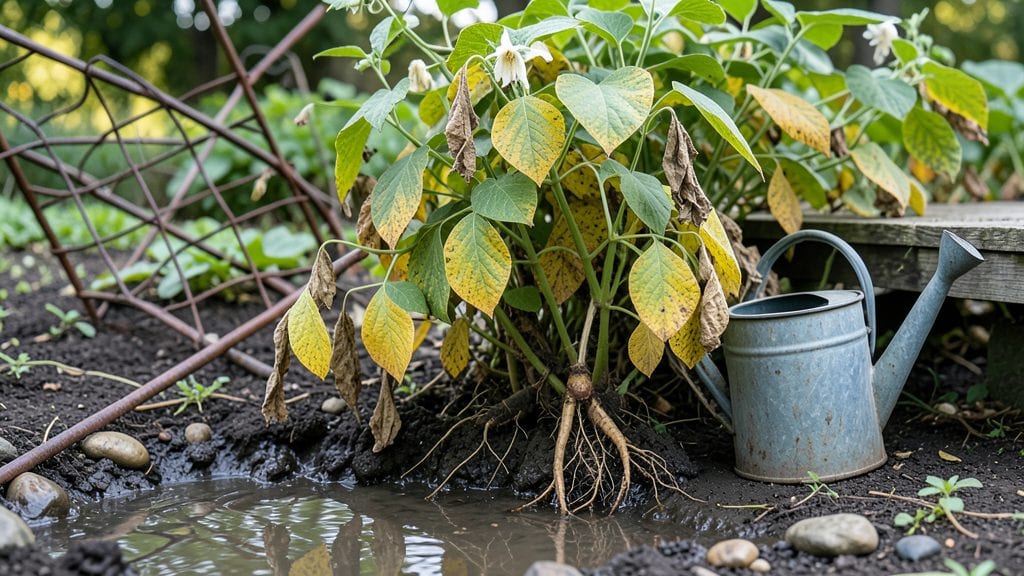
Your bean plants might look sad, but overwatered bean plants aren’t always a death sentence—root rot rescue is simpler than you think. 🌱 I’ve pulled wilted, yellowing plants back from the brink using just three straightforward fixes that work even for beginners.
The key? Stopping the rot before it spreads, and that starts with cutting back on water.
Most gardeners overdo it because beans need consistent moisture—but soggy soil suffocates roots faster than you’d expect. Yellow leaves, mushy stems, and a foul smell are your warning signs.
The good news? With proper drainage and adjusted watering, your plants can bounce back in just a few weeks. I’ve saved entire harvests this way, and you can too.
By the time you’re done, your beans will be standing tall again with fresh green foliage. The secret lies in well-draining soil, strategic watering, and a little patience. Let’s turn those limp plants into thriving vines before the next harvest season—no fancy tools or complicated steps required.
This method works for both bush and pole beans, whether you’re growing in containers or garden beds. The same principles apply to other moisture-sensitive plants too. Here’s how to bring your beans back to life without losing your sanity—or your harvest.
Why it happens
Overwatering may seem like a harmless mistake—after all, plants need water to thrive, right? But when bean plants drink too much, their roots suffocate, leading to a cascade of problems.
Let’s break down the three key culprits behind soggy soil and struggling beans, so you can spot the warning signs before it’s too late.
🌧️ Poor Drainage Traps Moisture
Beans hate soggy feet, and compacted or clay-heavy soil acts like a waterlogged sponge, trapping excess moisture around roots.
Without proper drainage, oxygen can’t reach the root zone, forcing roots to switch to anaerobic respiration—a desperate, inefficient process that weakens plants and invites Pythium and Phytophthora fungi (the root rot villains).
Why it’s deadly:
- 🔬 Root cells drown in water, starving for oxygen.
- 🍄 Fungal spores thrive in saturated conditions, spreading like wildfire.
- 🌱 Nutrient uptake halts—even if you fertilize, roots can’t absorb anything.
Actionable fix: Test your soil’s drainage by filling a container with potting mix, adding water, and timing how long it takes to drain. If it’s slower than 30 minutes, amend with perlite, sand, or coconut coir to improve airflow.
💦 Overzealous Watering Schedules
Beans need consistent moisture, but “consistent” doesn’t mean “daily.” When you water on a rigid schedule—especially if your local climate is humid—you risk over-saturating the soil before it has a chance to dry.
This is especially true for container-grown beans, which dry out faster but can also rot if water pools at the bottom.
Red flags:
- 🌱 Yellowing leaves that stay limp even after watering.
- 🍄 Mushy, brown roots when gently pulled from the soil.
- 🕳️ White, cottony fungal growth at the soil line.
Science behind it: Bean roots thrive in 60–70% soil moisture. Above 80%, roots suffocate, and ethylene gas (a plant stress hormone) floods the system, accelerating rot.
Actionable fix: Switch to the finger test: Stick your index finger 1–2 inches into the soil. Water only when it feels dry. For containers, use self-watering pots with drainage holes and a moisture meter for precision.
🌿 Container Boundaries Limit Root Escape
Beans in pots are at higher risk because their roots have nowhere to go. Unlike in-ground plants, container-grown beans can’t spread out to find drier soil. When you water, the excess has no outlet, leading to a permanent wet zone at the bottom.
This is a breeding ground for root rot pathogens like Fusarium.
Why containers lose the battle:
- 🏺 Small pots dry out fast but also retain moisture like a sponge.
- 🚫 No subsoil to absorb excess water—it just pools.
- 🌡️ Heat traps moisture in plastic pots, speeding up rot.
Actionable fix:
- ✅ Use terracotta or fabric pots (breathable materials).
- ✅ Elevate pots on feet or saucers with drainage holes.
- ✅ Repot into larger containers (minimum 12 inches deep) for bush beans.
Revive Your Bean Plants Now
Overwatering can turn your thriving bean plants into a soggy mess, but don’t panic—there’s still hope! The key is acting fast and addressing the root of the problem (literally).
Below, we’ve broken down the most common causes of overwatering and paired them with practical, step-by-step fixes to get your plants back on track. Plus, we’ll share pro tips to keep them healthy long-term.
Cause: Too much water disrupts nutrient uptake, leading to yellowing leaves and weak stems.
How to Fix It:
- 🔥 Stop Watering Immediately Let the soil dry out completely—this prevents further root suffocation. Stick your finger 1-2 inches into the soil; if it’s damp, wait another day.
- 🍳 Improve Drainage If your pots lack drainage holes, repot your beans into containers with holes or add a layer of perlite, gravel, or coarse sand to the bottom 20% of the pot.
- 👨🍳 Trim the Damage Snip off yellow or mushy leaves with clean scissors to redirect energy to healthy growth. Focus on lower leaves first.
- 🥘 Boost Nutrients Once the soil is dry, fertilize with a balanced, water-soluble fertilizer (like 10-10-10) to replenish lost nutrients. Follow package instructions—half-strength is often best for recovery.
💡 Prevention Tip: Water only when the top 1-2 inches of soil are dry. For beans, this usually means 2-3 times per week, depending on heat and humidity. Use your finger as a gauge—don’t guess!
Cause: Soggy soil creates the perfect breeding ground for fungal infections like root rot, which can kill plants in days.
How to Fix It:
- ⏰ Act Fast—Remove Affected Plants If roots smell foul or look black/mushy, pull the plant out and inspect. If root rot is severe, compost the plant (not the soil) to prevent spreading.
- 🔪 Prune Healthy Roots For salvageable plants, rinse the roots under cool water to remove excess soil, then trim healthy white roots (discard black/mushy ones). Let them air-dry for 30 minutes.
- 🌡️ Repot in Fresh, Sterile Soil Use a well-draining potting mix (add perlite or vermiculite) and a clean pot. Avoid garden soil—it may harbor pathogens.
- ✨ Fungicide Treatment (Optional) Spray the roots and soil with a copper-based fungicide or hydrogen peroxide solution (1 part 3% H₂O₂ to 4 parts water) to kill fungi.
💡 Prevention Tip:
- Space plants properly (3-4 inches apart) for airflow.
- Water at the base, not overhead, to keep foliage dry.
- Avoid watering at night—moisture lingers longer in cooler temps.
Cause: Overzealous watering (or poor soil) leads to chronic sogginess.
How to Fix It:
- 📊 Test Your Soil Grab a handful—if it clumps tightly when squeezed, it’s too wet. Ideal soil should crumble slightly when dry.
- 🎯 Water Deeply but Less Often Instead of daily light watering, soak the soil until water drains from the bottom (10-15 minutes), then wait until the top 2 inches are dry before repeating.
- 🌧️ Use the Right Tools
- Self-watering pots (for consistency).
- Drip irrigation (better than overhead sprinklers).
- Moisture meters (for tech-savvy gardeners).
💡 Prevention Tip:
- Group plants with similar water needs—beans prefer moderate moisture, not soggy conditions.
- Mulch (with straw or shredded leaves) to retain even moisture without over-saturating.
Final Thought: Recovery takes time, so be patient and monitor your plants closely. Within 2-4 weeks, you should see new green growth if the roots are still viable. If not, start fresh—sometimes a new plant is the best solution!
🚀 Pro Tip: Keep a watering journal to track when and how much you water. It’s a game-changer for long-term plant health!
Frequently asked questions about bean plant watering
Why do my bean plants turn yellow when I water them regularly?
Yellow leaves often signal overwatering because bean roots need oxygen to thrive. When soil stays too wet, roots suffocate and can't absorb nutrients properly. Check for soggy soil or mushy stems—these are key signs. Let the top 1-2 inches dry between waterings to prevent this.
Can I save my beans if the roots smell bad and look black?
Bad-smelling, black roots mean advanced root rot—likely too late to save that plant. However, you can prune healthy roots, repot in fresh, sterile soil, and treat with hydrogen peroxide (1:4 ratio) to prevent spread. For severe cases, start fresh with new plants in well-draining pots.
How often should I water bean plants in containers?
Container beans need watering when the top 1 inch of soil feels dry—typically every 2-3 days in hot weather. Use pots with drainage holes and avoid letting water pool at the bottom. A moisture meter helps track soil dryness accurately.
What’s the best soil mix to prevent overwatering?
Use a well-draining potting mix with 30% perlite or vermiculite to improve aeration. For garden beds, amend clay soil with compost and coarse sand. Test drainage by filling a container with your mix—water should drain completely within 30 minutes.
Will mulch help or hurt my overwatered beans?
Mulch helps retain moisture evenly but can worsen overwatering if applied too thickly. Use 1-2 inches of straw or shredded leaves, keeping it 2 inches away from stems to prevent rot. Always check soil moisture before watering after mulching.