Diseases
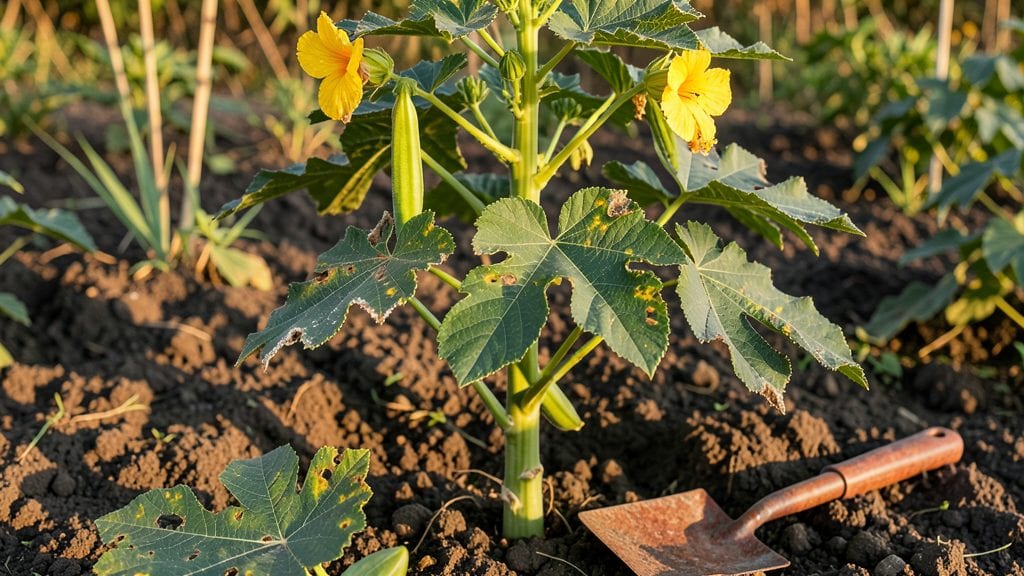
Okra plant diseases can turn your thriving bushes into sad, stunted shadows—until you know the right moves. 🌿 I’ve battled powdery mildew and bacterial blight in my own garden, and the difference between a failed crop and a bumper harvest often comes down to spotting symptoms early and acting fast.
These stubborn pests don’t care about your harvest plans, but with the right tools, you can outsmart them.
The worst offenders—like powdery mildew’s white dust or bacterial blight’s yellowing leaves—start small but spread fast if ignored. Most gardeners I know (including me) first notice problems when plants stop producing pods, or worse, wilt overnight.
The good news? Organic sprays, proper spacing, and a few preventative tricks keep okra healthy all season. No fancy equipment needed—just sharp eyes and quick action.
By the end of this, you’ll recognize the early warning signs and have a battle plan for each disease. Your okra will grow tall, pod-heavy, and resistant to the usual fungal attacks.
The key is catching issues before they cripple your plants—because once those spots appear, it’s already too late to play catch-up.
Works for backyard gardens, container growers, and even urban farms. Let’s get your okra back on track before the next heatwave hits.
Root Causes Behind Okra Troubles
Okra plants, like any other crop, face a variety of diseases that can stunt growth, reduce yields, or even kill the plant entirely. Understanding why these issues arise is the first step in preventing and treating them effectively.
Below, we break down the primary culprits—from environmental factors to microbial invaders—and explain the science behind their destructive behavior.
Okra thrives in warm, humid conditions, but when environmental factors push it beyond its comfort zone, its natural resistance weakens. Here’s how:
- Excess Moisture & Poor Drainage Okra plants hate soggy roots. Overwatering or heavy clay soil traps moisture, creating the perfect breeding ground for fungal pathogens like Phytophthora or Fusarium. These fungi thrive in waterlogged conditions, entering the plant through root wounds or natural openings (e.g., stomata).
Once inside, they block nutrient uptake, leading to wilting, yellowing leaves (chlorosis), and root rot.
- Why it happens: Fungal spores in the soil germinate when soil moisture exceeds 50-60% capacity. Poor drainage also reduces oxygen levels, suffocating roots and making them more susceptible to infections.
- Extreme Temperature Swings Okra prefers 75–90°F (24–32°C). Sudden drops below 50°F (10°C) or heatwaves above 100°F (38°C) stress the plant, weakening its cuticle (the waxy outer layer) and cell membranes. This makes it easier for bacteria and fungi to invade.
- Example: Bacterial blight (Xanthomonas campestris) spreads rapidly in warm, humid nights followed by dry days—ideal conditions for bacterial ooze to form on leaves.
- Nutrient Imbalances A lack of potassium (K) or calcium (Ca) makes okra more vulnerable to diseases. Potassium strengthens cell walls, while calcium helps regulate cell permeability. Without these, pathogens exploit weak spots.
- Sign: Edge necrosis (brown, dead leaf margins) often signals calcium deficiency, which also reduces resistance to powdery mildew.
Not all threats come from the environment—many are stealthy pathogens that evolve to exploit okra’s weaknesses. Here’s how they strike:
- Fungal Pathogens: The Silent Saboteurs Fungi like powdery mildew (Erysiphe cichoracearum) and target spot (Corynespora cassiicola) don’t just appear—they wait for the right moment.
Their spores lie dormant in soil or plant debris until triggered by: - High humidity (80%+) + warm nights (75–85°F) → Powdery mildew spores germinate and spread via wind. - Leaf wetness for 12+ hours → Target spot spores infect through stomata, causing dark, concentric lesions.
- Key fact: Fungi produce enzymes (e.g., cellulases, pectinases) that break down plant cell walls, creating entry points.
- Bacterial Blights: The Fast Spreaders Bacteria like Pseudomonas syringae (cause of bacterial leaf spot) thrive in warm, wet conditions and spread via:
- Rain splashes or overhead irrigation (which contaminates leaves).
- Insects (e.g., aphids) that carry bacteria from plant to plant.
- Wounded tissue (e.g., from pruning or hail damage).
- How they attack: Bacteria inject toxins that disrupt okra’s photosynthesis, leading to water-soaked lesions that turn brown and crispy.
- Viral Hitchhikers: The Unseen Thieves Viruses like Okra mosaic virus don’t act alone—they rely on insect vectors (e.g., aphids) to jump between plants. Once inside, they hijack the plant’s ribosomes (protein factories), forcing it to produce viral copies instead of nutrients.
- Why it’s sneaky: Infected plants show mild symptoms (e.g., yellowing, stunted growth) until the virus spreads systemically—by then, it’s often too late for treatment.
Sometimes, the biggest threat isn’t nature—it’s gardener errors. These common practices create perfect conditions for diseases:
- Overcrowded Plants Okra needs 12–18 inches of spacing to allow airflow. When plants grow too close:
- Humidity builds up between leaves, trapping moisture and encouraging fungi.
- Debris (fallen leaves, spent pods) harbors spores, giving pathogens a reservoir to reinfect.
- Ignoring Sanitation Reusing contaminated soil or tools spreads pathogens. For example:
- Fusarium wilt spores can survive in soil for years.
- Pruners used on infected plants may transfer bacteria to healthy ones.
- Planting Susceptible Varieties Some okra cultivars (e.g., ‘Clemson Spineless’) are more resistant to diseases, while others (e.g., ‘Emerald’) are prone to powdery mildew. Choosing the wrong variety in a high-risk climate sets the plant up for failure.
The soil isn’t just dirt—it’s a living ecosystem where beneficial and harmful microbes compete. Okra diseases often stem from imbalances here:
- Suppressive vs. Conducive Soil Healthy soil has mycorrhizal fungi and beneficial bacteria that outcompete pathogens. But when soil is:
- Too acidic (pH < 6.0) → Fungi like Phytophthora thrive.
- Compacted or depleted of organic matter → Roots weaken, making them easy targets.
- Past Crop History Planting okra (or related crops like sweet potatoes) in the same spot year after year exhausts soil defenses. Rotating crops breaks the pathogen cycle, but if you skip this, diseases like southern blight (Sclerotium rolfsii) can persist.
- Weak Beneficial Microbes Trichoderma and Bacillus subtilis are natural predators of plant diseases. If these are missing (due to chemical fertilizers or poor composting), pathogens take over.
Catch diseases early by watching for these red flags:
- White, powdery patches → Powdery mildew.
- Yellow, V-shaped lesions → Target spot.
- Oily, water-soaked spots → Bacterial blight.
- Wilting despite moist soil → Fusarium or root rot.
Act fast: Isolate infected plants, adjust care practices, and treat with copper fungicides (for bacteria) or neem oil (for fungi) before the problem spreads.
Practical fixes for okra plant troubles
Okra plants may face a variety of fungal, bacterial, and environmental challenges, but with the right approach, you can restore their health and boost your harvest. Below are targeted solutions for the most common issues, paired with preventive tips to keep your okra thriving.
Think of this as your okra plant first-aid kit—ready to tackle problems head-on!
Fungal infections like powdery mildew, leaf spot, and anthracnose thrive in damp, humid conditions. Here’s how to reverse the damage and protect future growth:
🔥 Remove Infected Plant Parts
- Snip off yellowing, spotted, or moldy leaves immediately using sterilized pruners (wipe with rubbing alcohol between cuts).
- Do not compost infected plant material—dispose of it in the trash to prevent reinfection.
- Pro Tip: 💡 Work during dry hours (morning or late afternoon) to avoid spreading spores via water droplets.
🍳 Apply Fungicidal Sprays (Organic & Chemical Options)
| Problem | Solution | Prevention Tip |
|---|---|---|
| Powdery Mildew | Spray with neem oil (2 tbsp per gallon of water + 1 tsp mild soap) or baking soda mix (1 tsp baking soda + 1 quart water + a drop of soap). Reapply every 7–10 days. | Space plants 18–24 inches apart for airflow. Avoid overhead watering. |
| Leaf Spot | Use copper fungicide (follow label rates) or a homemade garlic spray (blend 2 garlic cloves + 1 tsp cayenne pepper in 1 quart water, strain, and spray). | Rotate crops—don’t plant okra in the same spot yearly. |
| Anthracnose | Remove all infected plants if severe. Treat with chlorothalonil (e.g., Daconil) per label instructions. | Water at the base (not leaves) and mulch to reduce soil splashing. |
🌡️ Adjust Growing Conditions
- Improve airflow: Thin out crowded plants or prune branches to create space.
- Reduce humidity: Use a fan on low speed near plants or space them farther apart.
- Avoid wet foliage: Water early in the day so leaves dry before evening.
Bacterial infections like bacterial blight or wilt spread rapidly. Act quickly to save your okra:
👨🍳 Prune & Sterilize Aggressively
- Cut out infected stems at least 6 inches below visible symptoms to prevent underground spread.
- Burn or trash infected plant debris—do not compost.
- Pro Tip: 🔥 Disinfect tools with bleach (1 part bleach to 10 parts water) or 70% rubbing alcohol before and after pruning.
🥘 Use Copper-Based Bactericides
- Copper fungicide (e.g., Bordeaux mixture or copper soap) is effective against bacterial blight.
- Reapply every 7–10 days or after rain, as copper washes off.
- Alternative: Hydrogen peroxide spray (3% solution, 1 tbsp per quart of water) can help in early stages.
⏰ Rotate Crops & Practice Crop Hygiene
- Avoid planting okra in the same spot for at least 3 years to break bacterial cycles.
- Solarize soil (cover with clear plastic for 4–6 weeks in hot sun) to kill bacteria before replanting.
- Use disease-free seeds from reputable suppliers.
Sometimes, okra struggles due to poor soil, pests, or nutrient deficiencies—not just diseases. Here’s how to revitalize struggling plants:
🔪 Fix Soil & Nutrient Issues
- Test your soil (kits are cheap and available at garden centers).
Okra prefers slightly acidic to neutral pH (6.0–7.0). - Amend soil with: - Compost (for organic matter) - Balanced fertilizer (10-10-10) at planting, then side-dress with nitrogen (e.g., fish emulsion) when plants are 12 inches tall. - Calcium (crushed eggshells or lime) if leaves show blossom-end rot (common in okra).
💡 Boost Plant Immunity
- Strengthen plants with foliar feeds:
- Seaweed extract (1 tbsp per gallon of water)—spray every 2 weeks for stress resistance.
- Molasses spray (1 tbsp per gallon of water)—encourages beneficial microbes.
- Encourage beneficial insects like ladybugs and lacewings to control pests naturally.
🎯 Prevent Future Problems
- Mulch heavily (2–3 inches of straw or grass clippings) to retain moisture, suppress weeds, and regulate soil temp.
- Monitor for pests (aphids, spider mites) and blast them off with water or use insecticidal soap if needed.
- Harvest regularly—overcrowded plants are more susceptible to stress and disease.
Before the next growing season, follow this quick checklist to keep your okra healthy:
- Clean up debris thoroughly—no leftovers in the garden!
- Rotate crops—don’t plant okra, tomatoes, or peppers in the same spot.
- Sterilize tools before storing for the off-season.
- Start with disease-resistant varieties (e.g., ‘Clemson Spineless’ or ‘Emerald’).
- Plant at the right time—okra hates cool, wet springs; wait until soil is at least 65°F (18°C).
By acting fast and preventing recurrence, you’ll keep your okra plants strong, productive, and disease-free—ready to reward you with crisp, flavorful pods all season long! 🌱🍆
Frequently asked questions about okra plant diseases
What are the first signs my okra plants have a fungal infection?
Look for white powdery coatings (powdery mildew) or dark, circular spots with yellow halos (target spot). These appear on leaves first, often starting at the bottom. If you see these early, isolate the plant and spray with neem oil or baking soda mix immediately.
How do I tell if my okra plants have bacterial blight vs. a nutrient deficiency?
Bacterial blight shows as water-soaked, yellow lesions that turn brown and crispy, often with oily sheen. Nutrient deficiencies (like calcium) cause edge browning or blossom-end rot on pods, not leaf spots. Test soil pH—bacterial issues need copper sprays, while deficiencies need amendments like crushed eggshells.
Can I save my okra plants if they already have severe powdery mildew?
You can try, but act fast! Prune infected leaves (sterilize tools first!) and spray with copper fungicide or hydrogen peroxide (3% solution). Improve airflow by spacing plants 18+ inches apart and avoid overhead watering. Severe cases may require removing entire plants to prevent spread.
Why does my okra keep getting diseases even after I treat it?
Diseases often return due to contaminated soil or poor garden hygiene. Rotate crops (don’t replant okra in the same spot for 3+ years), sterilize tools between uses, and avoid composting infected plant debris. Solarizing soil (covering with plastic for 4-6 weeks) can also kill lingering pathogens.
Are there okra varieties that naturally resist diseases?
Yes! ‘Clemson Spineless’ and ‘Emerald’ are bred for disease resistance. They handle powdery mildew and bacterial blight better than heirloom varieties. Start with these if your climate has high humidity—your plants will thank you with fewer chemical treatments!