Pests and Diseases
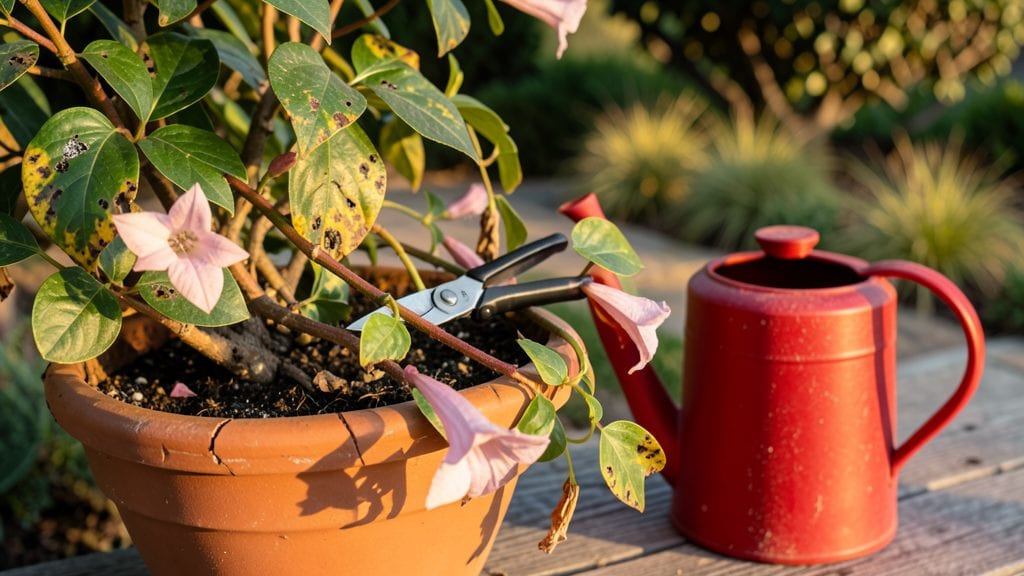
Mandevilla plant diseases can turn your vibrant vine into a sad, spotted mess if you don’t catch them early. 🌿 I’ve battled everything from powdery mildew to root rot, and I’ll show you how to spot the warning signs before they spread—yellowing leaves, black spots, or wilting that won’t quit.
These fungal threats love humidity and crowded foliage, but with the right moves, you can save your plant.
The key is acting fast when you see symptoms like white powder on leaves (powdery mildew) or dark, mushy stems (root rot). Prune infected areas immediately with clean scissors, and don’t let them touch healthy parts.
A mix of neem oil and water—sprayed in the morning—stops fungal spores in their tracks, and better airflow keeps them from coming back.
You’ll have your Mandevilla thriving again in no time, with glossy green leaves and those showstopping blooms. The secret? Regular checks, quick pruning, and keeping the environment just right—no soggy soil, no tight clusters of leaves. Let’s get your vine back to its best.
Works for both potted and in-ground Mandevillas, whether you’re dealing with a single plant or a whole garden bed. Here’s how to keep those diseases from crashing your summer display.
Root Causes Behind Mandevilla Struggles
Understanding why your Mandevilla plant succumbs to diseases starts with peeling back the layers of its environment and biology. These tropical beauties thrive in warmth and humidity, but when conditions shift—whether due to human error, nature’s whims, or unseen pests—they become vulnerable.
Below, we break down the key triggers that turn lush vines into a battleground for fungi, bacteria, and other pathogens.
Mandevillas crave breathable space, and when they’re packed too closely together or forced into cramped containers, disaster follows. Here’s why:
- Fungal Feast: Stagnant air traps moisture (like morning dew or overhead watering), creating the perfect humid microclimate for pathogens like Phytophthora (root rot) or Botrytis (gray mold).
Fungal spores float in still air but land and latch when humidity lingers. - Weakened Defenses: Overcrowded plants compete for nutrients, stressing their immune systems.
A stressed Mandevilla is like an open invitation for secondary infections—think of it as the plant equivalent of sleep deprivation. - Pest Magnet: Poor airflow also slows evaporation, keeping foliage damp longer.
This attracts sap-sucking pests (like aphids or whiteflies), which damage plant tissues and leave wounds where bacteria (e.g., Xanthomonas) can sneak in.
Actionable Fix: ✔ Space plants 12–18 inches apart in beds or use trellises to elevate vines. ✔ Prune aggressively to improve circulation—aim for open, airy growth. ✔ Avoid mulching too thickly near the stem (keep it 2–3 inches away).
Mandevillas are thirsty but not soggy—their roots rot faster than they drink when overwatered. Here’s the science behind the suffering:
- Oxygen Starvation: Roots need aerated soil to respire. When soil stays waterlogged, oxygen is replaced by anaerobic conditions, triggering root rot (Phytophthora or Pythium).
These fungi thrive in water and block nutrient uptake, causing yellowing leaves and stunted growth. - Salt and Chemical Buildup: Overwatering flushes out nutrients but also traps salts (from tap water or fertilizers) in the root zone.
High salt levels burn roots, making them susceptible to infections. - Fungal Spore Spread: Water splashes spores from soil onto leaves, accelerating diseases like powdery mildew or leaf spot.
Even "light" watering can be deadly if done overhead (fun fact: fungal spores can hitch rides on raindrops up to 3 feet!).
Actionable Fix: ✔ Water deeply but infrequently—wait until the top 1–2 inches of soil are dry. ✔ Use pots with drainage holes and raise containers to prevent water pooling. ✔ Mulch lightly (1–2 inches) to retain moisture without suffocating roots. ✔ Test your water: If it’s hard (high in minerals), collect rainwater or use distilled water for potted Mandevillas.
Mandevilla diseases don’t just appear—they hitchhike from neighboring plants, tools, or even the wind. Here’s how spores become a problem:
- Dormant but Deadly: Fungal spores (Botrytis, Alternaria, etc.) can survive for years in soil, old mulch, or infected plant debris.
When conditions turn favorable (warmth + moisture), they germinate and infect. - Tool Transmission: Pruners, gloves, or even your hands can carry spores from a sick plant to a healthy one.
A quick wipe-down with 70% isopropyl alcohol can kill 99% of spores—but many gardeners skip this step. - Wind and Wildlife: Spores ride air currents or stick to insects (like thrips or mites), landing on Mandevilla leaves.
Once there, they exploit weak spots (e.g., damaged leaves from pests or physical trauma).
Actionable Fix: ✔ Sanitize tools between plants with rubbing alcohol or bleach water (1 part bleach to 9 parts water). ✔ Remove infected plants immediately and dispose of them in the trash (not compost). ✔ Rotate crops if growing Mandevillas in the same spot yearly—avoid replanting in the same area for 2–3 years. ✔ Inspect new plants for signs of disease before bringing them home (quarantine for 2 weeks if possible).
Mandevillas are tropical escapees—they hate sudden shifts in temperature or humidity. Here’s how climate chaos invites disease:
- Cold Stress: Temperatures below 50°F (10°C) shock the plant, weakening its cell walls.
Cold-damaged leaves become entry points for bacteria (e.g., Erwinia***) or fungi (e.g., Fusarium). - High Humidity Without Airflow: While Mandevillas love 60–80% humidity, stagnant damp air is a recipe for gray mold (Botrytis*) or anthracnose.
The fungus grows fastest when leaves stay wet for more than 6 hours. - Nighttime Dew: Morning dew can linger on leaves if nights are cool. This prolonged moisture gives spores 24+ hours to infect before the sun evaporates it.
Actionable Fix: ✔ Avoid evening watering—stick to morning sessions so leaves dry by sunset. ✔ Use a hygrometer to monitor humidity; dehumidifiers (for indoor plants) or fan circulation (for outdoor) can help. ✔ Protect from frost: Move potted Mandevillas to sheltered spots or greenhouses when temps dip. ✔ Space plants for airflow (see earlier tip)—this reduces relative humidity at leaf level.
Pests don’t just eat Mandevillas—they create wounds that let diseases walk right in. Here’s the vicious cycle:
- Sap-Suckers (Aphids, Whiteflies, Mealybugs): These pests inject toxins and remove plant sap, causing yellowing, curling, or stunted growth.
Weakened leaves are easier targets for fungal infections like sooty mold (which grows on their honeydew). - Chewing Pests (Spider Mites, Caterpillars): They tear tissue, leaving open wounds where bacteria (e.g., Pseudomonas) or fungi (e.g., Colletotrichum) can colonize. - Root-Feeding Grubs (Cutworms, Nematodes): They munch on roots, reducing the plant’s ability to absorb water and nutrients.
A starving Mandevilla can’t fight off infections.
Actionable Fix: ✔ Inspect leaves undersides weekly for pests—early detection is key! ✔ Spray with neem oil (natural pesticide/fungicide) preventatively every 2–4 weeks. ✔ Introduce beneficial insects (ladybugs, lacewings) to control pest populations. ✔ Use reflective mulch (like aluminum foil) to deter aphids and whiteflies**.
Fixing Mandevilla Plant Troubles
Reviving your Mandevilla doesn’t have to be a struggle—once you identify the issue, targeted action can bring it back to vibrant health. Below are practical, step-by-step solutions for the most common fungal threats, along with prevention tips to keep your plant thriving long-term.
🔥 Cause: Overwatering, poor air circulation, or contaminated tools. 👨🍳 Fix:
- Prune infected leaves 🔪—Cut off yellow/brown spots with sterilized scissors (wipe with rubbing alcohol).
- Apply fungicide 💊—Spray with a copper-based or neem oil solution (1 tsp neem oil + 1 tsp mild soap per quart of water). Reapply every 7–10 days.
- Improve airflow 🌬️—Space plants 2–3 feet apart and avoid dense foliage clusters.
💡 Prevention Tip:
- Water at the base (not overhead) and only when the top inch of soil is dry.
- Sterilize pruners after each cut to prevent cross-contamination.
🌡️ Cause: High humidity, low light, or crowded growth. 🍳 Fix:
- Wipe leaves gently 🧼—Use a damp cloth with mild dish soap + water to remove white powder.
- Boost light exposure ☀️—Move to a sunnier spot (Mandevilla loves 6+ hours of sunlight).
- Spray fungicide 🍄—Use baking soda spray (1 tsp baking soda + 1 quart water + a drop of soap) weekly until cleared.
✨ Prevention Tip:
- Space plants to allow airflow—never let leaves touch.
- Avoid overhead watering (use drip irrigation or water at the base).
💀 Cause: Overwatering, poor drainage, or soggy soil. 🔪 Fix:
- Remove the plant 🌱—Gently dig it up and inspect roots. Trim black/mushy roots with clean scissors.
- Repot in fresh soil 🏺—Use a well-draining mix (cactus/succulent soil + perlite) and a pot with drainage holes.
- Adjust watering 💧—Let soil dry completely between waterings. Never let it sit in water!
🎯 Prevention Tip:
- Use a moisture meter to check soil—water only when it reads 3–4 (dry).
- Add orchid bark to soil for better aeration.
🍄 Cause: Fungal infection from wet stems or poor hygiene. 👨🍳 Fix:
- Prune infected stems ⚔️—Cut 1 inch below the rot with sterilized tools.
- Dust cuts with cinnamon 🌶️—A natural antifungal that helps seal wounds.
- Disinfect the pot 🧼—Scrub with 10% bleach solution, rinse, and repot in sterile soil.
💡 Prevention Tip:
- Water only in the morning so stems dry quickly.
- Avoid mulching too close to the stem—keep it 2–3 inches away.
Even after treatment, consistent care prevents recurrence:
- Fertilize lightly 🌱—Use a balanced 10-10-10 fertilizer every 4–6 weeks in spring/summer.
- Monitor humidity 🌡️—Keep it 40–60% (use a humidifier if needed).
- Rotate the plant 🌀—Ensures even sunlight and prevents weak growth.
🚨 Emergency Alert: If more than 50% of leaves are infected, it’s often easier to propagate healthy cuttings and start fresh. Mandevilla roots easily in water!
By following these steps, your Mandevilla will bounce back stronger—and with a little prevention, it’ll stay disease-free and stunning for years. 🌸
Frequently asked questions
What are the most common signs my Mandevilla plant might be sick?
Watch for yellowing leaves, black spots, or white powdery coatings—these often signal fungal infections like leaf spot or powdery mildew. Wilting, mushy stems, or sudden leaf drop may indicate root rot or bacterial issues. Always check the undersides of leaves first, as pests or early fungal growth often start there.
Can I save a Mandevilla with root rot? How do I know for sure?
Yes, but act fast! Gently remove the plant and check the roots—if they’re black, mushy, or smell foul, it’s root rot. Trim away the infected parts with clean scissors, repot in fresh, well-draining soil, and adjust watering to let the soil dry completely between waterings. If over 50% of the roots are rotted, propagation from healthy cuttings may be your best bet.
Is neem oil safe to use on Mandevilla plants? How often should I apply it?
Neem oil is a natural fungicide and pesticide that’s safe for Mandevillas. Mix 1 teaspoon neem oil + 1 teaspoon mild soap per quart of water, spray it on leaves (including undersides), and reapply every 7–10 days during outbreaks. For prevention, use it every 2–4 weeks during humid seasons. Always spray in the morning to avoid leaf damage from evening moisture.
Why does my Mandevilla get powdery mildew even when I water it correctly?
Powdery mildew thrives on high humidity + poor airflow, not just watering habits. Even with proper watering, crowded plants or low light can create the perfect conditions. Boost airflow by spacing plants 12–18 inches apart, move them to a sunnier spot (they need 6+ hours of sunlight), and wipe leaves with a damp cloth to remove spores. A baking soda spray (1 tsp baking soda + 1 quart water) used weekly can also help.
Should I remove infected leaves or stems immediately, or wait to see if the plant recovers?
Always prune infected parts immediately—never wait! Fungal spores spread quickly, and delaying treatment risks infecting the whole plant. Use sterilized tools (wipe with rubbing alcohol), cut 1 inch below the infected area, and dispose of pruned parts in the trash (not compost). This stops the disease in its tracks and gives your Mandevilla a fighting chance.