
How To
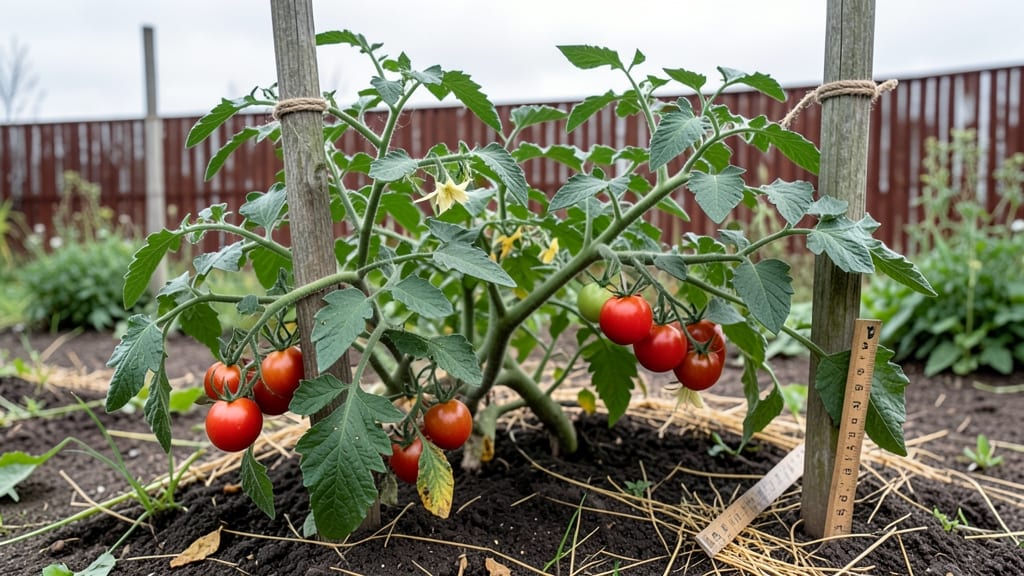
Understanding how tall tomato plants grow helps you pick the perfect variety, ranging from just 1 foot to impressive heights of 12 feet.
Wondering how tall your 🍅 plants will reach before they burst with juicy fruit? The answer depends entirely on the variety—some sprawl like vines while others stand tall like sentinels. Knowing these differences can transform your garden’s layout and yield.
Determinate types cap out at 3–4 feet, perfect for containers or small spaces, while indeterminate varieties can climb 10+ feet if left unchecked. Even a few inches of extra height can mean the difference between a manageable bush and a jungle.
In this guide, I’ll break down the height ranges of popular varieties, share pruning tricks to control sprawl, and reveal the one mistake that stunts growth without you even noticing.


Tomato plant height by variety: dwarf to sky-high giants
If you’ve ever wondered why your neighbor’s tomato plants tower over yours like skyscrapers while yours stay stubbornly short, the answer lies in the variety. Tomato plants fall into two broad categories: determinate (bush types) and indeterminate (vining types).
Determinate varieties grow to a fixed height, producing fruit all at once, while indeterminate types keep growing and fruiting until frost. Your garden’s layout—and your back’s comfort level—depends entirely on which type you choose.
Choosing the right tomato plant height for your space isn’t just about aesthetics. Dwarf varieties thrive in containers or small gardens, while towering types need trellises or cages to support their weight.
Below, I’ve broken down the spectrum from dwarf tomatoes to sky-high giants, including real-world growth expectations and space requirements to help you plan like a pro.
| Variety Type | Height Range | Growth Habit | Space Needs | Best For |
|---|---|---|---|---|
| Dwarf (Determinate) | 1–3 ft | Bushy, compact | 5–10 sq ft per plant | Containers, small gardens, early harvests |
| Semi-Dwarf (Determinate) | 3–4 ft | Bushy, slightly taller | 10–15 sq ft per plant | Balconies, raised beds, small yards |
| Standard (Determinate) | 4–5 ft | Bushy, sturdy stems | 15–20 sq ft per plant | Traditional gardens, trellises |
| Medium (Indeterminate) | 5–8 ft | Vining, continuous growth | 20–30 sq ft per plant (with support) | Vertical gardens, fences, trellises |
| Towering (Indeterminate) | 8–12+ ft | Aggressive vining, needs pruning | 30+ sq ft per plant (with strong support) | Large gardens, arbors, greenhouses |
Let’s start with the dwarf tomatoes, perfect for balconies or windowsills. Varieties like 'Tiny Tim' or 'Patio' max out at 2–3 feet, making them ideal for 5-gallon containers.
These determinate types produce a single flush of fruit, so they’re great for early-season harvests or urban gardens where space is tight. Just be sure to stake them lightly—their compact size doesn’t mean they’re fragile!
Next up are semi-dwarf varieties, which bridge the gap between pint-sized and towering. Think 'Roma' or 'Better Boy', which grow to 3–4 feet and thrive in raised beds or large pots.
These are my go-to for small-space gardens because they offer a balance: enough height for sturdy stems but not so tall that they flop over in windy conditions. A simple cage or stake keeps them upright without taking up extra room.
For traditional gardeners, standard-height determinate tomatoes like 'Celebrity' or 'Early Girl' hit 4–5 feet and deliver a heavy harvest in one go. These varieties are perfect for in-ground planting with 18-inch cages or wooden stakes.
The trade-off? You’ll need to harvest all at once, so plan for storage or canning if you can’t eat them fast enough.
Now, let’s talk indeterminate giants—the vining superstars of the tomato world. Varieties like 'Cherokee Purple' or 'Black Krim' can stretch 8–12 feet or more, producing fruit continuously until frost. These plants need strong trellises, arbors, or even a fence to support their weight.
Without proper support, they’ll sprawl everywhere, shading out other plants and making harvests a nightmare. But with the right setup, you’ll get tomatoes all season long.
If you’re dreaming of a tomato tower, consider 'Sungold' or 'Sweet Million'
How to control tomato plant height naturally (without sacrificing yield)
Tomato plants grow taller than you might expect—some varieties reaching 10 feet or more if left unchecked! The key to managing their height lies in understanding their natural growth patterns and applying gentle, organic techniques. Indeterminate varieties (like 'Sungold') grow continuously until frost, while determinate types (like 'Roma') stay compact.
Both benefit from strategic pruning and support to maximize yield without overpowering your garden space.
Before you reach for the pruners, know that controlling height isn't about stunting growth—it's about directing energy toward fruit production and plant stability. Tall, sprawling plants are prone to disease and fruit rot, while properly trained plants produce larger, healthier tomatoes.
The best part? These methods use only what nature provides—no harsh chemicals required.
How Tall Tomato Plants Grow: Natural Growth Stages
- Seedling Stage (0-3 weeks): Starts at 6-12 inches tall with rapid vertical growth. Focus on sturdy stems by ensuring 6+ hours of sunlight daily.
- Vegetative Growth (3-6 weeks): Height doubles as plants develop main stems and side shoots. Prune suckers (shoots in leaf axils) to direct energy upward.
- Flowering Stage (6-8 weeks): Growth slows slightly as flowers form. Remove lower leaves to improve airflow and reduce blossom-end rot risk.
- Fruiting Stage (8+ weeks): Indeterminate varieties may grow 1-2 feet per week while producing fruit. Use cages or stakes to support weight.
- Mature Stage (10+ weeks): Height stabilizes, but pruning continues to remove diseased leaves and shady branches that reduce yield.
🌱 Pro Tip: Measure your plant’s height weekly to track growth patterns and adjust pruning accordingly.
For indeterminate varieties, I recommend installing trellises or bamboo stakes early—before they reach 3 feet tall. These plants can become top-heavy, and sudden winds or heavy fruit loads can snap stems.
Wrap the main stem loosely with soft garden twine to guide growth without restricting it. Determinate tomatoes, on the other hand, thrive in cages or low stakes since they naturally grow bushy and compact.
Pruning is your secret weapon for controlling height while boosting yield. Start by removing suckers (the small shoots that form between the main stem and branches) when they’re 2-3 inches long.
This encourages the plant to focus on fruit-bearing branches rather than excessive vertical growth. For indeterminate varieties, leave the first 4-5 flower clusters intact before pruning—these will produce your earliest tomatoes.
Organic methods like mulching and compost tea also play a role in managing height. A 3-inch layer of straw mulch keeps roots cool and conserves moisture, reducing stress that can cause stunted growth.
Meanwhile, a weekly compost tea spray provides gentle nutrients without overfeeding, which can lead to excessive leafy growth at the expense of fruit.
Remember, the goal isn’t to create a miniature tomato plant—it’s to grow a healthy, productive one that fits your space. By combining pruning, support systems, and organic care, you’ll enjoy bountiful harvests without sacrificing your garden’s layout. Happy growing! 🪴