
Landscaping
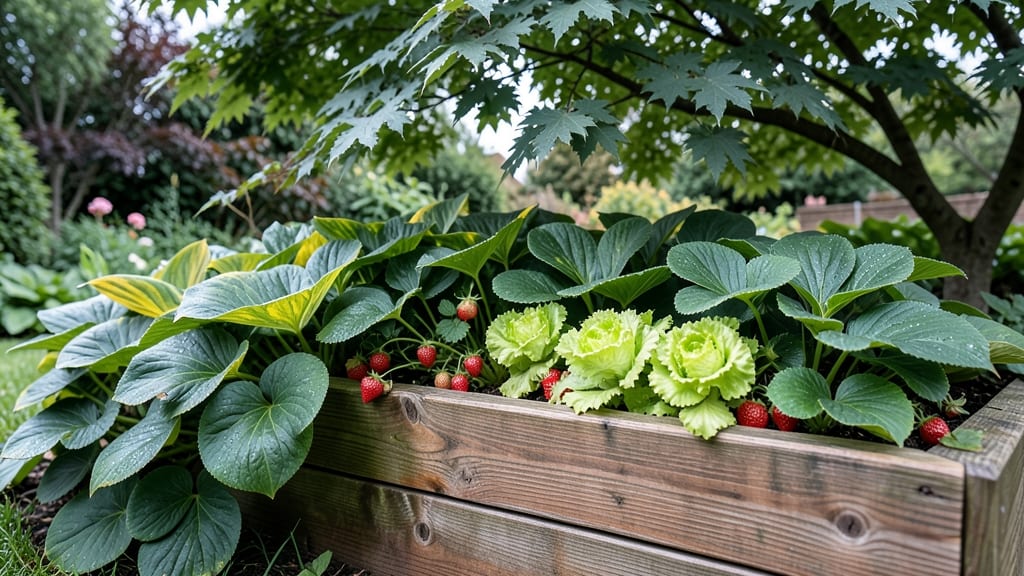
Hostas are the backbone of shade gardens, offering lush foliage and low-maintenance beauty. These 10 creative planting ideas transform your shady spaces into vibrant, year-round displays—whether you're a beginner or a seasoned gardener.
Layered Hosta Borders Along Garden Paths
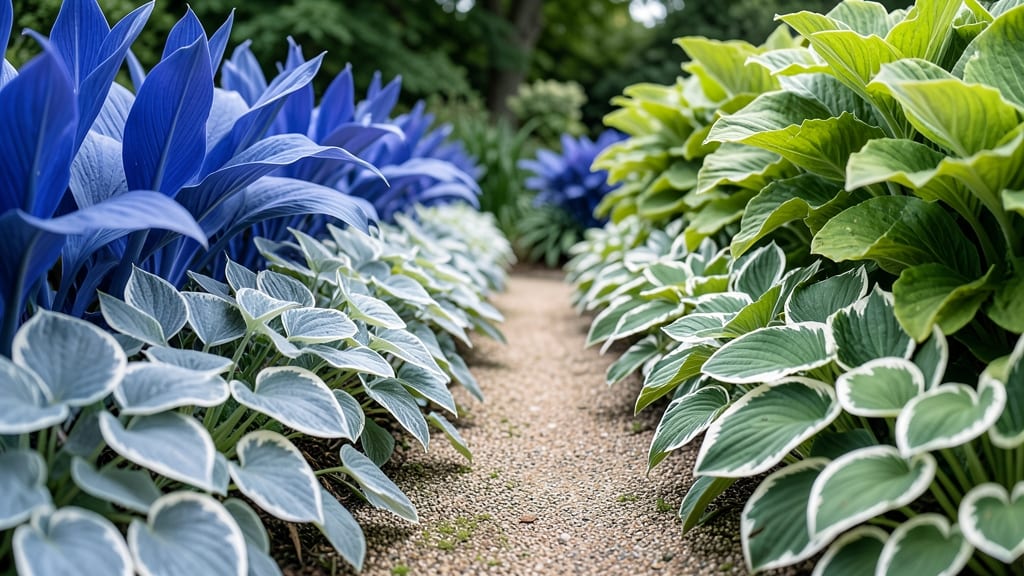
Transform your garden paths from plain walkways into living borders with layered hosta plantings—a trick that instantly adds depth and charm. The key is to plant tall varieties like 'Blue Angel' or 'June' along the outer edge, then cascade smaller types like 'Francee' or 'Patriot' toward the path center. This creates a soft, undulating edge that invites you to stroll while keeping weeds at bay.
For best results, space plants 12-18 inches apart in partial to full shade, using 3-5 inches of mulch (like shredded bark) to preserve moisture and suppress weeds. Group hostas in odd-numbered clusters (3, 5, or 7 plants) to mimic natural growth patterns and avoid a rigid look. This design thrives in small gardens or cottage-style landscapes, where it blends structure with organic flow.
Perfect for gardeners who love low-maintenance beauty without sacrificing personality—your paths will feel like a curated gallery. 🌿
Monochromatic Hosta Color Blocks
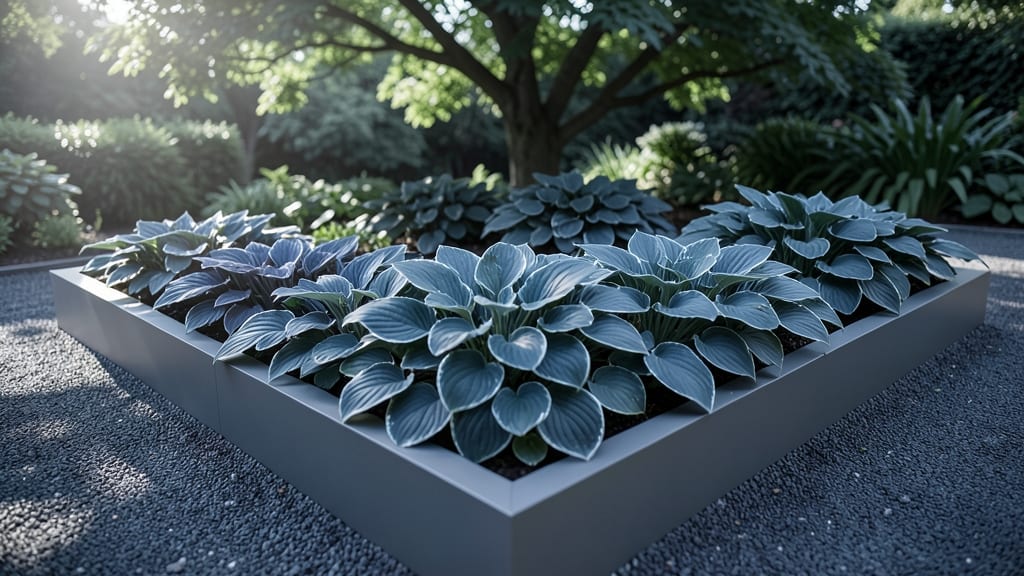
Tired of traditional garden beds that blend into the background? Monochromatic hosta color blocks turn your shade garden into a modern art piece with bold, uniform sections that pop against clean lines.
Start by grouping three to five hosta varieties in the same color family—think deep blue-green ('Blue Angel'), bright golden ('Golden Tiara'), or soft silver-blue ('Halcyon'). Use gravel or pavers to create geometric borders (rectangles or squares work best) and keep spacing consistent at 18-24 inches for mature plants. This approach works beautifully in urban courtyards or sleek contemporary landscapes where minimalism is key.
Urban gardeners and those with small spaces will love how this design maximizes visual impact without requiring sprawling beds. Plus, the uniformity makes maintenance a breeze—just divide and replace plants every few years to keep the look fresh. ✨
Hosta and Fern Mixed Beds
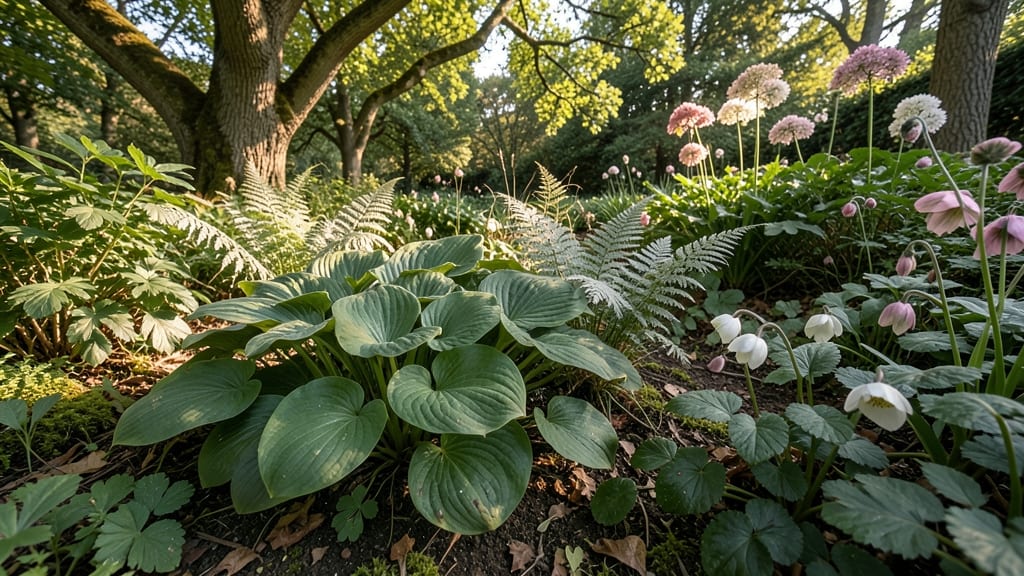
Transform your woodland garden into a lush, textured sanctuary by pairing hostas with ferns, hellebores, and astilbes. This combo creates a dynamic play of broad leaves, delicate fronds, and graceful blooms—perfect for areas where moisture lingers and sunlight dapples through the canopy.
Start by planting hostas as the foundation—choose varieties like 'Blue Angel' or 'Francee' for their bold foliage. Tuck Japanese painted ferns and Ostrich ferns around them for feathery contrast, then add early-blooming hellebores and astilbes for vertical interest. Mulch with wood chips to retain moisture and suppress weeds, mimicking the forest floor's natural conditions.
This design thrives in partial to full shade and requires minimal upkeep, making it ideal for gardeners who love low-maintenance yet striking landscapes. The layered textures create depth that feels wild yet intentional—perfect for those who want a garden that whispers serenity. 🌿
Container Hostas for Balconies
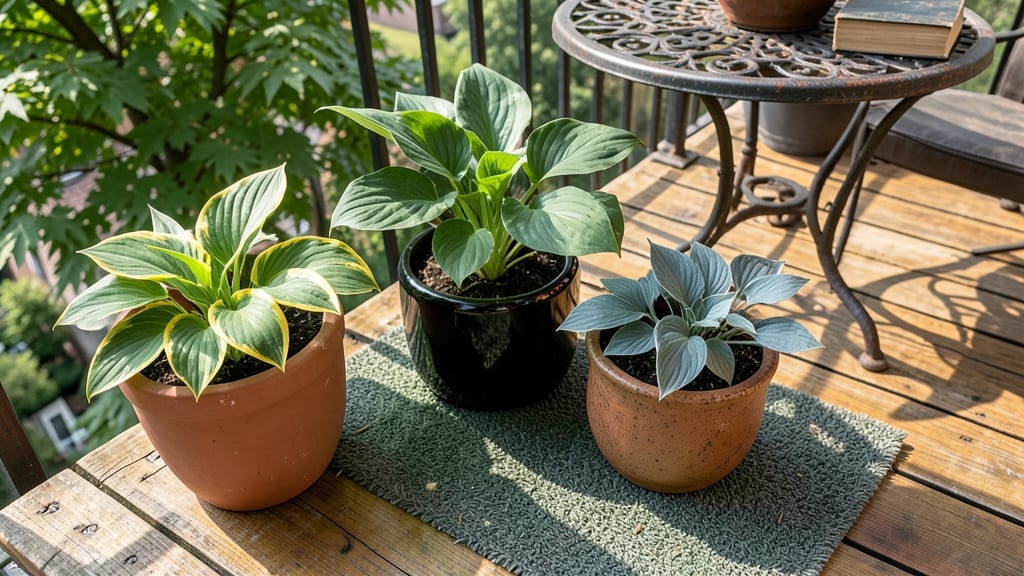
If you’re a renter, apartment dweller, or simply short on garden space, container hostas bring the same lush charm to balconies and patios as they do to gardens. Compact varieties like 'Halcyon' (with its golden edges) or 'Francee' (a petite blue-green gem) thrive in pots, making them ideal for urban greening without permanent commitments.
Choose containers with drainage holes and fill them with well-draining potting mix enriched with compost. Place your pots in partial to full shade, where they’ll flourish without wilting in summer heat. Water when the top inch of soil feels dry—these varieties stay compact but still deliver bold foliage that cascades beautifully over pot edges.
This approach is perfect for anyone who wants instant shade-friendly greenery with minimal upkeep. Plus, you can mix and match varieties to create a mini hosta collection that evolves with your space. 💚
Hosta Underrplanting for Perennials
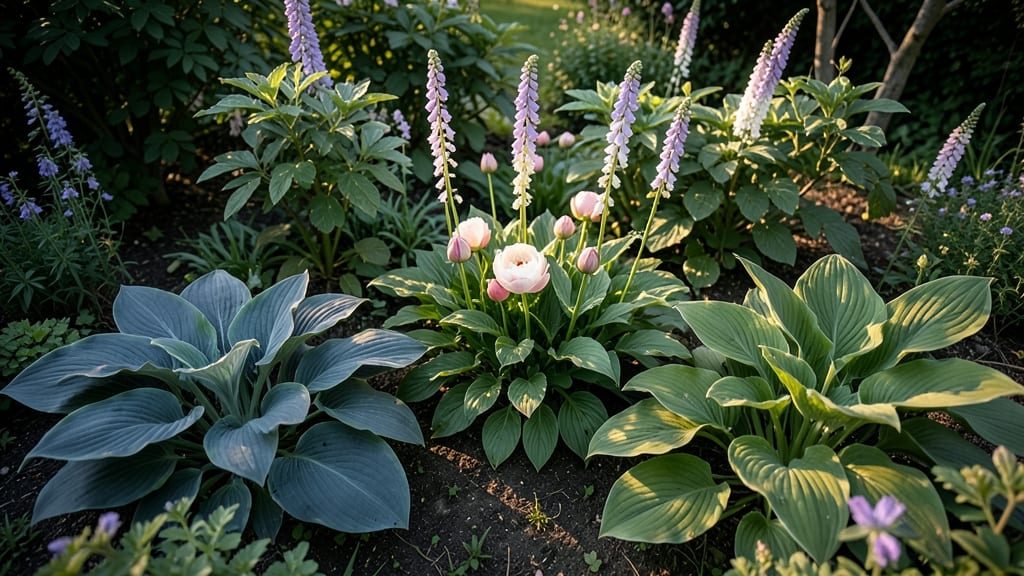
Tired of battling weeds around your prized peonies or foxgloves? Let hostas work for you as a living mulch—their broad leaves smother weeds while keeping soil moist and cool for your taller perennials.
Plant hostas with medium to large foliage (like 'Blue Angel' or 'Halcyon') in a circular pattern 12–18 inches from the base of your perennials. Their dense growth blocks sunlight from reaching weed seeds, and their year-round foliage adds texture even when peonies are dormant. Just avoid varieties with thin leaves—they won’t suppress weeds as effectively.
This trick is a game-changer for shade gardens where weeds thrive, giving you a low-maintenance solution that looks intentional. Plus, the contrast of hosta colors against blooms like foxglove spikes adds unexpected drama. ✨
Hosta Water Feature Edging
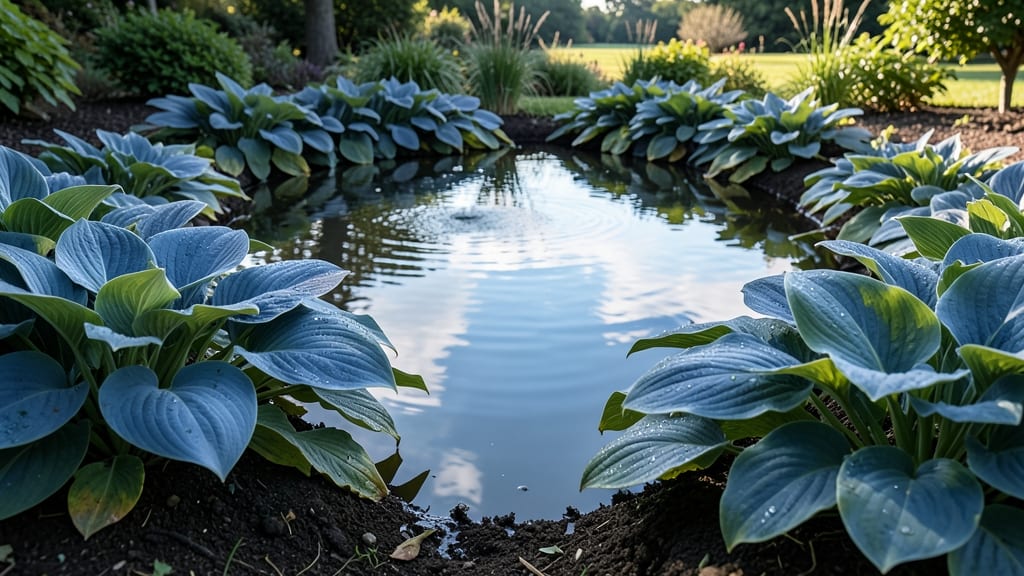
Transform your water feature into a tranquil oasis by lining it with hostas like 'Blue Angel'—their deep blue foliage mirrors the sky and creates a seamless transition between land and water. The moist, well-drained soil around ponds or fountains is perfect for hostas, which thrive in these conditions while suppressing weeds naturally.
Plant hostas in a staggered formation along the edge, spacing them 12–24 inches apart depending on variety size. For extra drama, mix in variegated types like 'Francee' or 'Guacamole' to add contrasting textures. This setup not only enhances the serene atmosphere but also deters unwanted pests like slugs, which struggle to cross the damp barrier.
This design is ideal for gardeners who want to blend functionality with beauty—perfect for small backyards, courtyard fountains, or even koi ponds. The result? A low-maintenance, high-impact water feature that feels like a natural retreat. ✨
Seasonal Hosta Color Rotation
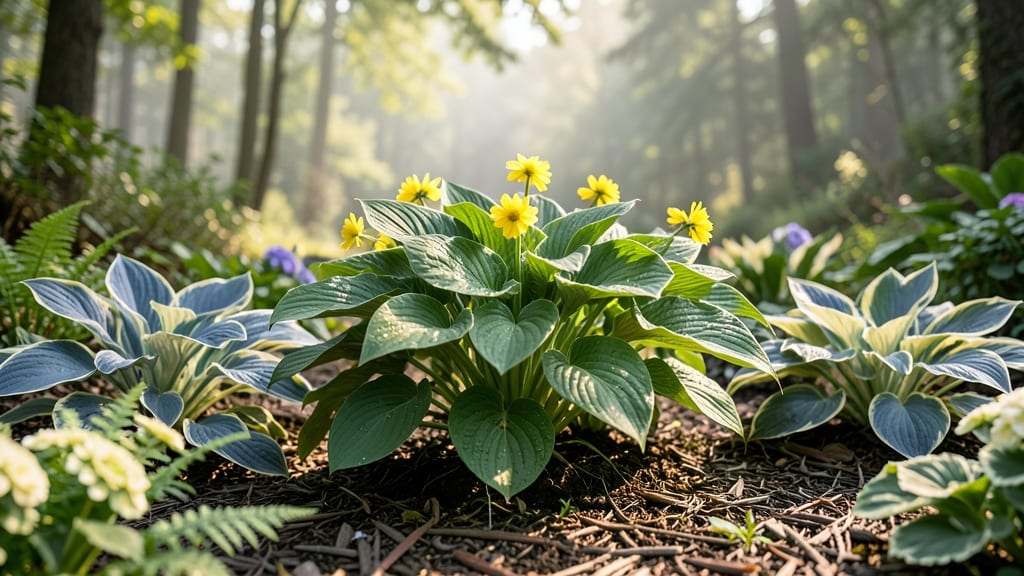
Tired of your hosta garden looking the same year after year? Seasonal color rotation keeps your shade garden fresh by swapping out varieties every few years—think of it as a foliage wardrobe change for your plants.
Start with spring-blooming varieties like 'Guacamole' (bright yellow flowers) for early color, then transition to bold summer foliage like 'Patriot' (deep green with burgundy centers). Finish with autumn stars like 'Francee', whose golden edges glow in cooler months. Each variety thrives in the same conditions but offers a different visual punch.
This approach is perfect for gardeners who love variety without extra work—simply divide and replant mature hostas to refresh your beds. Your garden will stay dynamic while requiring zero additional sunlight or water adjustments. 🌟
Hosta and Moss Rock Gardens
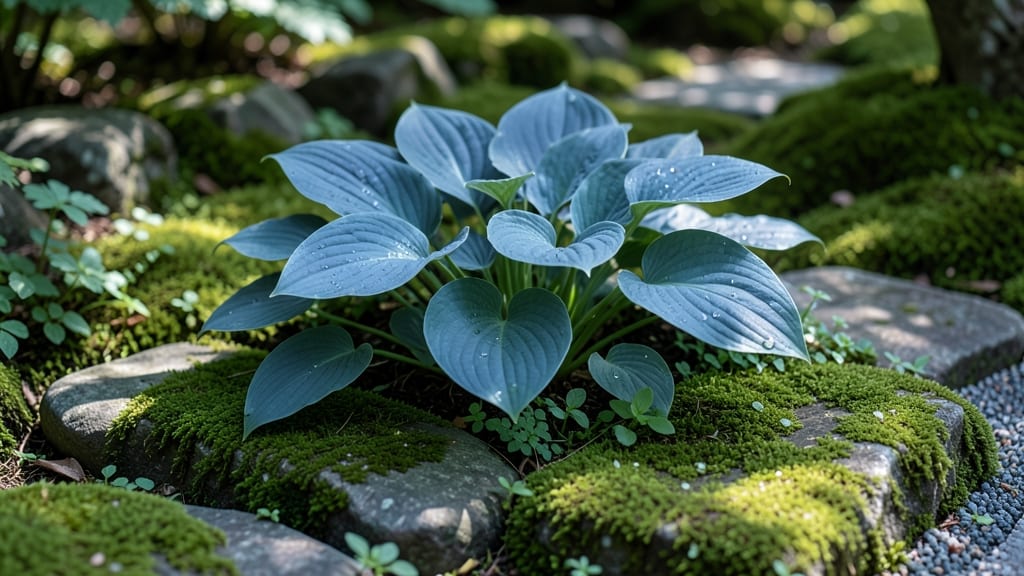
Bring the tranquility of a Japanese garden to your shade garden with a hosta and moss rock combination—where lush foliage meets organic textures for a serene, low-maintenance retreat.
Start by grouping drought-tolerant hosta varieties like 'Blue Angel' or 'Halcyon' around flat, moss-covered stones (like slate or flagstone). The hostas provide a soft, leafy backdrop while the moss-covered rocks add a natural, earthy contrast. Use raked gravel between stones to create clean lines and reduce weeds—perfect for dry-shade areas where moisture retention is a challenge.
This design thrives with minimal upkeep, making it ideal for busy gardeners or those seeking a Zen-inspired space. The combination of hostas' bold foliage and moss rocks' subtle texture creates a calming focal point that’s both functional and beautiful. 💚
Hosta Trellis Climbers Combo
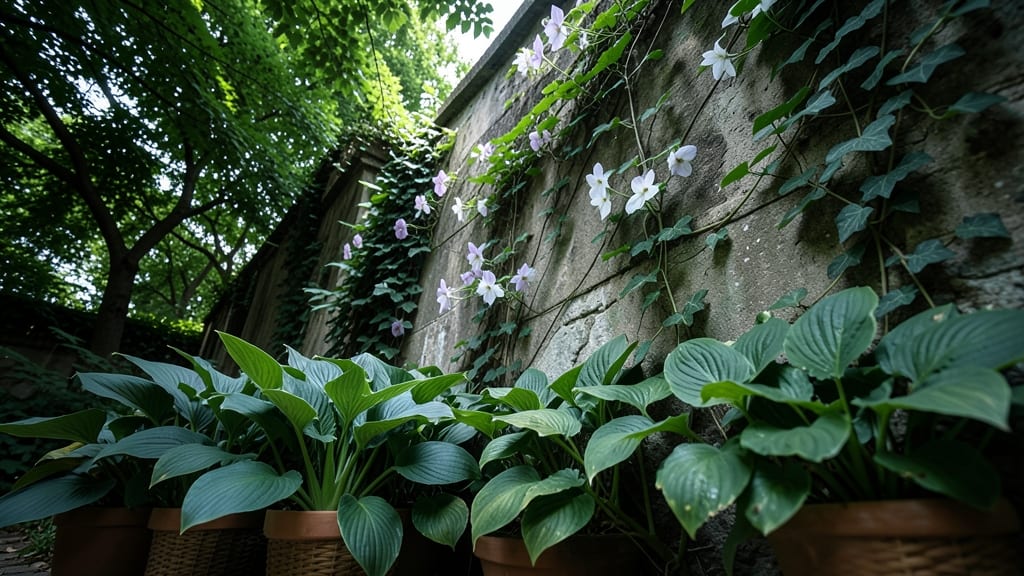
Turn those forgotten dark corners into a lush vertical garden by pairing hostas with shade-loving climbers like clematis or English ivy. This combo breathes life into spaces where sunlight barely reaches, transforming bare walls or tree canopies into a thriving green tapestry.
Plant hostas at the base of a rustic trellis, arbor, or fence to anchor the structure, then let climbers like clematis 'Jackmanii' or Boston ivy twine upward. The hostas provide a lush foundation while the vines add dynamic movement and seasonal interest—clematis blooms in summer, while ivy offers year-round coverage. For extra drama, choose hostas with contrasting foliage, like 'Francee' (gold edges) paired with deep green ivy.
This setup is perfect for gardeners with limited flat space or those looking to soften harsh architectural lines. It’s also a great solution for understory gardens where you want to maximize vertical real estate without sacrificing shade tolerance. 🌿
Edible Hosta Companion Planting

Turn your shade garden into a dual-purpose space by pairing hostas with edible crops like strawberries or lettuce. Hostas naturally repel slugs—common pests for tender greens—while their broad leaves provide the perfect shade for heat-sensitive plants.
Plant hostas in a border around raised beds or containers filled with strawberries, spinach, or radishes. The key is spacing: leave 12-18 inches between hosta crowns and edibles to prevent competition. Varieties like 'Blue Angel' or 'Francee' thrive in moist, shady conditions while keeping pests at bay.
This combo is perfect for urban gardeners with limited space or organic growers looking to reduce slug damage. You’ll enjoy lush foliage and homegrown harvests—without the hassle. 🌿