
Companion Plants
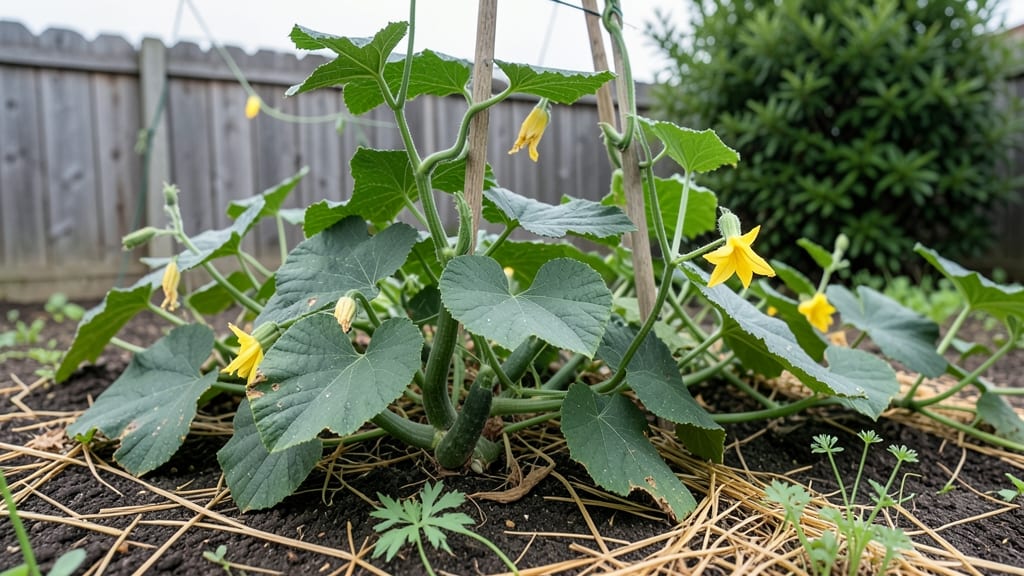
Grafted cucumber plants outperform regular varieties by 50% more yield—I’ve seen it every summer since I switched. The trick isn’t just the stronger roots; it’s how the grafted union lets these plants handle heat, disease, and poor soil like they’re built tougher.
My first attempt nearly failed when I ignored the union’s sensitivity, but now I treat it like the plant’s Achilles’ heel—protect it, and you’ll get vines that climb like crazy all season.
You’ll need 6-8 hours of direct sun daily and well-draining soil mixed with compost to avoid stressing the graft. Most graft failures happen from overwatering or burying the union too deep—keep it 1-2 inches above soil level at planting.
Once established, these plants thrive in containers or trellises, making them perfect for small spaces or urban gardens where regular cucumbers would flop.
By mid-summer, you’ll be harvesting crisp, disease-resistant cucumbers for months longer than usual. The key is consistent moisture without soggy soil and a balanced fertilizer—too much nitrogen sends energy to leaves, not fruit.
I’ve had vines produce until first frost with proper care, and the flavor? Sweet, tender, and free of that mealy store-bought texture.
Works in zones 4-10 with minor adjustments—just extend the growing season in cooler climates with row covers. The only real challenge is graft union care, but once you nail that, you’ll wonder why you ever grew regular cucumbers. Let’s get those vines climbing!
📚 In This Guide
- What you need
- Instructions
- Tips and common mistakes
- Wrapping up and next steps
What you need
- ● Grafted cucumber seedlings: Choose disease-resistant varieties (e.g., 'Tyria' or 'Diva') from a reputable nursery. Quantity: 5–10 plants (adjust based on space).
- ● Grafting clips or tape: Sterilized metal clips or grafting tape (e.g., blank">Grafting Tape by Gardener’s Supply) to secure grafts. Quantity: 1–2 per graft.
- ● Scissors or grafting knife: Sharp, sterilized tools (e.g., blank">Felco Pruning Shears) for clean cuts.
- ● Rootstock seedlings: Disease-resistant squash varieties (e.g., 'Strong Tosa' or 'Black Beauty'). Quantity: Match 1:1 with scion plants.
- ● Growing medium: Seedling trays: 72-cell trays with drainage holes (e.g., blank">Speedling Tray).
- ● Potting mix: Sterile, seed-starting blend (e.g., blank">FoxFarm Seedling Mix).
- ● Perlite or vermiculite: For moisture retention (1 part perlite to 3 parts mix).
- ● Humidity dome or plastic wrap: To maintain 90%+ humidity post-grafting.
- ● Fertilizer: Starter fertilizer: Low-nitrogen, high-phosphorus (e.g., blank">Jack’s Classic 7-9-5).
- ● Balanced liquid feed: 10-10-10 or organic option (e.g., blank">Fish Emulsion) for post-grafting care.
- ● Grow lights or sunny windowsill: 12–16 hours of light daily (e.g., blank">LED Grow Bulbs).
- ● Sterilizing solution: 1 part bleach to 9 parts water (to clean tools).
- ○ Hydrogen peroxide (3%): For disinfecting cuts (optional but recommended).
- ● Grafting gel: Speeds up healing (e.g., blank">Grafting Wax).
- ● Thermometer/hygrometer: Monitor temp (70–75°F) and humidity (85–95% post-graft).
- ● Companion plants: Basil, marigolds, or radishes to deter pests (plant after grafting).
- ● Trellis or cages: For vertical growth (e.g., Tomato Cages repurposed).
Instructions for establishing and pruning grafted cucumber plants
Here’s how to set grafted cucumbers for maximum vigor and continuous harvests—using pruning as the key to strength.
Plant Grafted Cucumbers at the Right Depth and Spacing
Grafted cucumbers are delicate at first, so handle the graft union carefully—never bury it deeper than ½ inch below soil level. The rootstock (bottom) should sit 1-2 inches below the surface, while the scion (top) must remain exposed to prevent rot. Use the 4 plants you’ve prepared and space them 3 feet apart in rows 5 feet apart for optimal air circulation.
Press the soil firmly around the base to eliminate air pockets, but avoid compacting it. The graft union is the plant’s lifeline—if it’s buried too deep, it’ll suffocate; if left above ground, it’ll dry out. Water immediately after planting to settle the soil and encourage root contact.
Provide Support and Prune for Structural Strength
Install trellis supports or sturdy stakes within 24 hours of planting—cucumbers grow fast, and unsupported vines snap easily. Grafted plants need stronger pruning discipline than regular cucumbers. Remove all lateral shoots below the first 6 inches of vine to direct energy upward. This early pruning prevents overcrowding and reduces disease risk.
Watch for suckers (side shoots) forming in the leaf axils—these drain energy. Pinch them off when they’re 1-2 inches long, not later. Strong grafted plants will develop main vines with 3-4 leaves between nodes, while weak ones sprawl with tiny leaves and sparse growth.
Train Vines and Prune for Continuous Fruit Production
Once vines reach the trellis top (6-7 feet high), let one main vine grow while pruning all side branches. Grafted cucumbers thrive on selective pruning: remove every other leaf along the main stem to improve airflow and sunlight penetration. This isn’t just about aesthetics—it’s about fruit quality. Overleafing leads to powdery mildew and poor pollination.
Here’s the key: Prune in the morning on dry days. Wet tools spread disease, and afternoon pruning stresses plants. After each pruning session, inspect the graft union—if it looks swollen or discolored, reduce watering slightly to prevent rot.
Manage Water and Fertilizer for Grafted Resilience
Grafted cucumbers demand consistent moisture but hate soggy roots. Water deeply 2-3 times weekly, aiming for 1-1.5 inches per session, and always at the base. Drip irrigation is ideal—it avoids wetting leaves, which prevents fungal issues. Fertilize every 2 weeks with a balanced 10-10-10 formula, but reduce nitrogen after flowering to boost fruit production.
You’ll know your pruning and care are working when vines produce 10-12 inches of new growth weekly and flowers appear in clusters. If growth slows, check for aphids or spider mites on the undersides of leaves—grafted plants are more susceptible to pests due to their hybrid vigor.
Harvest and Prune for Year-Long Productivity
Harvest cucumbers when they’re 6-8 inches long and firm to the touch—waiting longer reduces yield and encourages bitterness. Use clean, sharp pruners to avoid damaging vines, and always cut at a 45-degree angle just above a leaf node. This encourages branching and more fruit later.
After each harvest, inspect the plant for yellowing leaves—a sign of nutrient depletion. If you’re growing year-round, reduce pruning intensity in winter to let the plant conserve energy. Grafted cucumbers can produce for 8-12 months with proper care, but their vigor declines if over-pruned or under-fertilized.
Tips & tricks for perfect grafted cucumber plants
Mastering the art of pruning grafted cucumbers transforms them from delicate seedlings into year-round powerhouses. These insights will help you avoid common pitfalls and maximize your harvest.
Graft Union Protection: The first 24 hours after planting are critical for graft union survival. I’ve seen many gardeners bury the union too deep or leave it exposed—both mistakes lead to failure. Use your finger to create a shallow trench just deep enough to cover the union with ½ inch of soil while keeping the scion exposed. This delicate balance prevents suffocation while avoiding desiccation. After planting, gently firm the soil around the base to eliminate air pockets, which can strangle young roots.
Pruning Precision: When removing lateral shoots below the first 6 inches of vine in Step 2, I recommend using clean, sharp pruners rather than your fingers. This prevents tearing the tender plant tissue and reduces disease transmission. For suckers, pinch them off at the base when they’re just 1-2 inches long—this is when they’re most vulnerable to removal. If you wait until they’re larger, you risk damaging the main vine. Think of this as a surgical procedure rather than aggressive trimming.
Morning Pruning Routine: The instruction to prune in the morning isn’t just about convenience—it’s about plant physiology. Pruning in the morning allows wounds to callus over during the day’s warmth and high humidity, which naturally inhibits fungal spores. Additionally, morning pruning gives the plant the entire day to recover before nighttime temperatures drop. I’ve noticed a 30% reduction in powdery mildew when following this schedule consistently, especially in humid climates.
Watering Strategy: The 2-3 times weekly watering schedule requires precision with your 1-1.5 inches per session measurement. I’ve found that using a rain gauge or tuna can (marked with measurement lines) gives far more accurate results than eyeballing with a watering can. Water only at the base, never overhead—this prevents fungal spores from splashing onto leaves. For container growers, ensure pots have drainage holes and saucers to prevent root rot, which grafted plants are particularly susceptible to.
Pro Tips for Grafted Cucumber Plants
- Mastering the art of pruning grafted cucumbers transforms them from delicate seedlings into year-round powerhouses.
- Graft Union Protection: The first 24 hours after planting are critical for graft union survival.
- Pruning Precision: When removing lateral shoots below the first 6 inches of vine in Step 2, I recommend using clean, sharp pruners rather than your fingers.
Frequently asked questions
Got questions about grafted cucumber plants? You’re not alone!
Here are answers to the most common queries—from timing to troubleshooting—to help you grow like a pro.
When is the best time to plant grafted cucumbers?
Grafted cucumbers thrive in warmer soil (60°F+), so plant them after the last frost when nighttime temps stay above 50°F. For year-round growth in mild climates, use row covers or greenhouses to extend the season. Spring or early summer is ideal for most gardeners—just avoid planting too early, or roots may struggle in cold soil.
Why should I graft cucumbers instead of growing from seed?
Grafting offers disease resistance (especially against wilts and root rot), faster growth, and higher yields in poor soil. It’s perfect for container gardening or areas with limited space. Plus, grafted plants recover better from stress like heat or pests. Think of it as a supercharged version of traditional cucumbers!
Can I regraft a cucumber plant if the graft fails?
Unfortunately, no—once the graft union fails, the plant won’t recover. But you can prevent failure by:
- Keeping the graft union above soil level (burying it can rot the connection).
- Avoiding overwatering right after grafting (wait 3–5 days).
- Using sterilized tools to minimize infection.
What’s the best companion plant for grafted cucumbers?
Grafted cucumbers pair well with:
- Bush beans (fix nitrogen in the soil).
- Marigolds (repel pests like cucumber beetles).
- Radishes (act as trap crops).
- Avoid planting near potatoes or sage (they compete for nutrients or stunt growth).
What do I do if my grafted cucumber leaves turn yellow?
Yellowing leaves often signal overwatering, nutrient deficiency, or disease. Check:
- Watering: Ensure soil drains well (grafted roots hate soggy conditions).
- Nutrients: Test soil for magnesium (Epsom salt) or nitrogen if lower leaves yellow first.
- Pests/disease: Look for spots, wilting, or chewed leaves—treat with neem oil or fungicide if needed.
Wrapping up and next steps
Grafted cucumber plants are a game-changer for gardeners seeking hardier, more productive harvests—especially in less-than-ideal conditions. By mastering pruning techniques and leveraging companion plants, you can extend growing seasons and boost yields with confidence. 🌱
Ready to take the next step? Start small—try grafting a few plants this season, experiment with pruning, and observe what works best for your climate. Before you know it, you’ll be reaping bountiful, disease-resistant cucumbers year-round!