
Fertilization
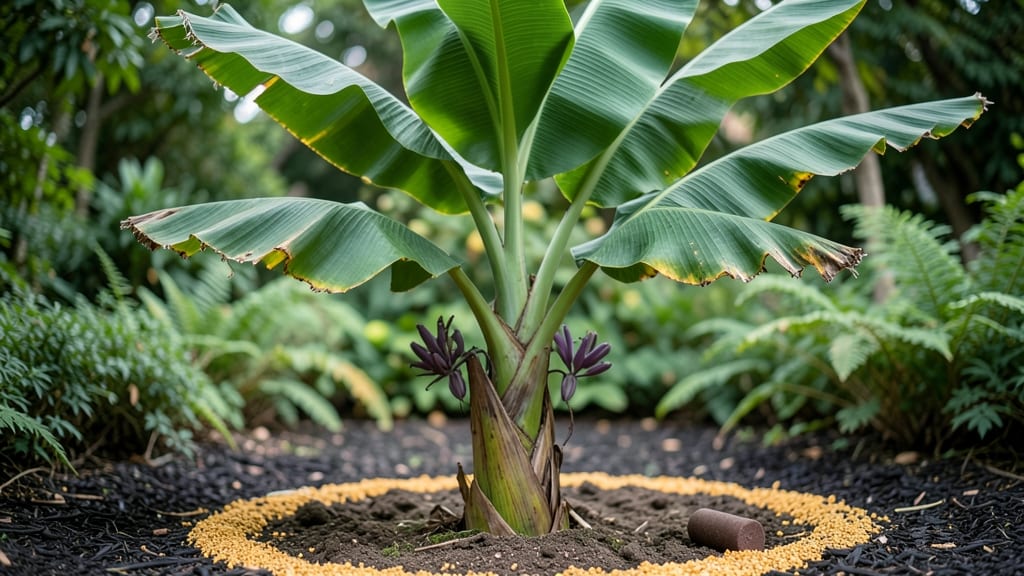
Fertilizing banana plants 🍌 is the secret to turning lush foliage into a heavy harvest of sweet fruit.
Banana plants grow at an astonishing rate—but only if they receive the right nutrients. A single misstep in fertilizing can leave you with lush leaves and no fruit. Here’s how to unlock explosive growth and heavy banana yields with science-backed fertilization strategies.
Most gardeners focus on nitrogen for leafy growth, but bananas need a precise balance of nitrogen, phosphorus, and potassium to set fruit. Too much nitrogen means big leaves but tiny hands, while potassium deficiency can cause fruit to drop before ripening.
In this guide, you’ll discover the exact nitrogen-potassium ratio for each growth stage, organic and synthetic fertilizer options, and how to avoid over-fertilizing—so you can enjoy a bumper crop in as little as 12 months.
The perfect nitrogen-potassium ratio for banana fruit production
Banana plants are heavy feeders, but not all nutrients are equal. While generic all-purpose fertilizers (like 10-10-10) work for lawns, bananas demand a higher potassium focus during fruiting. The secret?
A 3:1 to 4:1 nitrogen-potassium ratio—this balance prevents lush leaves at the expense of fruit. Without it, you’ll end up with a towering plant and tiny, poor-quality bananas.
Potassium (P on fertilizer labels) is especially critical for bananas. It strengthens cell walls, improves water uptake, and prevents heart rot—a fungal disease that turns the core of the fruit black and mushy.
Meanwhile, nitrogen (N) fuels leafy growth, but too much delays flowering. The trick is adjusting ratios as your plant matures: young plants need more nitrogen, while fruiting plants crave potassium.
Don’t overlook micronutrients either. Bananas are magnesium and calcium hogs. A deficiency in magnesium causes interveinal chlorosis (yellowing between leaf veins), while calcium deficiency leads to blossom-end rot—where the tips of bananas turn brown and rotten. Even with the right N-P-K ratio, these deficiencies can sabotage your harvest.
Here’s the golden rule: Start with a 4-1-2 ratio (nitrogen-phosphorus-potassium) for young plants, then shift to a 2-1-3 ratio once flowering begins. This shift ensures your plant invests energy in fruit development rather than just foliage.
For example, a 6-3-9 fertilizer is ideal for fruiting bananas, while 8-3-4 works for vegetative growth.
Organic gardeners can achieve this with composted manure (high in nitrogen) paired with potassium sulfate or wood ash. Synthetic growers might blend a slow-release granular (like Osmocote) with a potassium-rich liquid feed (such as 0-0-52). The key is consistency—bananas reward steady nutrition, not sporadic boosts.
Now, let’s break down the exact ratios for each growth stage, along with micronutrient needs, in this easy-to-follow table:
Step-by-step fertilization schedule for maximum banana yield
Banana plants thrive on a consistent nutrient supply, but their needs shift dramatically from juvenile growth to fruit production. Young plants prioritize leaf expansion and root development, while mature plants demand potassium-rich feeds to support heavy bunches.
A misaligned schedule leads to leaf burn, fruit abortion, or stunted growth—so timing matters.
For tropical climates, fertilization runs year-round, while subtropical growers pause in winter months. Organic options like composted manure or banana peels release nutrients slowly, while synthetic slow-release granules offer precise control. The key? Balance—never let salts build up near the roots.
🌱 Monthly Fertilization Plan
- Months 1-3 (Young Plants): Apply high-nitrogen fertilizer (e.g., 10-5-5) every 4 weeks to boost leaf growth. Use 1/4 cup per plant and water deeply afterward to prevent burn.
- Months 4-6 (Flowering Stage): Switch to balanced NPK (8-8-8) or potassium-heavy (5-10-10). Feed every 6 weeks with 1/2 cup per plant to support flower development.
- Months 7-9 (Fruiting Stage): Prioritize potassium (0-0-50) or banana-specific fertilizer. Apply 3/4 cup every 8 weeks to prevent fruit drop and improve sweetness.
- Months 10-12 (Harvest Prep): Use low-nitrogen (2-4-6) to mature fruit. Reduce frequency to every 10 weeks and avoid fertilizing 2 weeks before harvest.
In subtropical zones, pause fertilizing from November to February—banana plants enter a dormant phase and won’t absorb nutrients. Instead, focus on mulching with well-rotted compost to protect roots from cold snaps. If growing in containers, reduce fertilizer by 50% to avoid salt buildup.
Watch for leaf burn (brown edges) or yellowing fronds, which signal over-fertilization. Flush the soil with water 3x the pot size to leach excess salts. For organic growers, top-dress with worm castings or fish emulsion instead of synthetic granules to reduce risk.
Adjust your schedule based on plant age and climate. A 2-year-old plant in Florida may need monthly feeding, while a first-year sapling in California thrives on bi-weekly light doses. Always water before fertilizing—dry soil amplifies burn risk.
With this precision schedule, you’ll go from lush leaves to heavy bunches without wasted nutrients. Track your plant’s response and tweak ratios—bananas reward patience with sweeter, larger fruit every harvest. 🍌