
Companion Plants
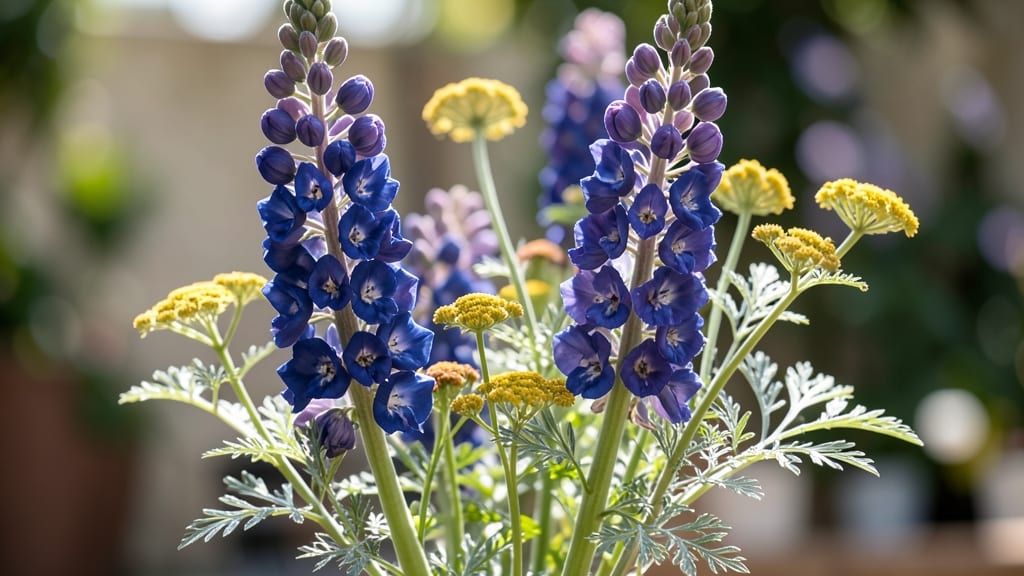
Delphiniums bring towering elegance to any garden, but their success depends on the right companions. These ten thriving pairings enhance height, color, and pollinator appeal while preventing common pests—creating a showstopping border or cottage garden display.
Lavender for Pollinators and Pest Control
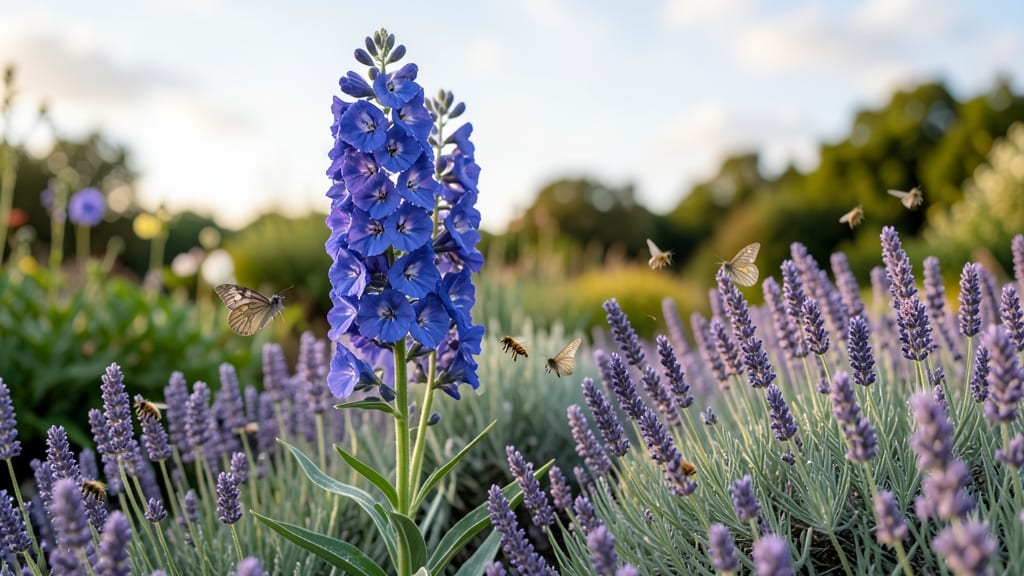
Want a garden that hums with life while keeping pests at bay? Plant lavender alongside your delphiniums—its aromatic oils naturally repel aphids, while its fragrant blooms lure bees and butterflies. The striking contrast of lavender’s silvery foliage against delphinium’s towering spires creates a visual and sensory masterpiece.
This dynamic duo thrives in full sun and well-drained soil, making it ideal for dry climates or slopes. Space lavender plants 18-24 inches apart to allow airflow, which prevents fungal issues. Prune lightly after flowering to maintain shape and encourage bushier growth.
Perfect for pollinator gardens and low-maintenance borders, this pairing benefits both beginners and experienced gardeners alike. 🌿
Peonies for Season-Long Support
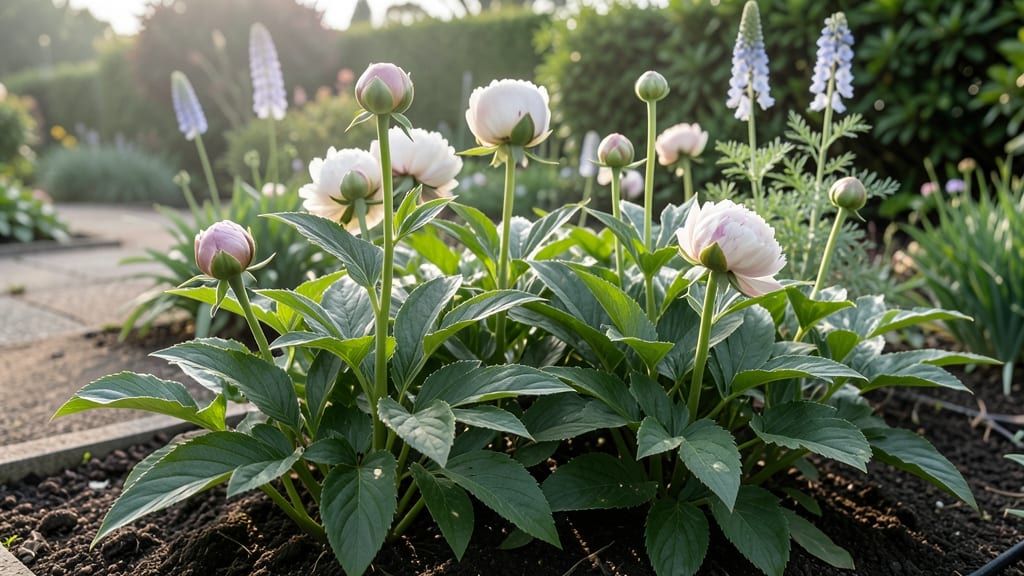
If your cottage garden feels a little bare before delphiniums burst into bloom, peonies are the unsung heroes you need. Their early-season structure creates a lush foundation, while their broad leaves act as natural windbreaks—keeping those delicate delphinium stems upright and sturdy.
Plant peonies in partial shade, where they’ll thrive alongside delphiniums without competing for sunlight. Their fragrant blooms in spring and early summer provide a romantic contrast to delphinium’s towering spires, while their deep green foliage stays attractive long after the flowers fade. This pairing is especially magical in shaded borders where both plants can spread comfortably.
Perfect for gardeners who love season-long interest without the fuss, peonies and delphiniums create a timeless cottage garden duo that’s easy to maintain and impossible to resist. 🌷
Salvia for Drought-Resistant Harmony
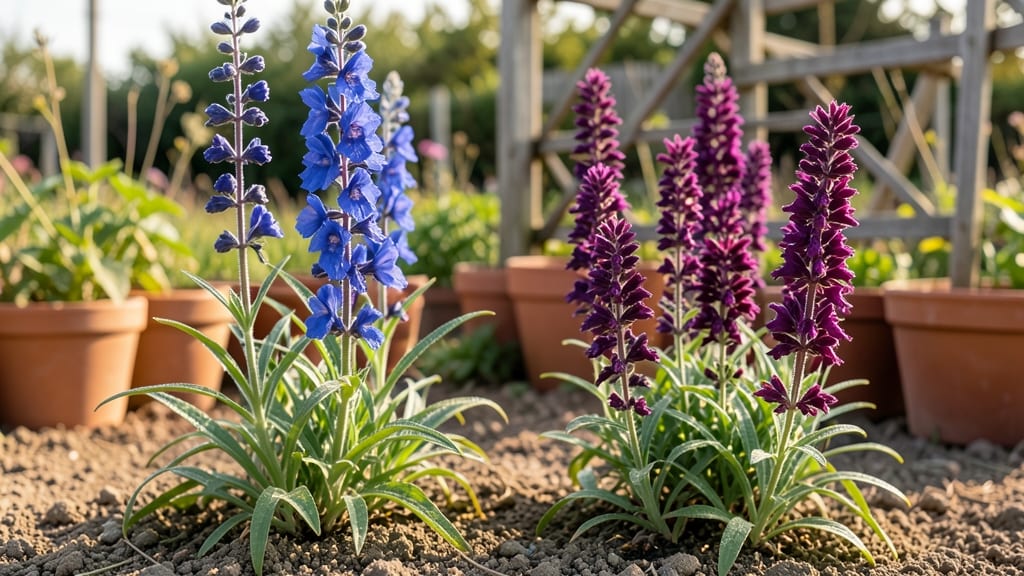
If you’re struggling to keep your garden lush without constant watering, salvia is the unsung hero you’ve been missing. This drought-tolerant plant thrives in the same dry conditions as delphiniums, making it the perfect partner for water-wise gardens. Its striking, spiky blooms not only mirror delphiniums’ vertical lines but also create a stunning visual rhythm in your border.
Salvia’s deep roots help break up compacted soil, improving drainage for delphiniums while its slug-repelling properties protect your prized blooms. Plant varieties like salvia nemorosa or salvia officinalis near delphiniums for a cohesive, low-maintenance look that hums with late-summer color. The key? Space them 12-18 inches apart for airflow and to prevent mildew.
This dynamic duo is ideal for urban gardeners or anyone with limited water resources—just add gravel mulch to retain moisture and watch your garden thrive with minimal effort. 💪
Rudbeckia for Late-Season Color
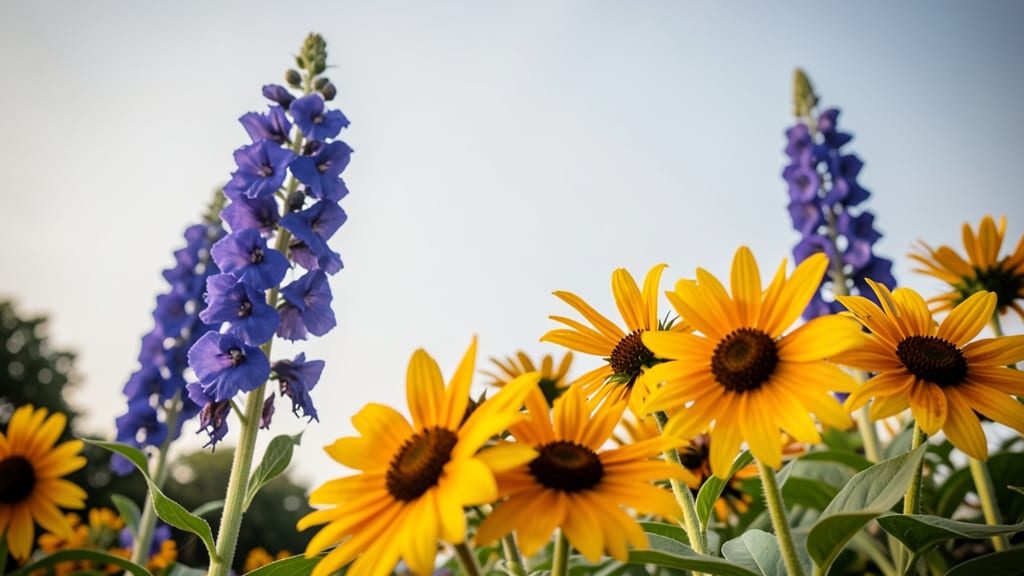
When your delphiniums start to fade in late summer, don’t let your garden lose its sparkle—rudbeckia steps in to steal the show. These cheerful, daisy-like blooms thrive in the same sunny spots as delphiniums and continue flowering well into fall, providing a vibrant contrast to their waning spires.
With deep taproots, rudbeckia also improves soil drainage, making it a smart choice for heavy or clay soils where delphiniums might struggle. Plant them in containers or borders for a low-maintenance pop of color, and enjoy their drought tolerance once established. The variety 'Goldsturm' is especially hardy and long-blooming.
Perfect for gardeners who want to extend their season without extra effort, rudbeckia pairs beautifully with delphiniums while attracting pollinators late into the year. 🌻
Allium for Height and Pollinator Magnet
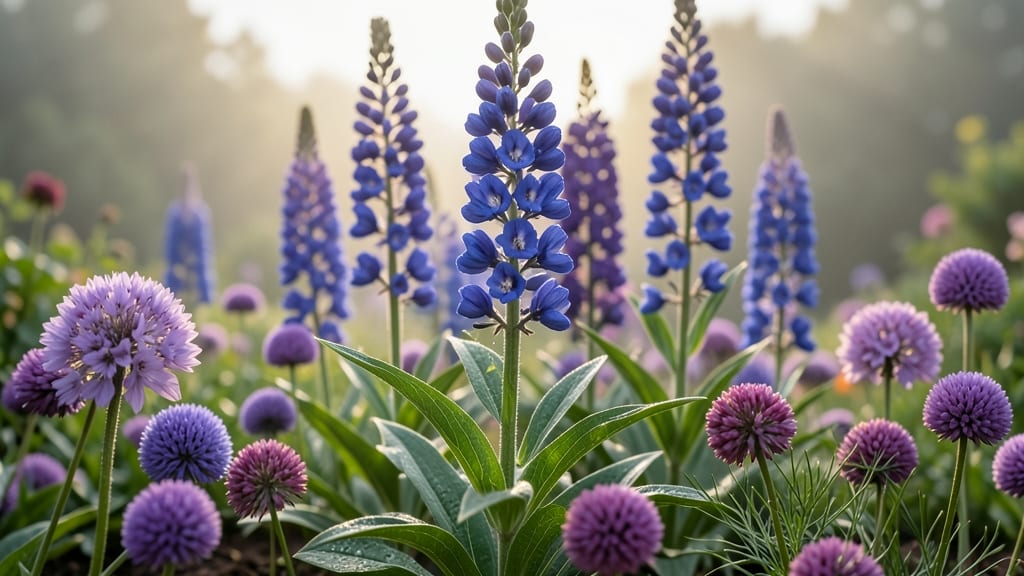
Want to add dramatic height and pollinator power to your delphinium borders without extra work? Alliums are the secret weapon—these globe-shaped blooms create eye-catching vertical accents that echo delphiniums' stature while luring bees and even confusing pests like delphinium-eating slugs.
Plant alliums in odd-numbered clusters (3, 5, or 7 plants) to break up symmetry naturally, and choose varieties like Allium 'Purple Sensation' for 2-3 foot spikes that bloom alongside delphiniums. Their spherical blooms also deter pests by masking delphinium's scent—ideal for organic gardens. Plus, they thrive in the same well-drained soil and full sun as delphiniums.
This pairing is perfect for beginner gardeners or small spaces—just tuck alliums at the base of delphinium clumps for instant height and color contrast. The result? A pollinator magnet that keeps your garden buzzing all season. ✨
Catmint for Long-Blooming Synergy
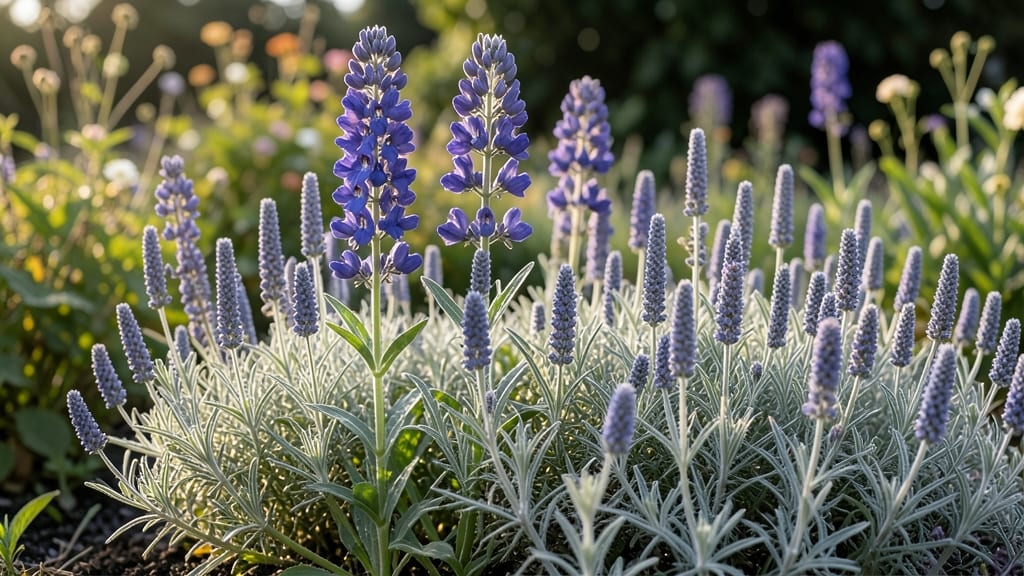
If you want a delphinium companion that blooms longer than the season itself, catmint is your secret weapon. This hardy perennial delivers lavender-blue spikes from early summer straight through frost, creating a seamless transition as your delphiniums fade. The silvery foliage adds texture that mirrors your delphiniums' height while staying deer- and rabbit-proof.
Plant catmint in full sun to part shade, where it thrives in well-drained soil with minimal fuss. Its drought-tolerant nature makes it perfect for dry gardens, and the fragrant blooms attract pollinators while repelling pests. For best results, shear back stems after flowering to encourage bushier growth next season.
This is the ideal choice for low-maintenance gardeners or those with wildlife pressure—catmint delivers beauty without the upkeep. 🌟
Dianthus for Fragrant Ground Cover
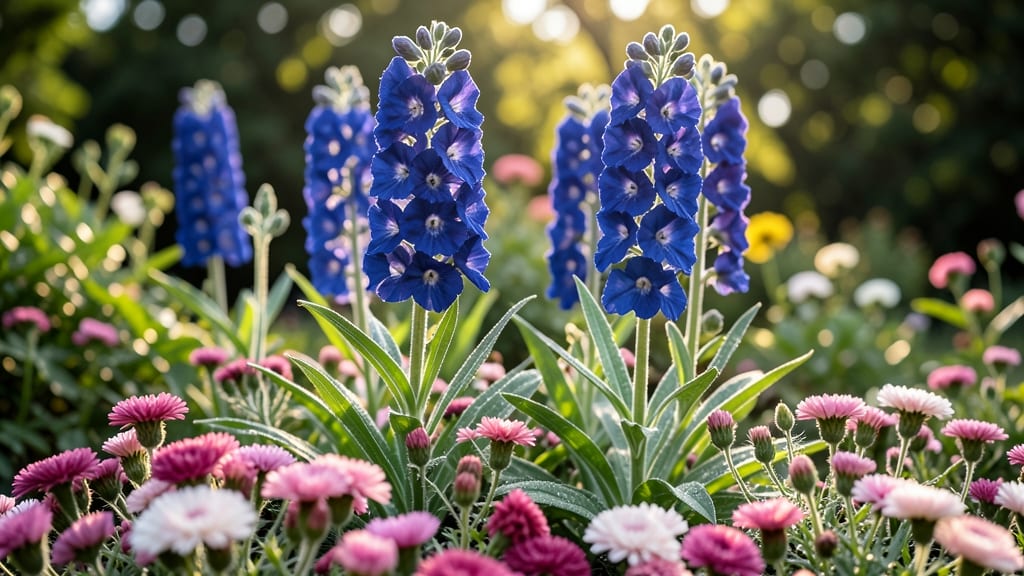
Want to add a sweet, fragrant touch to your delphinium borders while keeping mildew at bay? Dianthus is the perfect understory partner, with its low-growing habit and clove-like scent that naturally deters fungal spores from settling on delphinium leaves.
These charming perennials thrive in the same alkaline soil (pH 6.0-7.5) as delphiniums, making them effortless to integrate. Plant dianthus in clusters along pathways or at the base of delphinium clumps—their vibrant pink, red, or white blooms will spill over garden edges while their sweet fragrance masks any mildew odors that might develop.
Perfect for cottage gardens or urban borders, dianthus adds a sensory layer that other companions miss. 🌷
Echinacea for Disease Resistance
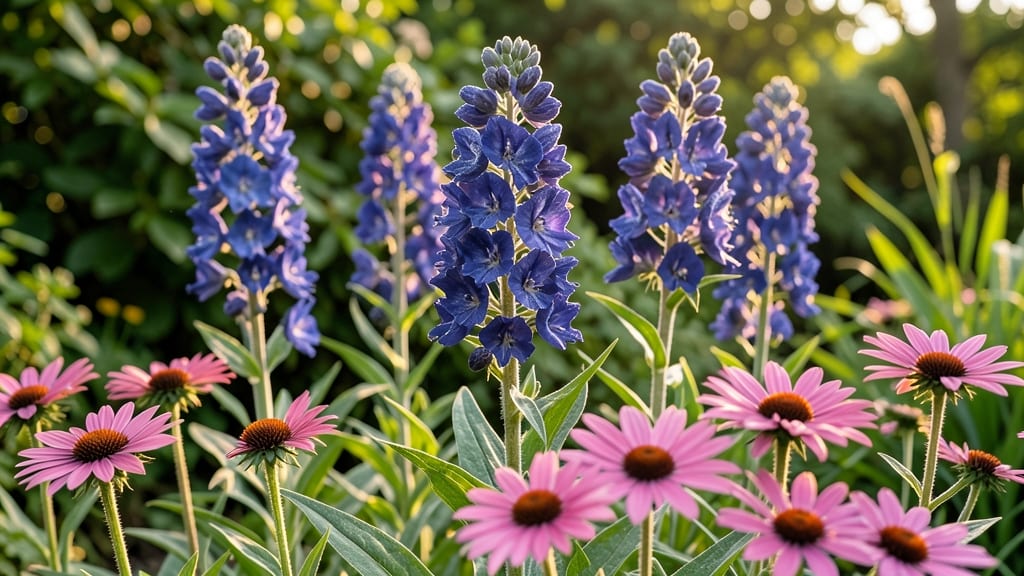
If your delphiniums struggle with powdery mildew or other fungal issues, echinacea could be their secret weapon. This hardy perennial doesn’t just add vibrant pink or purple daisy-like blooms—it actively suppresses soil-borne pathogens through natural antifungal compounds, creating a healthier growing environment for your delphiniums.
Plant echinacea at the base of delphinium clumps, spacing them about 18 inches apart to allow airflow and prevent overcrowding. Both thrive in full sun to partial shade and well-drained soil, making them effortless companions. The ruffled petals of echinacea contrast beautifully with delphinium’s spiky forms, while its long bloom season (summer to early fall) extends your garden’s color palette.
This pairing is a game-changer for pollinator gardens and low-maintenance meadows, offering both practical disease protection and striking visual contrast. 🌻
Ferns for Shade-Loving Balance
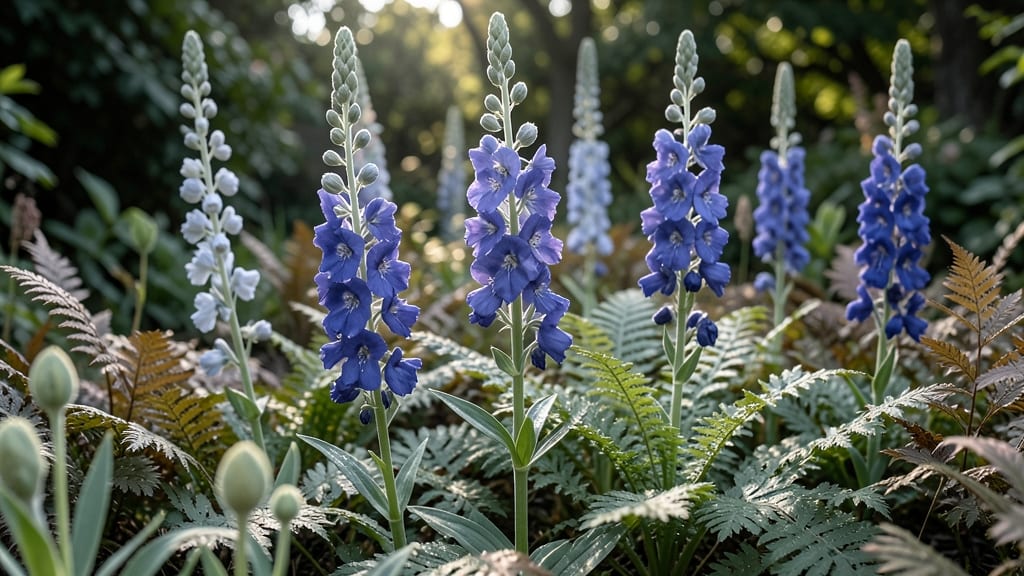
If your garden has north-facing beds or shaded corners where delphiniums struggle to shine, ferns are the unsung heroes you’ve been missing. Their delicate, lacy foliage creates a dreamy contrast to delphiniums’ bold vertical lines, while their moisture-retaining fronds help keep the soil consistently damp—perfect for shady spots.
Opt for woodland ferns like maidenhair or autumn fern, which thrive in partial to full shade and tolerate cooler temperatures. Plant them in clusters at the base of delphiniums to soften the transition from towering stems to ground level. Mulch with leaf litter to mimic their natural habitat and retain moisture, ensuring both plants stay lush.
This pairing is ideal for gardeners with woodland-style gardens or limited sun exposure—ferns add texture, movement, and a touch of whimsy without competing for attention. 🌿
Yarrow for Cut-Flower Arrangements

Want to extend your delphinium bouquets’ vase life while adding texture and structure? Yarrow (Achillea millefolium) is the unsung hero of cut-flower gardens, with its long, sturdy stems and feathery foliage that hold up beautifully alongside delicate delphinium spikes.
This drought-tolerant perennial thrives in full sun and well-drained soil—just like delphiniums—and its flat-topped clusters in shades of yellow, pink, or white create stunning contrasts. Snip stems at the base when buds first open for maximum longevity, and arrange them with delphiniums for a romantic, cottage-garden feel that lasts weeks.
Perfect for beginner gardeners or cut-flower enthusiasts, yarrow’s low-maintenance nature and pollinator appeal make it a must-have for any flower arrangement. 🌻