Pruning
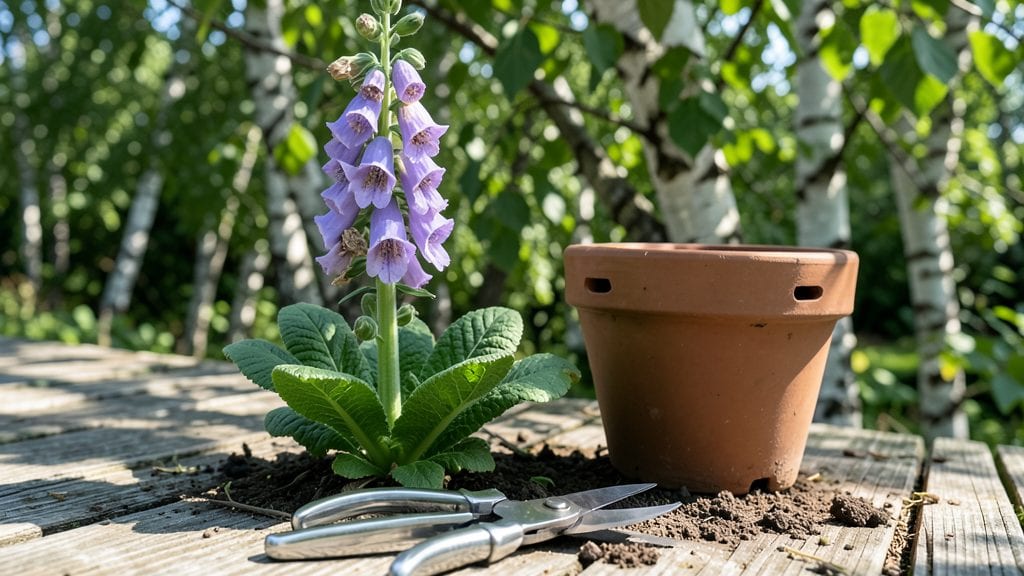
Deadheading foxglove plants extends their bloom time by redirecting energy from spent flowers to new growth—something I learned after watching my first batch of digitalis fade prematurely. The process is simpler than it seems, requiring just a sharp pair of pruners and a few minutes each week.
Foxgloves (Digitalis purpurea) naturally produce striking vertical spikes, but removing faded blooms encourages a second flush of flowers in late summer.
You’ll need basic tools: clean pruning shears, gloves (foxglove contains cardiac glycosides—handle with care), and a small bucket for clippings. The best time to deadhead is early morning when stems are firm and dew-free, avoiding wet conditions that spread disease.
Work systematically: start at the base of each spike and trim just above the next set of buds. This method preserves the plant’s structure while maximizing blooms.
Expect a second wave of flowers in 6-8 weeks, though results vary by variety and climate. Over-pruning weakens the plant, so avoid cutting more than one-third of the spike at once.
For advanced gardeners, saving seed pods from a few spikes ensures next year’s plants, but deadheading reduces seed production—choose based on your goals. The key is balance: encourage blooms now or save seeds later.
Common mistakes include trimming too late in the season (after Labor Day in most zones) or using dull tools that crush stems. If your foxgloves struggle, check for powdery mildew—a sign to space plants for better airflow.
With this approach, your digitalis will reward you with taller, fuller spikes and a prolonged display. Ready to try it?
📚 In This Guide
- What you need
- Instructions
- Tips and common mistakes
- Wrapping up and next steps
What you need
- ● Pruning shears or sharp scissors – Opt for bypass pruners (clean, sharp blades) to avoid crushing stems. Disinfect with rubbing alcohol before and after use.
- ○ Gloves (optional but recommended) – Wear gardening gloves to protect against foxglove sap (mildly toxic) and thorns.
- ● Trash bag or bucket – A small kitchen trash bag or 5-gallon bucket for collecting spent blooms.
- ● Compost bin access – Foxglove blooms are non-toxic to compost (avoid eating them, though!).
- ● Hand lens or magnifying glass – Helps spot hidden buds if you’re unsure where to cut.
- ○ Pruning sealant (optional) – A tree wound dressing (like Tanglefoot) can prevent disease if you’re dealing with damaged stems.
- ● Spray bottle with water – Keeps tools clean and dampens dust while working.
- ● Notebook & pen – Track bloom cycles or sketch your plant’s structure for future reference!
- ● Choose the right time – Deadhead on a dry, overcast day to reduce stress on the plant.
- ● Know your foxglove type – Some varieties (like Digitalis purpurea) are highly toxic—keep away from pets/kids!
- ● Sterilize tools – Prevents powdery mildew or fungal spread between cuts.
Deadheading foxglove plants: 3-Step method for longer blooms
Foxglove thrives when you remove spent blooms—here’s how to extend flowering effortlessly.
Identify and Select Spent Blooms
Foxglove’s tall spikes bear clusters of bell-shaped flowers that fade from vibrant hues to dull brown as they age. Look for blooms that have fully opened but now appear wilted or papery—these are ready for removal. I always work in the early morning when dew is present, as the stems are firmer and less likely to snap unexpectedly.
Focus on removing only the individual spent flowers, not entire stems. Each spike can produce multiple blooms sequentially, and cutting back too aggressively reduces the plant’s ability to rebloom. Use your fingers to gently pinch off the faded flowers at their base, just above the first set of healthy leaves or side buds.
Remove Blooms Without Damaging the Plant
Grasp the faded bloom firmly at its base and twist it cleanly away from the stem. Avoid yanking—this can tear the stem and leave it vulnerable to disease. If a bloom resists, use sharp, clean pruning shears to snip just above the next set of buds. I keep a small spray bottle of 70% isopropyl alcohol handy to wipe down the shears between cuts, ensuring no bacterial transfer.
Never cut into the woody part of the stem; foxglove’s energy for reblooming comes from the lower leaf nodes. If you accidentally sever too much, the plant may produce fewer flowers later in the season. Watch for fresh green buds forming at the base of each spike—these are your signal that the plant is still actively growing and capable of more blooms.
Encourage New Growth and Maintain Plant Health
After deadheading, step back and assess the overall health of the plant. Foxglove thrives in partial shade with well-draining soil, so if your plants appear leggy or sparse, consider providing afternoon shade during peak summer heat. Water at the base of the plant rather than overhead to prevent fungal issues, especially after deadheading.
Feed the plant with a balanced, water-soluble fertilizer diluted to half strength every 4-6 weeks during the growing season. This encourages robust new growth and more abundant blooms. I’ve found that foxglove responds well to a light application of compost around the base in early spring, which improves soil structure and nutrient availability for the next flowering cycle.
Finally, monitor for pests like aphids or slugs, which are more likely to target stressed plants. A quick inspection after deadheading helps catch issues early. With consistent care, your foxglove will reward you with taller, fuller spikes of blooms throughout the season.
Tips & tricks for perfect foxglove deadheading
A few strategic approaches will help you extend your foxglove's blooming season while keeping plants healthy and vigorous.
Timing is Everything: The early morning timing in Step 1 isn't just about convenience—it's about plant physiology. Dew-covered stems are naturally more pliable, reducing the risk of accidental breaks. I've found that working within two hours of sunrise gives me the best results, especially during hot, dry periods when stems become brittle. If you must work later in the day, water the plants thoroughly the night before to restore that natural flexibility.
Precision Over Speed: In Step 2, resist the temptation to rush through the deadheading process. Each bloom should be removed with deliberate care, focusing on the clean twist rather than a quick pinch. I've seen gardeners accidentally sever entire sections of stem when they pull too hard. Take your time to identify the exact point where the bloom meets the stem—this is where you want to apply just enough pressure to release it cleanly. A sharp pair of pruners makes this easier, but your fingers can deliver the same precision when used properly.
Post-Deadheading Care: After completing Steps 1 and 2, don't forget the immediate follow-up care mentioned in Step 3. The first 24 hours after deadheading are critical for plant recovery. I always give my foxglove a gentle watering at the base immediately after deadheading, which helps the plant recover from the minor stress of bloom removal. This small step makes a noticeable difference in the plant's ability to produce new blooms quickly. The 4-6 week fertilization schedule is perfect for maintaining consistent growth, but you can apply a light feeding immediately after deadheading if you notice any signs of stress in the foliage.
Seasonal Adjustments: Foxglove's needs change throughout the growing season. During the peak summer months, I increase my deadheading frequency to every 7-10 days rather than waiting for blooms to fully fade. This stimulates more frequent flowering but requires more frequent attention. In early fall, I reduce the frequency to every 2-3 weeks as the plant naturally slows its growth in preparation for winter. The key is to match your deadheading schedule to the plant's natural growth rhythm rather than working on a fixed calendar.
Pro Tips for Deadheading Foxglove Plants
- A few strategic approaches will help you extend your foxglove's blooming season while keeping plants healthy and vigorous.
- Timing is Everything: The early morning timing in Step 1 isn't just about convenience—it's about plant physiology.
- Precision Over Speed: In Step 2, resist the temptation to rush through the deadheading process.
Frequently asked questions
Got questions about deadheading foxglove?
Here are answers to the most common ones—so you can keep your plants thriving and blooming all season!
When is the best time to deadhead foxglove?
Deadhead foxglove after the flowers fade but before the seed pods form—typically in late spring to early summer. For continuous blooms, repeat every 2–3 weeks until frost. Avoid pruning in fall, as the plant needs energy to store nutrients for next year.
Can I cut foxglove stems all the way to the ground?
No—cutting too low can harm the plant. Instead, trim stems just above a set of healthy leaves (about 6–12 inches from the base). This encourages new growth while preserving the root system. For biennials, avoid heavy pruning in their first year.
What if my foxglove stops blooming after deadheading?
If blooms taper off, check for these issues:
- Over-pruning—leave at least half the stem intact.
- Poor soil—foxglove thrives in well-draining, slightly acidic soil (pH 6.0–7.0).
- Lack of sunlight—ensure partial shade (they hate scorching sun).
Do I need to deadhead foxglove every year?
Yes! Deadheading annually (or twice a year for perennials) prevents self-seeding and redirects energy to new flowers. Skipping it often leads to leggy stems and fewer blooms. Even biennials benefit—just avoid heavy cuts in their first year.
What’s a quick alternative if I miss deadheading?
If you skip deadheading, snip the entire flower spike at the base in early fall. This removes spent blooms and seed pods, letting the plant focus on root health. Just avoid cutting into woody stems—foxglove can get tough as wood!
Wrapping up and next steps
Deadheading foxglove plants is a simple yet powerful way to keep your garden vibrant and encourage more blooms! By removing spent flowers regularly, you’re not just tidying up—you’re giving your plants the energy to thrive.
With just a few tools and a little time, you can enjoy lush, long-lasting foxgloves for seasons to come. 🌸
Ready to put your new skills to work? Start by checking your plants weekly—the sooner you deadhead, the sooner you’ll see results! And don’t forget to share your progress with fellow gardeners for extra motivation. Happy pruning! ✂️🌿