
Planting
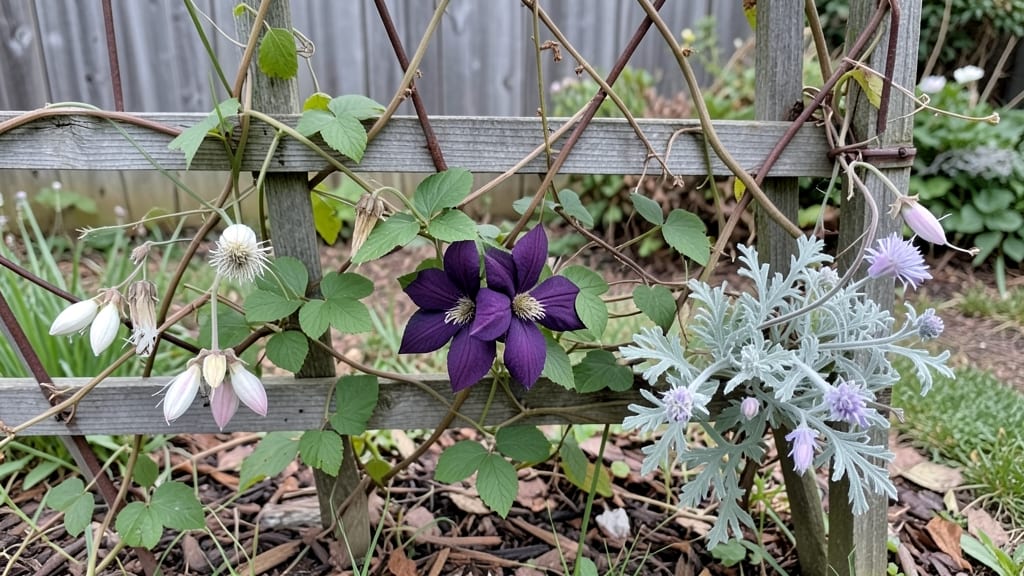
Choosing the right clematis plant names feels like picking a star for your garden—each one brings its own dazzle. 🌿 I’ve grown over a dozen varieties, and the difference between a Clematis montana climbing your fence and a Clematis viticella draping your arbor is night and day.
Some bloom early, others late, and a few even change color as they age.
Start with your garden’s conditions: Clematis jackmanii thrives in full sun, while Clematis lanuginosa prefers shade. The big-leafed Clematis heracleifolia handles heat better than delicate Clematis alpina, which loves cool climates. Size matters too—Clematis recta stays compact, while Clematis armandii can reach 20 feet.
You’ll find flowers in every shade imaginable—deep purples like Clematis ‘Niobe’, sunny yellows like Clematis ‘Bill MacKenzie’, or even the rare blue Clematis ‘Perle d’Azur’.
Some varieties repeat bloom all season, while others offer one spectacular show. Pair the right clematis with its perfect support—arbors, trellises, or even a sturdy tree branch.
Here’s the secret: most clematis need well-draining soil and consistent moisture, but the real magic happens when you match the plant to its spot. Once established, they reward you with years of effortless climbing beauty. Let’s pick the perfect one for your garden!
📚 In This Guide
- What you need
- Instructions
- Tips and common mistakes
- Wrapping up and next steps
What you need
- ● Clematis plants: Choose 1–3 varieties based on your hardiness zone (e.g., Clematis montana, Clematis jackmanii, or Clematis viticella). Opt for healthy, potted specimens with well-developed roots.
- ● Well-draining potting mix: 1–2 bags (10–15 lbs each) of high-quality compost or a mix designed for climbing plants.
- ● Support structure: A trellis, arbor, or sturdy fence (at least 6–8 feet tall for most varieties). Ensure it’s weather-resistant and securely anchored.
- ● Pruning shears: Sharp, clean shears (bypass-style recommended) for trimming and shaping.
- ● Mulch: 2–3 inches of organic mulch (e.g., wood chips or straw) to retain moisture and suppress weeds.
- ● Watering can or hose: With a gentle spray nozzle for even hydration.
- ● Fertilizer: A balanced, slow-release fertilizer (10-10-10 ratio) or organic options like composted manure.
- ● Plant ties or soft twine: To gently guide young vines onto the support structure.
- ● Garden gloves: For protection while handling thorny varieties or soil.
- ● Plant labels: To keep track of your clematis plant names and care notes.
- ● Fungicide (preventative): Copper-based or neem oil spray to ward off powdery mildew.
How to select and identify Clematis varieties by name
Here's how to navigate the world of clematis names—each one brings unique color, bloom time, and growth habits.
🌿 Step 1: Understand the Three Major Clematis Groups
Clematis varieties are grouped by pruning needs and bloom timing, which directly impacts their care. The Large-Flowered Group (Group 1) includes showstoppers like 'Jackmanii' and 'Nelly Moser', both of which bloom on old wood—meaning they set buds the previous year. Prune these only after flowering to avoid sacrificing next season's blooms.
The Early Large-Flowered Group (Group 2) features varieties like 'The President' and 'Comtesse de Bouchard', which bloom in late spring on old wood. These are perfect for early season color but require careful pruning to encourage reblooming. The Late Large-Flowered Group (Group 3) includes 'Henryi' and 'Jackmanii', which bloom on new wood—ideal for aggressive pruning in early spring.
Finally, the Small-Flowered Groups (4-6) like 'Montana' and 'Armand' bloom prolifically on new growth, making them low-maintenance choices. Knowing your group ensures you won’t accidentally prune off next year’s flowers.
🌱 Step 2: Match Varieties to Your Climate and Sun Exposure
Not all clematis thrive in every zone. Hardy varieties like 'Niobe' (Group 1) and 'Perle d'Azur' (Group 3) tolerate USDA Zones 4-9, while tender types such as 'Fascination' (Group 3) struggle below Zone 7. Check the USDA Hardiness Zone label on nursery tags—it’s your first clue for survival.
Sunlight needs vary too. Full sun (6+ hours daily) suits bold bloomers like 'Jackmanii', while partial shade (3-6 hours) protects delicate petals from scorching. Varieties like 'Vyvyan Pennell' (Group 3) actually prefer morning sun and afternoon shade—plant them where leaves won’t crisp in afternoon heat.
Here’s the trick: Observe your site’s microclimate. A north-facing wall stays cooler, while a south-facing trellis bakes by noon. Adjust by choosing shade-tolerant types like 'Betty Corning' (Group 1) for hotter spots.
💧 Step 3: Decode Names for Bloom Color and Season
Clematis names often hint at color and bloom time. For example, 'Pink Fantasia' (Group 3) lives up to its name with pink blooms in summer, while 'Ernest Markham' (Group 1) offers deep purple flowers in late spring. Some names even describe patterns: 'Multi Blue' (Group 3) features lavender-blue with darker centers, while 'Hagley Hybrid' (Group 1) has ruffled, rose-like petals.
Seasonal cues are in the name too. 'Early Sensation' (Group 2) blooms in late spring, while 'The President' (Group 2) reblooms in early summer. If you want continuous color, pair an early bloomer like 'Comtesse de Bouchard' with a late-season variety like 'Jackmanii'. The key is layering bloom times—no gaps in your climbing display.
Pro tip: Check the suffix. Many Group 3 varieties end with '-ii' (e.g., 'Jackmanii'), signaling they’re new-wood bloomers perfect for aggressive pruning. Group 1 names often include 'Moser' or 'Nelly'—classic old-wood reliables.
☀️ Step 4: Plan for Support Structures Based on Growth Habits
Clematis names reveal their growth habits. Vining types like 'Montana' (Group 6) climb aggressively and need strong trellises or arbors. Smaller varieties like 'Lanuginea' (Group 2) are happy on wire fences or mailbox posts. Always match the plant to the support—'Jackmanii' can reach 12-15 feet if given a sturdy structure.
Here’s how to translate names into support needs:
- "Grandiflora" varieties (e.g., 'The President') often need wide-spreading trellises.
- "Armand" types (e.g., 'Clematis armandii') thrive on tree trunks or fences.
- "Alpine" clematis (e.g., 'Clematis alpina') prefer rock gardens or low walls.
I’ve learned the hard way: Never skimp on support. A young 'Jackmanii' can double in size yearly—if your trellis sags under the weight, the plant will struggle to reach sunlight, leading to leggy growth and fewer blooms.
✂️ Step 5: Verify Pruning Requirements by Name
Pruning clematis correctly hinges on group identification, and names often give clues. Group 1 varieties (e.g., 'Nelly Moser') bloom on old wood, so you’ll only prune to shape and remove dead growth after flowering. Group 3 types (e.g., 'Fascination') bloom on new wood, so a hard prune in early spring (cutting back to 2-3 healthy buds) encourages vigorous reblooming.
Group 2 varieties (e.g., 'The President') are the trickiest—they bloom on old wood in spring and may rebloom on new wood in summer. Prune lightly after the first flush, then again in late summer to promote fall blooms. If you’re unsure, search the variety name + "pruning group"—nursery websites often list this clearly.
Here’s my foolproof method: Label your plants at the base with their name and group. When pruning season rolls around, you won’t second-guess which stems to cut. And remember: Sharp, clean cuts at a 45-degree angle (just above a bud) prevent disease and encourage stronger regrowth.
Tips & tricks for mastering Clematis variety selection
Decoding clematis names transforms guesswork into confident planting—here's how to decode their secrets like a pro.
Group Identification Shortcuts: Beyond memorizing groups, look for naming patterns. Group 1 varieties often include 'Moser' or 'Nelly' in their names (like 'Nelly Moser'), while Group 3 varieties frequently end with '-ii' (such as 'Jackmanii'). This naming convention is your secret weapon for quick identification when shopping. I always verify by checking the plant's tag or searching "variety name pruning group" online—it takes seconds and prevents costly pruning mistakes.
Climate Zone Cross-Referencing: When selecting varieties for your hardiness zone, start with the USDA Zone range printed on nursery tags. For example, 'Niobe' thrives in Zones 4-9, while 'Fascination' needs at least Zone 7. Pro tip: Create a simple chart matching your zone to recommended varieties. I keep mine on my phone for quick reference at garden centers—it's saved me from buying unsuitable plants multiple times. Remember, microclimates matter too: a south-facing wall might be a full sun zone even if your yard is Zone 6.
Bloom Time Layering Strategy: For continuous seasonal interest, plan your clematis selection like a floral calendar. Start with early bloomers like 'Early Sensation' (Group 2) for late spring color, then add mid-season varieties such as 'The President' (Group 2) for summer, and finish with late bloomers like 'Jackmanii' (Group 3) for fall. This layering approach ensures you'll have blooms from May through October. I've found that pairing Group 1 and Group 3 varieties creates the most dramatic seasonal displays, as they complement each other's bloom cycles.
Support Structure Planning: The most overlooked aspect of clematis planting is their support system. Always match the variety's mature height to your structure—'Jackmanii' needs a 12-15 foot trellis while 'Lanuginea' thrives on a simple mailbox post. Here's my foolproof method: measure your available vertical space first, then select varieties that fit. For example, if you only have 6 feet of wall space, consider 'Betty Corning' (Group 1) which typically reaches 8-10 feet. Never plant a vigorous climber like 'Montana' without a sturdy support system—it will quickly outgrow anything flimsy.
Pro Tips for Clematis Plant Names
- Decoding clematis names transforms guesswork into confident planting—here's how to decode their secrets like a pro.
- Group Identification Shortcuts: Beyond memorizing groups, look for naming patterns.
- Climate Zone Cross-Referencing: When selecting varieties for your hardiness zone, start with the USDA Zone range printed on nursery tags.
Frequently asked questions
What are the easiest clematis varieties for beginners?
Start with hardy, low-maintenance picks like Clematis montana (prolific blooms) or Clematis armandii (evergreen, fragrant). For vibrant colors, Clematis ‘Jackmanii’ is a classic purple favorite that thrives with minimal fuss. All three tolerate partial shade and occasional neglect!
When is the best time to plant clematis?
Plant in early spring or early fall (4–6 weeks before the first frost) for optimal root establishment. Avoid summer heat or winter freezing. If planting in containers, spring is ideal—just ensure roots stay moist until established. Pro tip: Prune dead stems before planting to encourage fresh growth!
Why aren’t my clematis flowers opening?
Common culprits include over-pruning (cut only dead or old wood), poor sunlight (most need 6+ hours of sun), or nutrient deficiencies. Feed with a balanced fertilizer in early spring and mid-summer. If blooms form but don’t open, check for pests (slugs, aphids) or disease (like powdery mildew).
Can I grow clematis in containers?
Choose compact varieties like Clematis ‘Niobe’ (deep purple) or Clematis ‘Freckles’ (tiny pink blooms). Use a large pot (15+ gallons) with drainage holes, and pair with a support trellis. Keep soil consistently moist—containers dry out faster than garden beds. Bonus: Move pots to partial shade in hot climates to prevent wilting.
How do I choose clematis based on bloom time?
| Season | Top Varieties | Color Palette |
|---|---|---|
| Early Spring | Clematis montana, ‘Broughton Star’ | White, pale pink |
| Summer | ‘Jackmanii’, ‘Perle d’Azur’ | Purple, blue, pink |
| Fall | ‘Henryi’, ‘The President’ | Red, burgundy, gold |
Pro tip: Mix varieties for non-stop color—early bloomers set the stage, while late-season types steal the show!
Wrapping up and next steps
Exploring the world of clematis plant names reveals a stunning array of climbing beauties, each with unique colors, blooms, and growing habits. Whether you're drawn to the elegant Clematis montana or the bold Clematis jackmanii, there’s a variety to suit every garden style.
With the right care, these vines can transform your space into a vertical paradise!
Ready to bring some climbing charm to your garden? Start by selecting a clematis that matches your climate and sunlight preferences, then gather your supplies and dive in! 🌿✨ Your future trellis masterpiece awaits—happy planting!