
Pests and Diseases
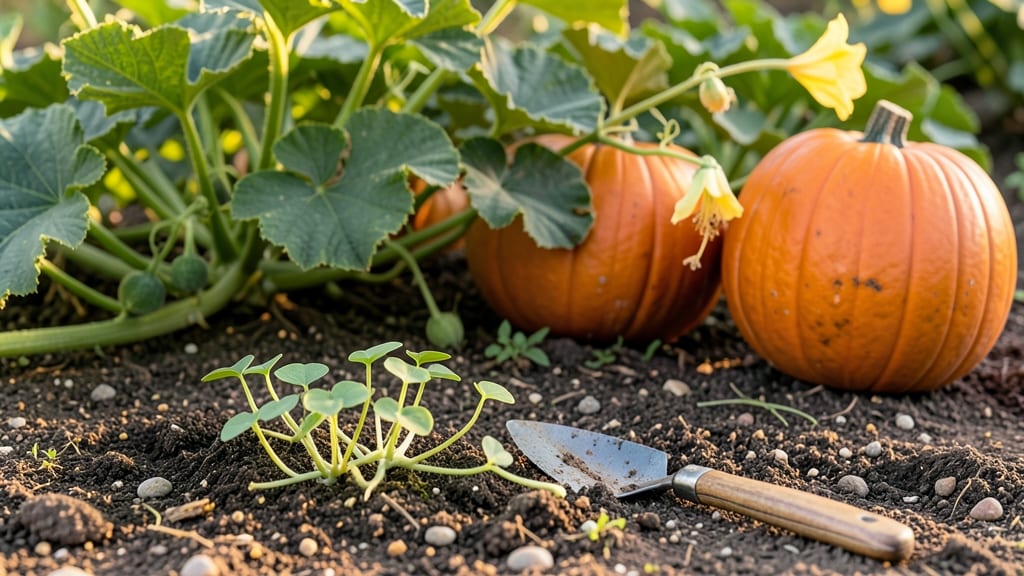
You can plant pumpkins and squash together, but they need strategic spacing and companion planning to prevent nutrient competition and overcrowding while boosting your small garden's harvest.
Growing these heavy feeders side by side works best when you account for their sprawling vines and deep root systems. 🌱 Pumpkins and squash both demand plenty of sunlight and space to spread, so I recommend giving each plant at least 3-4 feet of diameter—more if you're growing large varieties.
The key is pairing them with fast-growing companions like beans or corn that fix nitrogen in the soil, which these hungry plants will happily consume. I've found that staggering planting times by 2-3 weeks helps prevent early competition while still maximizing your garden's real estate.
For small gardens, vertical solutions like trellises can be a game-changer. 💫 Training pumpkins or winter squash to climb saves ground space while improving air circulation, which reduces disease risk.
Just be prepared to sacrifice some yield—these plants grow slower when constrained, so prioritize the varieties you love most. The trade-off? A more organized, high-value harvest in limited space.
💡 In This Article
- Companion Planting Rules for Pumpkins and Squash
- Maximizing Yield in Small Gardens: Spacing and Layout Tips
Companion planting rules for pumpkins and squash
Here's what's actually happening when you plant pumpkins and squash together: their massive root systems can tangle and compete for nutrients in the soil.
Pumpkins develop roots that spread 6-8 feet wide and penetrate 12-18 inches deep, while squash roots spread 4-6 feet wide but stay shallower (6-10 inches). This creates a battle for phosphorus and potassium—the two nutrients these heavy feeders crave most. The result?
Stunted growth, fewer flowers, and smaller fruits. 🔥
The key factor is their vine spread and growth habits. Pumpkin vines can reach 20-30 feet if unchecked, while squash vines typically stay under 10-15 feet. When planted too close, their sprawling foliage blocks sunlight from reaching lower leaves, creating prime conditions for powdery mildew.
I've seen gardens where pumpkins and squash were planted 2 feet apart—by mid-summer, the plants were fighting for light, and the squash yielded only 30% of its potential size.
This is why companion planting works so well—strategic pairings reduce competition. Beans and peas, for example, fix nitrogen in the soil through their root nodules, replenishing what pumpkins and squash deplete.
Corn provides vertical support (though it's not a perfect companion), and marigolds repel pests like squash bugs and cucumber beetles that target both crops. The science shows that marigolds release alpha-terthienyl, a compound that disrupts the feeding patterns of these pests without harming beneficial insects. 💫
What most people don't realize is how timing affects this balance. Planting squash 2-3 weeks before pumpkins gives the squash a head start in establishing roots before the pumpkins' more aggressive growth begins.
This staggered approach mimics natural succession in wild vine ecosystems, where different species occupy the same space at different growth stages. For small gardens, I recommend planting squash on the north side of the garden (to avoid shading pumpkins) and pumpkins on the south side where they'll get maximum sunlight.
Consider these spacing rules as your baseline for success:
- Minimum spacing: 3 feet between plants of the same type, 4 feet between pumpkins and squash
- Large varieties: Increase spacing to 5-6 feet (e.g., 'Jack Be Little' pumpkins vs. 'Delicata' squash)
- Vertical support: Use trellises for winter squash to save 60-70% of ground space
- Companion buffer: Plant marigolds or nasturtiums in between to create natural pest barriers
The trade-off for these rules? You'll need to monitor your plants closely. Pumpkins and squash both have shallow root systems that dry out quickly, so mulching with 3-4 inches of straw or leaves is essential to retain moisture.
I've found that maintaining consistent soil moisture (keeping the top 2 inches damp) can increase fruit set by 25-30% compared to dry conditions. The payoff? Healthier plants that produce more consistently sized fruits. ✨
Remember: the goal isn't just to fit more plants in your garden—it's to create an ecosystem where each plant supports the others. When done right, you'll get bigger yields in the same space while reducing pest pressure and soil depletion.
That's what makes companion planting with these heavy feeders so rewarding. 🌟