
Plants
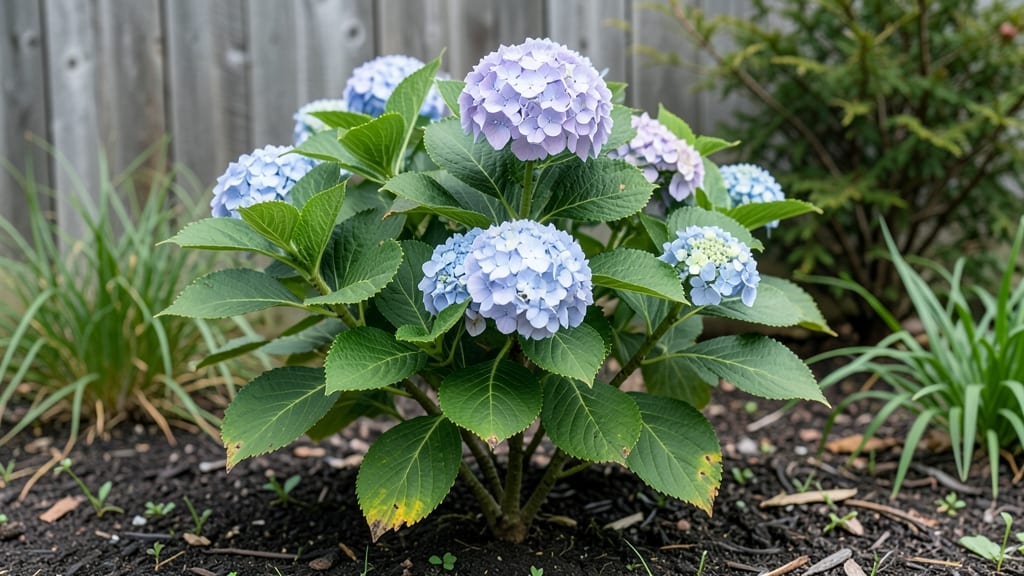
Bigleaf hydrangea plants thrive with late-winter or early-spring pruning just before new growth begins, ensuring vibrant blooms by midsummer. Avoid pruning after mid-July to preserve next year’s flower buds, which form on old wood. Use clean, sharp shears to trim back 1/3 of the previous year’s growth for optimal shape and flower production.
The timing of your cuts directly impacts both bloom size and color intensity. Bigleaf hydrangeas develop flower buds on last year's stems, so pruning too late can sacrifice next season's display.
I've noticed that plants pruned in early spring often produce brighter blooms because they have more energy to focus on flower development. Additionally, the soil pH plays a role—acidic conditions (pH < 6.0) encourage blue flowers, while alkaline soil (pH > 7.0) shifts them toward pink. 🌸
For best results, I always prune after the last hard frost but before buds swell. This window gives the plant enough time to establish new growth before summer heat arrives. The 1/3 reduction rule isn't arbitrary—it maintains the plant's energy balance while encouraging bushier growth.
If you're unsure about your hydrangea's variety, a quick check of last year's blooms will reveal whether it's a reblooming type (which can handle light summer pruning) or a once-blooming variety that needs strict winter pruning.
💡 In This Article
- How Bigleaf Hydrangea Bloom Cycles Work
- Step-by-Step Bigleaf Hydrangea Pruning Guide
How bigleaf hydrangea bloom cycles work
The magic of bigleaf hydrangea blooms begins in late summer when flower buds form on old wood—the stems that grew last season. These buds remain dormant through winter and burst into color in spring.
What's fascinating is how the plant allocates resources: up to 70% of its energy goes toward developing these buds between July and September.
If you prune after this window, you risk removing next year's flowers before they even form. 🌿 The buds themselves are tiny, barely visible, but they contain all the genetic instructions for next season's blooms.
Here's where soil pH enters the picture: the same buds that determine bloom timing also react to soil chemistry. Bigleaf hydrangeas contain anthocyanins, pigments that shift color based on aluminum availability in the soil.
In acidic soil (pH 5.0-5.5), aluminum becomes soluble, allowing the plant to absorb it and produce blue flowers. Conversely, alkaline soil (pH 7.0+) locks out aluminum, resulting in pink blooms. The color change happens at the cellular level—anthocyanin molecules bind differently to aluminum ions, altering light reflection.
This is why you might see a single plant with both blue and pink flowers if the soil pH varies in different sections.
The plant's growth cycle follows a predictable pattern: new stems emerge in spring from dormant buds, grow rapidly through summer, and then harden off in fall. Each stem typically produces 1-3 flower clusters on its lower half, while the upper growth remains vegetative.
This is why the 1/3 pruning rule works so well—it removes the oldest, least productive stems while preserving the younger growth that will carry next year's flowers. Over-pruning can create a "haircut" effect where the plant focuses all its energy on leaf production rather than blooms. 🌸
Environmental factors also play a crucial role. Bigleaf hydrangeas need 6-8 hours of sunlight daily to set strong flower buds, but they can tolerate partial shade. Too much shade (less than 4 hours of sun) reduces bloom size by up to 40%), while full sun can cause leaf scorch.
The plant's response to temperature is equally precise: buds form best when daytime temperatures stay between 70-85°F during summer. Cooler nights (55-65°F) help the plant transition into dormancy more smoothly, preparing it for winter survival.
What most gardeners don't realize is that bigleaf hydrangeas have a built-in "memory" system. The plant tracks the length of daylight hours through a process called photoperiodism, which triggers bud formation.
This is why late summer pruning is so damaging—it confuses the plant's internal clock, potentially delaying or preventing bud development.
The buds themselves are remarkably resilient, capable of surviving temperatures down to -15°F when properly hardened off, but they need protection from late-season frost that can damage emerging shoots in spring.