
Companion Plants
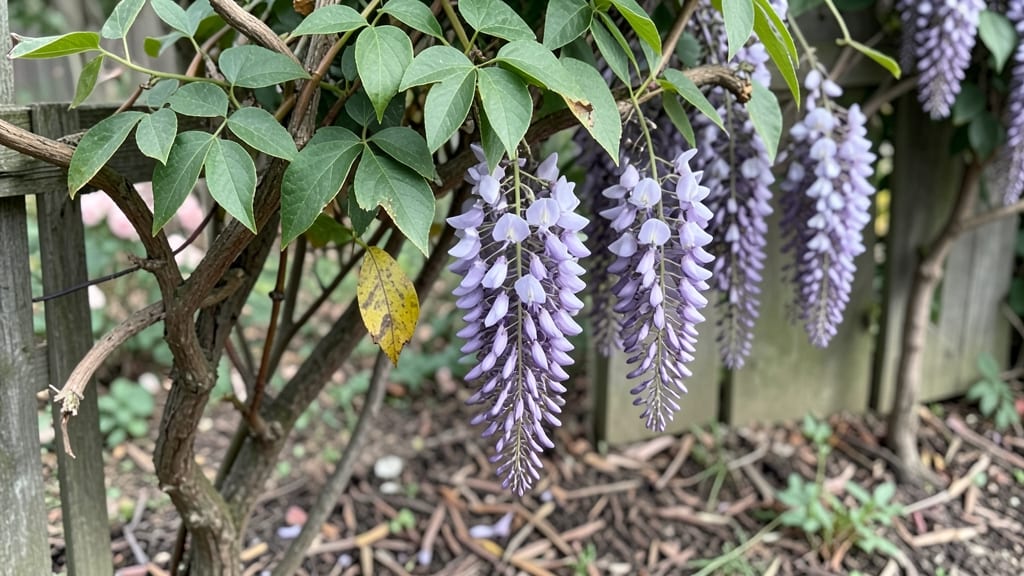
Amethyst wisteria plants bring a dramatic purple cascade to vertical spaces that no other vine can match. I fell for this variety after seeing how it transformed a bare fence into a fragrant, flowering waterfall—something that looks like a fairy tale but grows from real seeds.
The key to success lies in its climbing habit and how you support it early, because those long, graceful stems need guidance before they get heavy with blooms.
You’ll need a sturdy trellis, arbor, or pergola to handle the weight—think 10-15 feet of vertical space for mature plants—and well-draining soil rich in organic matter. Amethyst wisteria thrives in full sun but tolerates partial shade in hotter climates, making it versatile for different gardens.
The real magic happens in late spring when those lavender-blue flower clusters appear, filling the air with a sweet, intoxicating scent that draws hummingbirds and bees like magnets.
Pruning is where most gardeners trip up, but with this variety, you focus on shaping rather than harsh cuts. After flowering, trim back about one-third of the previous year’s growth to encourage bushier stems and more blooms next season.
The purple blooms may fade to brown, but they stay attractive as seed pods—just leave them if you want next year’s show to start early.
Winter care is simple: mulch heavily around the base to protect roots in colder zones, and avoid heavy pruning until late winter when new growth signals it’s safe. Even in tough winters, amethyst wisteria bounces back with vibrant green foliage by spring, proving it’s worth the patience.
Once established, these vines reward you with decades of effortless beauty—if you give them the right start.
📚 In This Guide
- What you need
- Instructions
- Tips and common mistakes
- Wrapping up and next steps
What you need
- ● Amethyst Wisteria Plant: 1 healthy, potted specimen (preferably 1–3 years old for best vigor). Look for lush foliage and vibrant purple blooms!
- ● Vertical Garden Structure: Trellis, arbor, or obelisk (minimum 6–8 feet tall to support climbing vines).
- ○ Garden stakes or wire mesh (optional, for extra support during early growth).
- ● Potting Soil: 3–5 gallons of well-draining, nutrient-rich potting mix (amend with perlite or compost for aeration).
- ● Containers: 1 large pot (15–20 gallons) with drainage holes for the wisteria.
- ○ Optional: Smaller pots for companion plants (see Companion Planting Tips section!).
- ● Fertilizer: Balanced 10-10-10 or 20-20-20 granular fertilizer (1 tbsp per plant initially).
- ● Slow-release organic fertilizer (e.g., worm castings or fish emulsion) for long-term growth.
- ● Watering Can or Hose: With a gentle spray nozzle (wisteria hates soggy roots!).
- ● Pruning Shears: Sharp, sterilized shears (for shaping and maintenance).
- ● Mulch: Wood chips or shredded bark to retain moisture and regulate soil temp.
- ● Companion Plants: Pair with clematis, roses, or lavender for a stunning vertical display!
- ● Plant Ties: Soft jute or fabric ties to secure young vines to the trellis.
- ● Soil pH Test Kit: Ensure your soil is slightly acidic (6.0–7.0)—wisteria loves it!
- ● Decorative Accents: Solar-powered lights or hanging planters to elevate your garden’s charm.
Instructions for planting and caring for amethyst wisteria
Here's how to bring that stunning purple cascade to life in your garden—step by step.
Choose the Perfect Planting Location
Amethyst wisteria thrives in full sun to partial shade, with at least 6 hours of direct sunlight daily for best flowering. I always pick a spot where the vine can climb a trellis, arbor, or fence—this plant grows 10-20 feet per year if given the right conditions. The soil should drain well, so avoid low-lying areas where water pools after rain.
If your yard has heavy clay soil, amend it with 2-3 inches of compost mixed into the top 12 inches before planting. This improves drainage and gives the roots the nutrients they crave. Test the soil pH—amethyst wisteria prefers 6.0 to 7.0, so adjust with lime if needed. You’ll know you’ve picked the right spot when the soil feels loose and crumbly when squeezed, not compacted.
Plant at the Right Depth and Support
Dig a hole twice as wide as the root ball but no deeper—this prevents the plant from sitting too low and risking rot. Gently remove the plant from its container and loosen any circling roots with your fingers. Place it in the hole so the top of the root ball sits just below the soil line, not buried deeper. This ensures the stem stays healthy and doesn’t suffocate.
Install a strong trellis or support structure at least 6 feet tall before planting. Amethyst wisteria needs something sturdy to climb—bamboo stakes or a metal arbor work best. Position the support 12-18 inches from the planting hole so the vine can reach it immediately. Backfill the hole with soil, pressing lightly around the roots to remove air pockets. Water deeply right after planting to settle the soil and encourage root growth.
Water and Mulch for Strong Growth
Keep the soil consistently moist but not soggy for the first 4-6 weeks after planting. Water deeply 2-3 times per week, checking the top 2 inches of soil—if it feels dry, it’s time to water again. Avoid overhead sprinklers, which can cause fungal diseases. Instead, water at the base of the plant early in the morning so the leaves dry quickly.
Spread 2-3 inches of mulch around the base, keeping it 6 inches away from the stem to prevent rot. I use shredded bark or wood chips because they break down slowly and improve soil structure over time. Mulch helps retain moisture, suppresses weeds, and keeps roots cool in summer. Replenish the mulch layer every 6 months to maintain its effectiveness.
Prune and Train for a Lush Cascade
Prune amethyst wisteria in late winter or early spring, before new growth begins. Cut back one-third of the previous year’s growth to encourage bushier, more abundant blooms. Remove any dead, diseased, or crossing branches first—they can spread problems or block sunlight. Use clean, sharp pruners to make cuts just above a leaf node or bud, angled slightly away from the branch.
Train young vines by gently tying them to the trellis with soft plant ties every 6-8 inches as they grow. This prevents the weight of the plant from pulling branches down. Once established, amethyst wisteria will climb on its own, but early support ensures a stronger structure. Watch for new shoots in spring—they’ll be your signal to adjust ties or prune as needed.
Fertilize for Vibrant Purple Blooms
Feed your amethyst wisteria in early spring with a balanced, slow-release fertilizer (10-10-10 ratio). Sprinkle ½ cup around the base of the plant, then water deeply to help it absorb. Avoid high-nitrogen fertilizers—they promote leafy growth at the expense of flowers. Repeat in mid-summer with a low-nitrogen, high-phosphorus fertilizer (5-10-10) to encourage blooming.
You’ll know your plant is happy when it produces long, cascading clusters of purple flowers in late spring. Deadhead spent blooms by cutting the stem back to the nearest leaf node—this redirects the plant’s energy into new growth and more flowers. With proper care, amethyst wisteria will reward you with years of stunning vertical color and a fragrant display that draws hummingbirds and bees to your garden.
Tips & tricks for perfect amethyst wisteria planting
A few key strategies that'll help your amethyst wisteria thrive and create that stunning purple cascade you're dreaming of.
The Sunlight Secret: In Step 1, when choosing your planting location, remember that those 6 hours of direct sunlight are non-negotiable for vibrant blooms. I've seen amethyst wisteria in partial shade still produce flowers, but the color intensity and bloom quantity will be significantly reduced. If your yard has areas with less than 6 hours of sun, consider using it as a decorative focal point near a sunny window or balcony instead.
Root Ball Placement: During Step 2, when planting, pay special attention to the root ball position. The top should sit just below the soil line—not buried deeper, not sticking out. I learned this the hard way after planting one too deep, which led to stem rot. Use a reference point like the top of the container's rim to gauge the correct depth. This small detail makes a big difference in your plant's long-term health.
Watering Wisdom: In the first 4-6 weeks after planting (Step 3), consistency is everything. I recommend using a moisture meter to check that top 2 inches of soil—it's the most reliable way to determine when you need to water again. Early morning watering is crucial because it gives the leaves plenty of time to dry before evening, reducing the risk of fungal diseases that can plague wisteria plants.
Pruning Precision: When you're ready to prune in late winter or early spring (Step 4), make your cuts just above a leaf node or bud, angled slightly away from the branch. This technique encourages new growth in the right direction. I always prune about one-third of the previous year's growth, but if your plant is particularly vigorous, you might need to trim back a bit more to maintain that beautiful cascading shape.
Pro Tips for Amethyst Wisteria Plants
- A few key strategies that'll help your amethyst wisteria thrive and create that stunning purple cascade you're dreaming of.
- The Sunlight Secret: In Step 1, when choosing your planting location, remember that those 6 hours of direct sunlight are non-negotiable for vibrant blooms.
- Root Ball Placement: During Step 2, when planting, pay special attention to the root ball position.
Frequently asked questions
Got questions about growing amethyst wisteria plants? You’re not alone—this stunning purple climber has its quirks! Here are answers to the most common queries to help you cultivate a thriving vertical garden.
How fast does amethyst wisteria grow, and how tall can it get?
Amethyst wisteria is a fast grower—expect 3–6 feet per year with proper care! Mature plants can reach 20–30 feet when trained on trellises or arbors. For compact gardens, prune aggressively in late winter to control height. Pro tip: Use a sturdy support system early to avoid structural stress!
When is the best time to plant amethyst wisteria?
Plant in early spring or fall when soil temps are mild (50–70°F). Avoid extreme heat or frost, as young roots are sensitive. For container growing, spring planting works best—just ensure the pot has drainage holes and is large enough (15+ gallons for mature plants).
How often should I water amethyst wisteria, and what’s the ideal soil?
Water deeply 1–2 times per week (more in blazing sun or containers). Soil should drain well but retain moisture—aim for a mix of 60% loam, 20% compost, and 20% perlite/sand. Warning: Overwatering causes root rot, so check soil moisture 2 inches down before watering again!
Can I grow amethyst wisteria in containers, and what’s the best trellis?
Yes! Containers work beautifully if they’re at least 18 inches deep with fast-draining soil. For trellises, choose metal or wooden lattice (avoid plastic—it degrades). Vines need horizontal support to climb, so opt for a cage-like structure or a sturdy arbor. Bonus: Rotate the pot occasionally for even growth!
What pests or diseases should I watch for with amethyst wisteria?
Common issues include aphids, spider mites, and powdery mildew. Treat pests with neem oil or insecticidal soap. For mildew, improve airflow and avoid overhead watering. Preventative tip: Mulch around the base to deter soil-borne diseases and keep roots cool.
Are there alternatives to amethyst wisteria for smaller spaces?
If space is tight, try these purple-climbing companions:
- Clematis (drought-tolerant, blooms all season)
- Morning glories (fast-growing annuals, great for trellises)
- Passionflower (unique foliage, thrives in partial shade)
- Dwarf wisteria (Wisteria floribunda ‘Amethyst Falls’)
Wrapping up and next steps
Transforming your space with amethyst wisteria plants isn’t just about adding beauty—it’s about creating a thriving, vertical garden that’s both functional and breathtaking. These purple cascades bring elegance, pollinator support, and a touch of whimsy to any outdoor (or indoor!) setting.
Whether you’re a seasoned gardener or just starting, the key is patience, proper care, and a little creativity.
Ready to dive in? Start small—plant a single amethyst wisteria in a trellis or hanging pot, and watch your garden bloom with color and life! 🌸 For even more inspiration, explore companion plants like clematis or roses to create a stunning, layered display. Happy gardening!