
Pruning
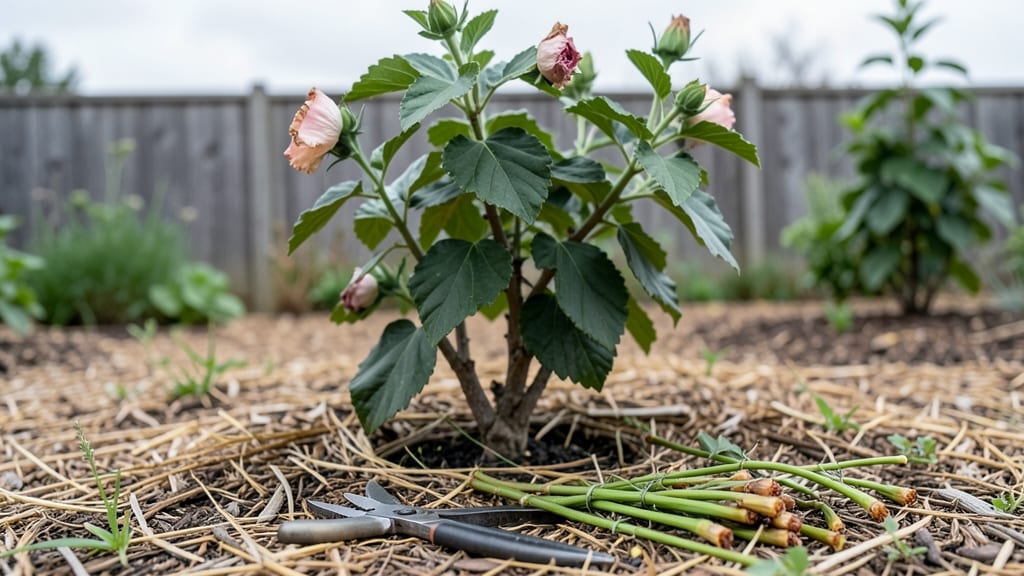
Pruning hardy hibiscus plants transforms them from occasional bloomers into nonstop flower machines. ✨ I learned this the hard way after my first winter—what looked like a dead stickburst into vibrant blooms by summer, proving those strategic cuts actually save the plant’s energy for flowers.
The secret lies in timing, technique, and knowing exactly where to cut without hacking away at next year’s blooms.
You’ll need sharp pruners (cleaned with rubbing alcohol), a pair of gloves, and a clear day to assess the plant. Focus on three cuts: removing dead wood first, then thinning out crowded branches, and finally shaping for airflow.
Hardy hibiscus bloom on new growth, so the more you prune back in late winter, the more flowers you’ll coax by midsummer. Think of it as giving your plant a fresh start—just like a haircut for a bush that’s been growing wild.
What you’ll end up with is a bush that looks like it belongs in a botanical garden, not your backyard. The blooms arrive earlier, last longer, and the plant stays compact enough to fit in smaller spaces.
My hibiscus now produces flowers from June through October, with some varieties even blooming in late fall before frost. The key is patience—prune too aggressively, and you’ll stunt next year’s growth.
This method works for both tropical and hardy hibiscus varieties, though hardy types handle winter pruning better. Even if you’ve pruned hibiscus before, you’ll likely discover a few new tricks here—like how to spot hidden buds or when to stop cutting.
Let’s get those shears ready and turn your hibiscus into a blooming powerhouse.
📚 In This Guide
- What you need
- Instructions
- Tips and common mistakes
- Wrapping up and next steps
What you need
- ● Pruning shears: Bypass pruners (for clean cuts on smaller stems) or loppers (for thicker branches). Opt for sharp, stainless-steel blades (e.g., Felco or Fiskars models).
- ● Hand pruners: A compact pair (like the Corona Ratchet Pruner) for precision work on delicate stems.
- ● Disinfectant: 70% isopropyl alcohol or a 10% bleach solution (1 part bleach to 9 parts water) to sterilize tools between cuts.
- ● Gloves: Heavy-duty gardening gloves (e.g., Mechanix Wear) to protect against thorns and bacteria.
- ○ Pruning saw: Optional but handy for thick, woody stems (e.g., Fiskars X7 curved blade).
- ● Rubbing alcohol or hydrogen peroxide: For cleaning wounds on the plant after pruning (3% solution).
- ● Gardening twine or plant ties: To secure branches if you’re doing heavy structural pruning.
- ● Sharpie or marker: For labeling branches if you’re experimenting with different pruning techniques.
- ● Compost bin or mulch: To dispose of pruned material (hibiscus clippings decompose quickly!).
- ● Plant food: A balanced fertilizer (e.g., 10-10-10) to apply post-pruning for a growth boost.
- ● Check the weather forecast—prune on a calm, dry day (avoid rain for 24 hours post-pruning).
- ● Know your hibiscus’s growth stage (spring, summer, or winter) to time cuts correctly.
- ● Have a clear goal: Are you shaping, rejuvenating, or encouraging blooms?
How to prune hardy hibiscus for continuous, show-stopping blooms
Hardy hibiscus thrives with intentional pruning—here’s how to shape it for year-round color without stressing the plant.
✂️ Step 1: Perform the Late-Winter Cleanup Cut
This is the most critical cut of the year. Wait until after the last frost when new growth begins—you’ll spot tiny buds forming at the base of stems. Grab your pruners and cut back one-third of the plant’s height, removing dead, damaged, or crossing branches first. I always start at the bottom and work upward to maintain a natural shape.
Focus on removing stems that are thinner than a pencil—these won’t produce strong blooms. Leave 3-5 sturdy, healthy stems per plant to encourage robust growth. The goal here is to open up the center for airflow and sunlight, which prevents fungal diseases that plague hibiscus. You’ll see fresh green shoots emerging within 2-3 weeks—that’s your signal the plant is responding well.
✂️ Step 2: Light Summer Pruning for Shape and Encouraging More Blooms
About 6-8 weeks after the late-winter cut, when the plant has established new growth but before it flowers heavily, do a light shaping prune. Look for stems that are growing inward or upward—these compete for energy and produce fewer blooms. Cut these back to just above a leaf node or outward-facing bud to redirect growth toward the plant’s edges.
I never remove more than 10-15% of the plant’s foliage in this step. The key is to maintain an open, vase-like shape. You’ll notice the plant fills out more evenly and develops more side branches, which is where hibiscus produces its most vibrant flowers. Avoid pruning after mid-summer—new growth won’t harden off before frost, and you’ll lose those tender shoots to cold.
✂️ Step 3: Post-Bloom Renewal Cut for Fall Prep
After the hibiscus finishes blooming in late summer or early fall, give it a final light prune to remove spent flowers and any leggy growth. Cut back stems that have finished flowering to just above the nearest outward-facing leaf or bud. This encourages a fresh flush of growth that can sometimes bloom again before frost, especially in warmer climates.
I also use this cut to thin out any overly dense areas. Hardy hibiscus can handle this late pruning because it’s a deciduous shrub, not a tropical one. You’ll see new shoots emerge from the base and along the stems—these will harden off over fall and come back stronger next year. Stop pruning entirely once temperatures drop below 40°F to protect tender new growth.
🌿 Bonus Step: Year-Round Maintenance Checks
Between the three main cuts, do quick monthly inspections. Remove any dead or diseased branches immediately with clean, sharp pruners—this prevents problems from spreading. I also pinch off the first few blooms that appear in spring to encourage the plant to put energy into developing stronger stems for later, bigger blooms.
Watch for signs of stress like yellowing leaves or blackened stems—these often indicate fungal issues from poor airflow. Adjust your pruning in future years to keep the center of the plant more open. With these cuts, your hibiscus will reward you with bold, continuous blooms from early summer through frost, and even into fall in mild climates.
Tips & tricks for pruning hardy hibiscus
These pruning secrets will help you transform your hibiscus into a year-round blooming powerhouse without stressing the plant.
The Timing Secret: Timing is everything with hibiscus pruning. In Step 1, wait until you see those tiny buds forming at the base of stems—this means the plant has survived winter and is ready to grow. If you prune too early, you risk cutting off new growth before it starts. I always check for these buds in late winter to confirm it's time for the cleanup cut. This precise timing ensures your plant has the best possible start to the growing season.
Tool Tip: Use clean, sharp pruners for every cut—dull tools crush stems and create entry points for diseases. I sterilize my pruners with rubbing alcohol between cuts, especially when removing diseased branches. For thicker stems, I use loppers to make clean cuts just above outward-facing buds. The cleaner the cut, the faster the plant recovers and the better it blooms.
Visual Cues for Pruning: When doing your light summer pruning in Step 2, look for stems that grow inward or upward—they're competing for energy with your outward-facing blooms. Cut these back to just above a leaf node or outward-facing bud. You'll notice the plant develops more side branches after this step, which is where hibiscus produces its most vibrant flowers. Think of it as sculpting the plant to encourage the best possible bloom production.
Seasonal Strategy: The 40°F threshold in Step 3 is your hard cutoff for pruning. Once temperatures drop below this, new growth becomes vulnerable to frost damage. I always check the weather forecast before doing my fall pruning to ensure we have at least a week of mild temperatures for new shoots to establish. This seasonal awareness prevents winter damage and sets your plant up for a strong spring comeback.
Pro Tips for Pruning Hardy Hibiscus Plants
- These pruning secrets will help you transform your hibiscus into a year-round blooming powerhouse without stressing the plant.
- The Timing Secret: Timing is everything with hibiscus pruning.
- Tool Tip: Use clean, sharp pruners for every cut—dull tools crush stems and create entry points for diseases.
Frequently asked questions
Got questions about pruning your hardy hibiscus?
You’re not alone! Whether you're a newbie gardener or just want to refine your skills, these FAQs will help you keep your plants thriving. Let’s dive in!
When is the best time to prune hardy hibiscus?
Prune hardy hibiscus three times a year: late winter/early spring (to shape and remove dead wood), summer after blooming (to encourage new growth), and fall (for light cleanup before winter). Avoid pruning in extreme cold or heat—aim for mild, dry days.
How much should I cut back my hardy hibiscus?
For late winter/early spring, cut back 1/3 to 1/2 of the plant’s height to promote bushiness. In summer, trim just enough to remove spent blooms and encourage new flowers. Avoid over-pruning—hardy hibiscus can bounce back, but drastic cuts may stress the plant. Think "shape, not shear!"
What if I prune at the wrong time?
Pruning at the wrong time (like mid-winter or late fall) can stunt blooms or leave the plant vulnerable to frost damage. If you’ve already pruned too early, don’t panic! Just focus on light maintenance (removing dead branches) and give the plant extra care—fertilizer and water—to help it recover.
Can I prune hardy hibiscus too much?
Yes! Over-pruning—especially in one session—can weaken the plant, reduce flowering, and even kill it. Hardy hibiscus is resilient, but gradual, strategic cuts work best. If you’ve already gone overboard, trim back only the most extreme cuts and monitor for new growth. Patience is key!
Will pruning make my hibiscus bloom more?
Pruning stimulates new growth and removes spent blooms, which triggers more flowers. The summer prune (after blooming) is especially effective—it encourages a second flush of vibrant blooms. Just remember: timing and technique matter more than aggressive cutting!
Wrapping up and next steps
Pruning your hardy hibiscus doesn’t have to be intimidating—it’s all about timing, technique, and a little love! 🌸 With just three strategic cuts (spring, summer, and fall), you’ll encourage vibrant blooms year-round while keeping your plant healthy and thriving.
Remember, sharp tools, clean cuts, and patience are your best friends in this process.
Now that you’re armed with the know-how, roll up your sleeves and give your hibiscus the care it deserves! Start by assessing your plant this week—notice any overgrown branches or leggy stems?
That’s your cue to grab those pruners and get pruning! For even more tips, join a gardening community or share your progress online—your fellow green thumbs will cheer you on! 🌿✨