Tools
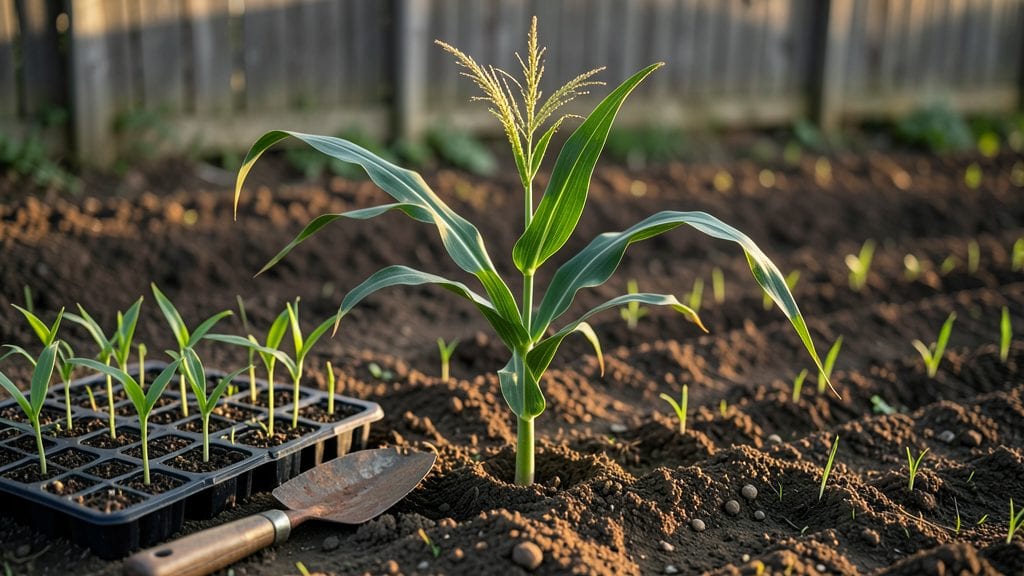
Sweet corn transforms a garden from ordinary to extraordinary with its towering stalks and golden kernels. 🌽 I planted my first row last summer and ended up with enough ears to share with neighbors—no fancy equipment needed, just the right spacing and timing.
The secret isn’t just planting; it’s giving each plant enough elbow room so they don’t crowd each other out, leading to those plump, juicy ears you crave.
Start with loose, well-drained soil rich in compost—corn loves to sink its roots deep. You’ll need seeds (or transplants if your growing season is short), a hoe for marking rows, and a watering can.
Plant seeds 1 inch deep, 4 inches apart in rows that are 3 feet apart. If you’re using transplants, space them 6 inches apart—they’ll need more room to bulk up.
The key is patience: seeds take 7-10 days to sprout, and stalks won’t be ready for harvest until 60-90 days after planting.
By midseason, you’ll see tassels forming at the top and silks emerging from the ears below—this is when the magic happens. Keep the soil consistently moist (not soggy) and watch for pests like corn earworms. A simple trick?
Plant marigolds nearby—they deter pests naturally. When the silks turn brown and the kernels are milky when pierced, it’s harvest time. One well-spaced row can yield 50-100 ears, enough to freeze or grill for months.
This method works for any home garden, whether you’ve got a small backyard plot or a raised bed. The spacing rules apply whether you’re growing sugar-enhanced varieties like ‘Silver Queen’ or heirlooms like ‘Country Gentleman’.
Once you master the basics, you can experiment with succession planting for a longer harvest window. Ready to turn your garden into a cornucopia?
📚 In This Guide
- What you need
- Instructions
- Tips and common mistakes
- Wrapping up and next steps
What you need
- ● Sweet corn seeds: Choose a variety suited to your climate (e.g., Bodacious, Silver Queen, or Peaches & Cream). Plan for 1–2 lbs of seed per 100 ft² (about 12–15 seeds per foot of row). For pollination, plant at least 4–6 rows (or block plant in groups of 10–12 plants).
- ● Garden soil: Well-draining, fertile soil with a pH of 6.0–6.8. Amend with 2–3 inches of compost or aged manure before planting.
- ● Fertilizer: Balanced fertilizer (10-10-10) or organic options like bone meal or worm castings (apply 1–2 lbs per 100 ft² at planting).
- ● High-nitrogen fertilizer (e.g., blood meal) for side-dressing 2–3 weeks after germination.
- ● Watering supplies: Hose with a gentle spray nozzle or drip irrigation system (corn needs 1–2 inches of water per week).
- ● Watering can (for seedlings).
- ● Planting tools: Garden trowel or hand transplanter for digging holes.
- ● Rake or hoe for prepping soil.
- ● Row markers or stakes: Use bamboo stakes or plant labels to track varieties and spacing.
- ● Mulch: Straw or grass clippings to retain moisture and suppress weeds.
- ● Corn cages or trellis: For dwarf varieties (e.g., Golden Bantam) to support stalks.
- ● Pest deterrents: Row covers (to protect seedlings from corn earworm and cutworms).
- ● Neem oil or diatomaceous earth for organic pest control.
- ● Soil test kit: To check pH and nutrient levels before planting.
Step-by-step instructions for planting sweet corn in garden
Sweet corn thrives with the right spacing—here's how to plant for full, productive stalks.
🌱 Step 1: Prepare the Soil and Planting Site
Choose a location with full sun (at least 6-8 hours daily) and soil that drains well. Sweet corn loves rich, fertile ground with a pH between 6.0 and 6.8. Work in a 2-3 inch layer of compost into the top 6-8 inches of soil to improve fertility and moisture retention.
Break up any compacted areas with a garden fork or tiller to create loose, crumbly soil. Corn roots need space to spread, so avoid heavy clay or rocky soil. If your soil is sandy, mix in a bit of peat moss to help retain moisture—corn hates drying out.
🌱 Step 2: Plant Seeds in Hills for Better Support
Corn grows best when planted in hills (small mounds) rather than rows. For 4 plants, create 4 hills spaced 3 feet apart in all directions. Each hill should be about 6 inches tall and 12 inches wide. This spacing gives roots room to breathe and stalks plenty of elbow room.
Drop 3-4 seeds per hill, spacing them 1 inch apart. Cover them with 1 inch of soil—don’t bury them deeper, or they’ll struggle to push through. Gently firm the soil around the seeds with your fingers to ensure good contact. Water lightly right after planting to settle the soil without disturbing the seeds.
☀️ Step 3: Thin Seedlings for Stronger Stalks
Once seedlings reach 4-6 inches tall (about 2-3 weeks after planting), thin them so only the strongest plant per hill remains. Use scissors or your fingers to snip or pull the weaker seedlings at the base—don’t yank them out, or you’ll disturb the roots of the survivors.
Thinning ensures each plant gets enough nutrients and space to grow tall and full. You’ll see thicker stalks and more ears when plants aren’t competing. Water the remaining seedlings after thinning to help them recover. Keep the soil evenly moist (about 1 inch of water per week) until tassels appear.
💧 Step 4: Maintain Moisture and Fertility
Sweet corn needs consistent moisture, especially during pollination (when tassels appear). Water deeply 1-2 times per week, aiming for 1-1.5 inches of water total. Avoid overhead watering—direct the hose at the base to prevent fungal diseases like rust or blight.
Side-dress with a balanced fertilizer (10-10-10) when plants are 6 inches tall, then again when tassels emerge. Scatter ½ cup of fertilizer around each hill, 3 inches from the stalk, and water it in. This boosts ear development without burning the plants. Mulch with straw or grass clippings to retain moisture and suppress weeds.
⏰ Step 5: Watch for Pollination and Harvest Ready
Corn is pollinated when the tassels (male flowers) at the top release pollen onto the silks (female flowers) that emerge from the ear. You’ll know pollination is working when silks turn brown and dry within 24 hours. Harvest 1-2 days after pollination for the sweetest corn.
Check for readiness by peeling back a few husks—ears should feel plump and firm, with milky white liquid when sliced open. Pick in the morning for peak sweetness. If silks turn black or mushy, harvest immediately—the ear is past its prime. With proper spacing, you’ll get full, juicy ears every time.
Tips & tricks for perfect sweet corn planting
Sweet corn rewards patience and precision—here’s how to turn those tiny seeds into a bountiful harvest.
The Soil Factor: Don’t skip the compost! That 2-3 inch layer in the top 6-8 inches of soil creates the ideal environment for corn roots to spread. I learned this the hard way—skipping compost meant my first attempt produced puny stalks. For sandy soils, mix in peat moss to help retain moisture; corn roots need consistent hydration to grow strong.
Hill Spacing Secret: Those 3 feet between hills might seem excessive, but trust me—it’s worth it. Corn plants grow tall and need room to avoid shading each other. When you create hills that are 6 inches tall and 12 inches wide, you’re actually building a natural reservoir that holds moisture right where the roots need it. Don’t be tempted to crowd them!
Thinning Timing: The 2-3 week window for thinning (when seedlings reach 4-6 inches) is critical. Waiting too long makes it harder to pull weak seedlings without disturbing the strong ones. I use clean scissors to snip at the base—it’s cleaner than pulling and prevents root damage to the survivors. After thinning, give them a good drink to help them recover.
Pollination Watch: Those silks turning brown within 24 hours is your green light that pollination worked! I check my corn every morning during this time—if silks stay green or turn black, it means pollination failed. Harvest within 1-2 days after successful pollination for the sweetest corn. Morning harvesting prevents the sugars from converting to starch during the heat of the day.
Pro Tips for Planting Sweet Corn In Garden
- Sweet corn rewards patience and precision—here’s how to turn those tiny seeds into a bountiful harvest.
- The Soil Factor: Don’t skip the compost!
- Hill Spacing Secret: Those 3 feet between hills might seem excessive, but trust me—it’s worth it.
Frequently asked questions
Got questions about growing sweet corn? You’re not alone! Here are answers to the most common queries—from timing to troubleshooting—to help you grow a bumper crop of golden kernels.
When is the best time to plant sweet corn?
Sweet corn thrives in warm soil, so plant after the last frost when temperatures consistently stay above 50°F (10°C). For most regions, this means late spring (April–June). If your growing season is short, opt for early-maturing varieties (50–60 days) to ensure a harvest before fall chill sets in.
How far apart should I space sweet corn plants?
Spacing is key! Plant seeds 1 inch deep and 4–6 inches apart in rows spaced 24–36 inches apart. For bush varieties, closer spacing (3–4 inches) works, while succession planting (staggered rows) every 2 weeks extends harvest time. Crowding leads to poor air circulation and disease.
What should I do if my corn plants get chewed by pests?
Common culprits include corn earworms and rabbits/squirrels. For earworms, use row covers early on or apply Bt spray (a natural bacteria). To deter rodents, wrap lower stalks in hardware cloth or use repellent sprays. Handpick larger pests at dawn when they’re sluggish.
Can I grow sweet corn in containers or small gardens?
Yes! Choose bush varieties (like ‘Golden Bantam’ or ‘Ambrosia’) designed for small spaces. Use 5-gallon containers or raised beds with well-draining soil. Plant 1–2 seeds per container and ensure pots get 6+ hours of sun. Just avoid dwarf varieties—they’re for salads, not corn!
How long does it take for sweet corn to mature?
Most sweet corn varieties mature in 60–100 days, depending on the type:
- Extra-sweet (e.g., ‘Silver Queen’): 60–75 days
- Standard sweet (e.g., ‘Peaches and Cream’): 75–90 days
- Super-sweet (e.g., ‘Ambrosia’): 80–100 days
Wrapping up and next steps
Planting sweet corn is a rewarding journey that turns your garden into a goldmine of juicy, homegrown goodness—when you nail the spacing! From choosing the right variety to mastering row distances and companion planting, every detail matters for a bountiful, pest-free harvest. 🌽✨
Now that you’re armed with the secrets, roll up your sleeves and get planting! Start with a small patch to test your spacing skills, and soon you’ll be enjoying ears so plump they’ll make your neighbors jealous.
Ready for the next step? Check out our guide on maintaining your corn patch—or dive into preserving your harvest for year-round sweetness!