Transplanting
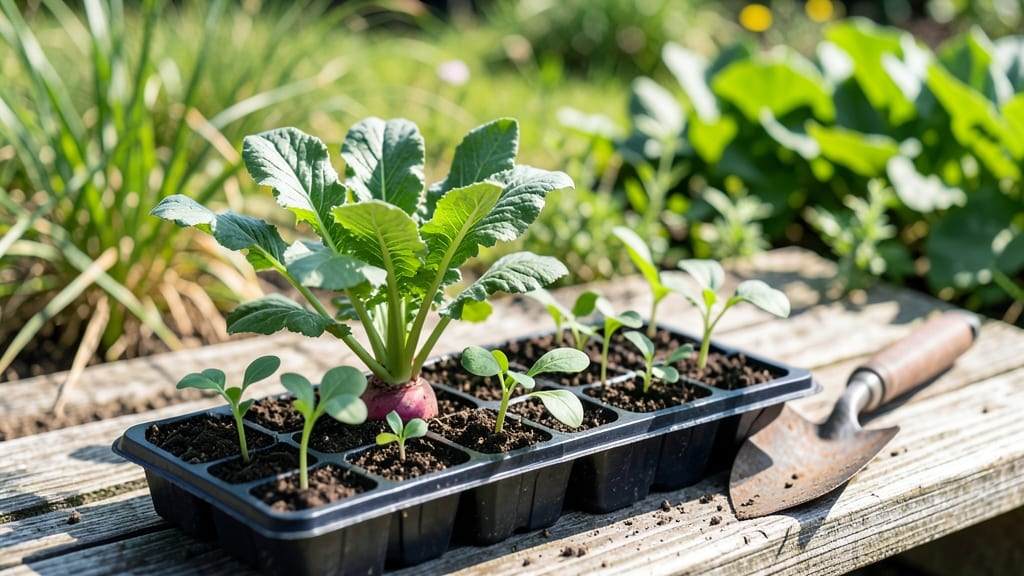
Planting radish seedlings fast means bold red roots in as little as three weeks—if you nail the timing and conditions. I learned the hard way that skipping soil prep or planting too deep turns fast germination into a waiting game.
The secret is loose, fertile soil and consistent moisture from day one.
Start with a sunny spot getting at least 6 hours of light daily, and loosen the soil to 12 inches deep—radishes hate compacted earth. Space seedlings 1–2 inches apart in rows 12 inches apart, then water gently to settle without disturbing roots.
Too much space slows growth; too little crowds out those crisp roots.
After planting, keep soil evenly moist (not soggy) and watch for sprouts in 3–7 days. Thin seedlings to 2 inches apart once they’re 2 inches tall, using sharp scissors to avoid disturbing neighbors. The payoff? Crisp, vibrant radishes ready to harvest before they bolt—no bitter surprises.
Works for spring or fall plantings in most climates, though hot summers make radishes bolt faster. For extra speed, try a shade cloth in peak heat. Let’s get those seeds in the ground!
📚 In This Guide
- What you need
- Instructions
- Tips and common mistakes
- Wrapping up and next steps
What you need
- ● Radish seedlings: 10–20 healthy, sturdy seedlings (choose varieties like Cherry Belle, French Breakfast, or Daikon based on your preference).
- ● Garden bed or containers: For in-ground planting: A well-draining, loose soil bed (6–12 inches deep) with full sun (6+ hours/day).
- ● For containers: 5–6 inch-deep pots (1 seedling per pot) or a raised bed (spacing seedlings 1–2 inches apart).
- ● Transplanting tools: Trowel or small hand shovel (for digging holes).
- ● Garden gloves (to protect your hands from soil and sharp roots).
- ● Watering can or hose with a gentle spray nozzle (for hydration).
- ○ Soil amendments (optional but helpful): Compost or well-rotted manure (1–2 cups per planting area) for nutrient-rich soil.
- ● Balanced fertilizer (5-10-10 or organic option like fish emulsion) if soil is poor.
- ● Soil test: Check pH (ideal: 6.0–7.0). Adjust with lime (to raise pH) or sulfur (to lower it) if needed.
- ● Weather check: Transplant on a cool, cloudy day or in the early morning/evening to avoid stressing seedlings.
- ● Hardening-off seedlings: If growing indoors, acclimate seedlings to outdoor conditions for 5–7 days before transplanting.
- ● Spacing: Thin seedlings to 1–2 inches apart (closer for baby radishes, wider for larger varieties like Daikon).
- ● Mulch: Apply a thin layer of straw or mulch to retain moisture and suppress weeds.
- ● Shade cloth: Use lightweight shade cloth (30–50%) if transplanting in hot climates to prevent bolting.
Instructions for planting radish seedlings with speed and precision
Here's how to get those fiery red radishes in the ground fast—no waiting, no fuss.
Prepare the Soil for Rapid Germination
Radishes despise cold, compacted soil, so work the ground until it's loose and fine. Use a garden fork or tiller to break up any clumps to a depth of 6 inches. If your soil feels heavy or sticky when squeezed, mix in 2-3 inches of compost to improve drainage and warmth. The goal is soil that crumbles easily between your fingers—this ensures roots can spread quickly without resistance.
Test the soil temperature with your hand. Radishes need soil that feels warm to the touch, ideally between 50-75°F. If it's cooler, wait a few days or use a black plastic mulch to warm the bed faster. Cold soil slows germination to a crawl, and you'll end up with patchy, uneven sprouts.
Space Seedlings for Quick, Uncrowded Growth
Radishes grow fast but need room to bulk up—1 inch apart in rows spaced 12 inches apart. Use a small hand trowel to create shallow holes just deep enough to cover the seedlings' roots. Gently loosen the roots if they're tangled, then place each seedling in its own hole. This prevents competition for nutrients, which keeps roots bold and uniform.
If you're transplanting older seedlings, trim any leaves that look yellowed or damaged with clean scissors. Healthy radishes start with strong foliage, so remove anything that might slow them down. Water the holes lightly before inserting seedlings to help roots settle into moist soil.
Water Deeply and Keep Soil Evenly Moist
After planting, water deeply with ½ inch of water to settle the soil around the roots. Use a gentle stream from a watering can or hose to avoid dislodging seedlings. The soil should feel damp 1 inch below the surface—not soggy, but not bone-dry either. Radishes need consistent moisture to grow fast, but soggy soil invites rot.
Mulch the area with 1 inch of straw or shredded leaves to lock in moisture and keep the soil temperature stable. Check the soil daily—radishes germinate in just 3-5 days when conditions are right, but they won’t tolerate drying out. If the top inch feels dry, water lightly again. Overwatering is worse than underwatering here, so err on the side of caution.
Thin to Final Spacing for Maximum Yield
When seedlings reach 2 inches tall, thin to 2 inches apart in rows. Use sharp scissors to snip at soil level—pulling risks disturbing nearby roots. This spacing gives each radish room to swell without competing for space. Thin in stages if needed; radishes grow so fast that you might need to thin again in 10-14 days for larger varieties.
Harvest when roots reach 1 inch in diameter for baby radishes or wait until they're 1.5-2 inches for classic size. The key is speed—radishes left too long in the ground turn woody and bitter. Watch for the tops to yellow or fall over; that’s your signal to dig before they bolt.
Maintain Even Moisture for Bold, Crisp Roots
Radishes need 1 inch of water per week, split into two waterings. Water in the morning so foliage dries quickly, reducing disease risk. Avoid overhead watering as plants mature—direct streams can crack the soil and split tender roots. Instead, water at the base with a soaker hose or drip irrigation.
Fertilize lightly with a balanced 10-10-10 formula at planting, but skip heavy feeding—too much nitrogen makes radishes leafy and small. If leaves yellow between veins, that’s a sign of overwatering or poor drainage. Adjust your watering routine immediately to keep roots crisp and vibrant.
Tips & tricks for perfect radish seedling planting
These precision techniques will help you achieve rapid germination and bold, crisp radishes without the common pitfalls that slow down growth.
Soil Temperature is Non-Negotiable: While the instructions mention 50-75°F as ideal, I've found that radishes actually thrive fastest when soil reaches the upper end of that range—closer to 75°F. Use a soil thermometer if possible, as your hand might not provide an accurate reading, especially in cooler climates. If your soil is consistently below 60°F, consider using a mini greenhouse or row covers to create a warmer microclimate for those critical first 3-5 days of germination.
Precision Planting Technique for Uniform Growth: When creating those 1-inch holes in Step 2, use a small stick or dowel to measure depth consistently. The holes should be just deep enough to cover the roots but no deeper—over-planting can cause the seedlings to struggle as they push through compacted soil. I also recommend using a small garden rake to create furrows first, then space the holes precisely along the lines. This ensures your 12-inch row spacing remains consistent across the entire bed.
Watering Strategy for Speed: The ½ inch of initial watering in Step 3 is crucial, but timing matters just as much. Water immediately after planting, then wait until the top inch of soil feels dry before watering again. For fastest results, I've found that using a drip irrigation system set to deliver water at the base of plants—rather than overhead watering—prevents soil compaction and keeps moisture exactly where the roots need it. This method also reduces the risk of disease that comes with wet foliage.
Thinning with Surgical Precision: When thinning to 2 inches apart in Step 4, I recommend using a small hand pruner instead of scissors for cleaner cuts. The key is to thin when seedlings reach 2 inches tall, but don't wait until they're taller—each day counts when you're aiming for speed. For larger varieties that might need thinning again in 10-14 days, mark your rows with small stakes so you can easily locate where to thin without disturbing the entire bed.
Pro Tips for Planting Radish Seedlings
- These precision techniques will help you achieve rapid germination and bold, crisp radishes without the common pitfal...
- Soil Temperature is Non-Negotiable: While the instructions mention 50-75°F as ideal, I've found that radishes actuall...
- Precision Planting Technique for Uniform Growth: When creating those 1-inch holes in Step 2, use a small stick or dow...
Frequently asked questions
Got questions about transplanting radish seedlings? You’re not alone! Here are some of the most common concerns—plus quick, actionable answers to keep your radishes thriving.
How deep should I plant radish seedlings?
Keep it shallow! Radish seedlings should go just below the soil line—no deeper than ½ inch. Their tiny roots need quick access to moisture and warmth, so burying them too deep can slow growth or even cause rot. Gently press the soil around them to ensure stability.
When is the best time to transplant radish seedlings?
Transplant seedlings after the last frost when soil temps hit 50–60°F. For fastest germination, aim for early spring or late summer (avoid heatwaves—radishes bolt in warmth!). If starting indoors, harden off seedlings for 5–7 days before moving them outside.
Can I plant radish seedlings too close together?
Absolutely—overcrowding is a no-no! Space seedlings 1–2 inches apart in rows 12–18 inches apart. If you’re direct-sowing, thin seedlings to this spacing once they’re 1–2 inches tall. Crowded radishes compete for nutrients and often grow misshapen or pithy.
What should I do if my radish seedlings look wilted or yellow?
Wilt or yellowing often signals overwatering, pests, or disease. Check for:
- Fungal issues: Space plants for airflow and avoid wet foliage.
- Pests: Look for flea beetles or aphids—spray with neem oil if needed.
- Nutrient deficiency: Feed with a balanced fertilizer (like 10-10-10) if leaves are pale.
Mulch lightly to retain moisture without suffocating roots.
Can I transplant radish seedlings if they’re already flowering?
Not ideal! Radishes bolt (flower prematurely) when stressed by heat or age. If your seedlings are flowering, it’s too late for transplants—they’ll focus on seeds, not roots. Instead, sow new seeds for a fresh batch or opt for bolt-resistant varieties like ‘Cherry Belle’ or ‘French Breakfast.’
Are there alternatives if my seedlings don’t survive transplanting?
No stress—try direct sowing! Radishes germinate in just 3–5 days when planted ½ inch deep. For a second crop, succession-sow every 2 weeks until early summer. If space is tight, grow in containers with well-draining soil.
Wrapping up and next steps
Planting radish seedlings is a rewarding way to grow a fast, flavorful crop—especially when you follow the right steps! With the right soil, spacing, and care, you’ll enjoy bold red roots in just a few weeks.
Now that you’re equipped with the know-how, get your hands dirty and watch your garden thrive!
Ready for the next harvest? Try experimenting with different radish varieties or even companion planting with leafy greens. Happy gardening! 🌱✨