Watering
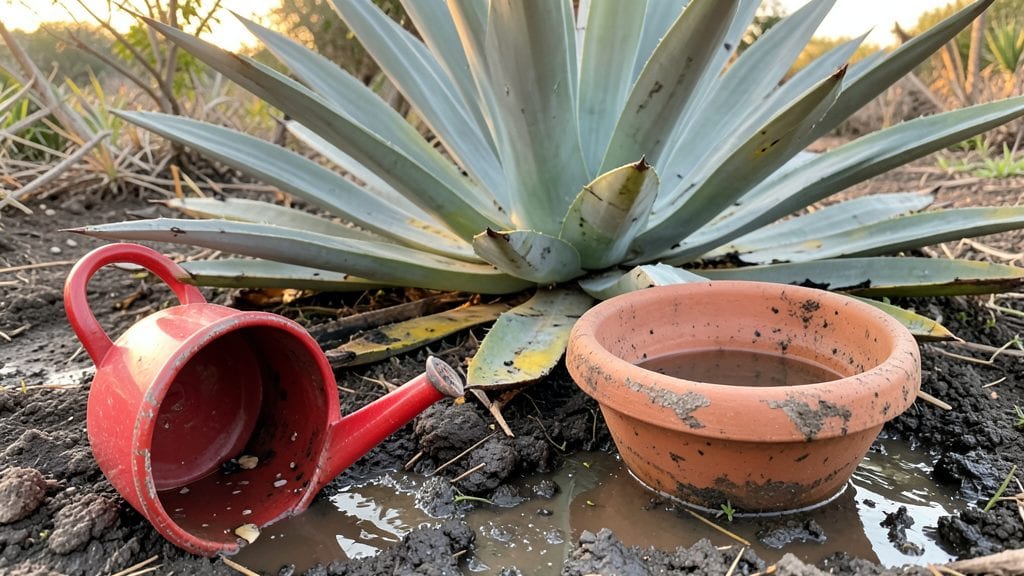
An agave plant that’s mushy at the base or yellowing at the tips is begging for a watering timeout. 🌱 I’ve nursed back more overwatered agaves than I’d like to admit—each one just needed air, time, and a little less pampering.
The key is spotting the signs early: soft stems, leaf rot, or that sad, wilted look that’s not from thirst but from drowning.
First, stop watering completely and move the plant to a spot with bright, indirect light—no soggy soil means no more root rot. If the pot feels heavy or smells funky, empty it, rinse the roots gently, and repot in cactus mix with perlite or pumice for that critical drainage boost.
Agaves store water in their leaves, so they’d rather go thirsty than soggy.
Within 2-4 weeks, you’ll see crisp new growth pushing out as the plant recovers. Long-term, water only when the soil is bone-dry 2-3 inches down—stick your finger in to check.
These desert survivors thrive on neglect, not attention, and once revived, they’ll reward you with bold, architectural foliage for years.
This works for both container agaves and in-ground plants—just adjust the soil mix. The lesson? Agaves forgive overwatering, but they never forget a soggy home. Let’s get yours back to its sharp, sun-loving self.
Root Causes Of Soggy Soil
Agave plants are succulents—naturally drought-tolerant and adapted to thrive in arid conditions. When they receive too much water, their roots and leaves react in ways that can quickly turn your prized plant into a sad, mushy mess.
Understanding why this happens is the first step to fixing it. Let’s break down the key culprits behind overwatering and how they damage your agave.
Agave roots are not designed to sit in wet soil for long. If your pot lacks drainage holes or uses soil that retains too much moisture, water pools at the bottom instead of draining away. This creates a waterlogged environment where roots suffocate.
- Why it’s dangerous: Without oxygen, roots die from anaerobic conditions (lack of air), leading to rot. Fungal and bacterial infections, like Phytophthora, thrive in soggy soil, attacking healthy tissue.
- Common mistakes:
- Using decorative pots without drainage holes.
- Planting in heavy, clay-based soils that don’t dry quickly.
- Overpacking soil, reducing airflow to roots.
- Actionable fix: Repot your agave in a container with drainage holes and use a fast-draining mix (e.g., 60% cactus soil + 30% perlite + 10% coarse sand).
Agave plants store water in their leaves, meaning they don’t need frequent watering. Yet, many gardeners water on a schedule rather than checking soil moisture first. This leads to chronic overwatering, where the roots never get a chance to dry out between sessions.
- Why it’s dangerous:
- Excess water dilutes essential nutrients in the soil, starving the plant.
- Prolonged wetness triggers root rot, causing the roots to turn black, mushy, and emit a foul odor.
- Leaves may develop soft, translucent patches or yellowing (chlorosis) due to oxygen deprivation.
- Common mistakes:
- Watering every week regardless of season (agaves need less in winter!).
- Using the "finger test" incorrectly—poking just the top layer instead of checking deeper.
- Assuming bigger pots = more water (they actually dry slower!).
- Actionable fix: Wait until the top 2–3 inches of soil are bone-dry before watering. In summer, this might be every 2–3 weeks; in winter, stretch it to 4–6 weeks.
Agaves hate humidity. In high-moisture environments (like bathrooms or poorly ventilated greenhouses), the air itself can condense on leaves and soil, mimicking a watering session. Combine this with cooler temperatures, and your plant’s natural drying process grinds to a halt.
- Why it’s dangerous:
- Humidity slows evaporation, keeping soil wet longer.
- Cool temps (below 50°F/10°C) reduce the plant’s ability to metabolize water efficiently.
- Fungal spores (like Erwinia) spread faster in damp, cool air.
- Common mistakes:
- Placing agaves near humidifiers or in enclosed glass containers.
- Moving them indoors during winter without adjusting care.
- Ignoring seasonal changes (e.g., watering a summer agave like a winter one).
- Actionable fix:
- Keep humidity below 40%—use a dehumidifier or move the plant to a drier spot.
- Avoid watering in the evening (cool temps + moisture = rot risk).
- In winter, reduce watering by half and ensure the pot isn’t sitting on a cold surface (like a concrete floor).
Not all soils are created equal. Agaves need gritty, well-aerated mixes that mimic their desert habitat. Heavy or organic-rich soils (like garden dirt or potting mixes with peat) cling to moisture, smothering roots.
- Why it’s dangerous:
- Compacted soil blocks oxygen flow, causing root asphyxiation.
- Organic matter breaks down, creating anaerobic pockets where bacteria thrive.
- Salts from tap water or fertilizers build up in dense soil, burning roots.
- Common mistakes:
- Using general-purpose potting soil (too dense).
- Amending soil with compost (agaves hate "rich" soil!).
- Reusing old soil that’s broken down over time.
- Actionable fix: Refresh your soil with a mineral-based mix:
Ingredient Ratio Purpose Cactus/succulent soil 60% Provides structure and some nutrients. Perlite or pumice 30% Improves drainage and aeration. Coarse sand (or horticultural grit) 10% Prevents soil compaction.
💡 Pro Tip: If your agave is already showing signs of rot, stop watering immediately and let the soil dry completely before assessing damage. In severe cases, you may need to trim affected roots during repotting.
How to solve it
An overwatered agave may look sad, but with the right care, it can bounce back to its striking, sun-loving glory! The key is to act fast, adjust your watering habits, and give your plant the space it needs to recover.
Below, we’ve mapped out practical fixes based on the most common causes of soggy agave roots—and how to prevent future mishaps. Let’s turn that droopy plant into a thriving centerpiece again! 🌵💦
If your agave’s soil is perpetually damp or even waterlogged, its roots are suffocating. Here’s how to rescue it:
🌱 Step 1: Stop Watering Immediately
- Pause all watering for at least 1–2 weeks. Agave stores water in its leaves, so it can survive without frequent hydration.
- Check moisture by sticking your finger 2 inches into the soil—if it’s still damp, wait longer.
🧹 Step 2: Improve Drainage
- Repot if needed: If the soil is compacted or retains too much moisture, transfer your agave to a pot with drainage holes (if it isn’t already in one).
Use a well-draining cactus/succulent mix (add perlite or pumice for extra airflow). - Raise the pot: Place it on elevated trays or pebbles to prevent water pooling at the bottom.
💧 Step 3: Water Only When Truly Dry
- Wait until the soil is bone-dry (3–4 inches down) before watering again.
- Bottom-watering trick: Pour water into the saucer and let the plant soak it up for 10 minutes.
Dump excess after 30 minutes to avoid soggy roots. - Avoid overhead watering—it can cause rot by keeping foliage damp.
If your agave’s leaves are turning yellow, mushy, or developing soft spots, root rot may have set in. Don’t panic—you can still save it!
✂️ Step 1: Trim the Damage
- Snip off mushy or blackened leaves with sterilized scissors (use rubbing alcohol to clean them).
- Remove any puckered or slimy growths—these are signs of fungal/bacterial rot.
🧼 Step 2: Disinfect and Repot
- Soak the roots in a 1:10 hydrogen peroxide solution (3% peroxide + water) for 10 minutes to kill fungus.
Rinse and let dry. - Repot in fresh, sterile soil (sterilize with baking soda or a fungicide if needed). - Add a fungicide (like copper fungicide) to the soil to prevent reinfection.
☀️ Step 3: Boost Recovery Conditions
- Move to bright, indirect light (direct sun can stress a weakened plant).
- Reduce humidity around the plant—agave hates damp air. Use a fan on low setting if needed.
- Wait 2–4 weeks before watering again, and then water sparingly.
Once your agave is on the mend, follow these habits to keep it thriving:
💡 Watering Wisdom - Less is more: Agave thrives on neglect, not attention.
Water every 2–3 weeks in summer, monthly in winter. - Seasonal adjustments: Cut watering in fall/winter—growth slows, so roots need less moisture. - Test your soil: Use a moisture meter or the finger test to avoid guesswork.
🏺 Pot and Soil Perfection
- Use terracotta pots—they dry out faster than plastic.
- Avoid garden soil: It compacts and holds too much water.
Stick to cactus/succulent mixes with added grit. - Double-check drainage: If your pot has no holes, drill them or use a cache pot (a decorative outer pot with a saucer underneath).
🌞 Light and Location
- Bright light is non-negotiable: Place your agave in full sun (6+ hours/day). A south- or west-facing window is ideal.
- Rotate occasionally: This ensures even growth and prevents leaning.
🌡️ Climate Control
- Agave hates humidity: If you live in a damp climate, use a dehumidifier near the plant or place it on a gravel tray with dry stones.
- Watch for temperature drops: Below 50°F (10°C) can shock the plant—bring it indoors if frost is forecasted.
With these steps, your agave should start showing signs of recovery in 2–4 weeks—new growth, firmer leaves, and a perkier stance! Remember, agave is a tough cookie; it’s built to handle dry conditions, not soggy ones. Treat it like a desert dweller, and it’ll reward you with stunning, sword-like foliage for years to come. 🌵✨
Frequently asked questions
How can I tell if my agave is overwatered vs. underwatered?
Check the leaves and soil: Overwatered agaves have mushy, yellowing leaves with soft spots, while underwatered ones have crispy, dry edges. Stick your finger 2-3 inches into the soil—if it's damp, you're overwatering. If completely dry, it's thirsty.
Can I save an agave with black, rotting roots?
Yes! Trim away all black/mushy roots with sterilized scissors, then soak healthy roots in a 1:10 hydrogen peroxide solution for 10 minutes. Repot in fresh, gritty cactus mix and hold off on watering for 2-3 weeks to prevent reinfection.
Why does my agave keep getting root rot even after I fix drainage?
Check these common culprits: Humidity (keep below 40%), plastic pots (switch to terracotta), or tap water (use filtered or rainwater). Also verify your soil mix—if it still feels dense, add more perlite or pumice (30% of the mix).
How often should I water my agave after recovery?
Once revived, water only when the top 3 inches of soil are completely dry. In summer, this might be every 2-3 weeks; in winter, stretch to 4-6 weeks. Agaves store water in their leaves—underwatering is safer than overwatering!
Can I use Miracle-Gro on my recovering agave?
No—agaves hate "rich" soil. Use a balanced, diluted fertilizer (like 5-5-5) only in spring/summer, and never when the plant is stressed. For recovery, focus on drainage and light first, then introduce fertilizer sparingly.