
Pruning
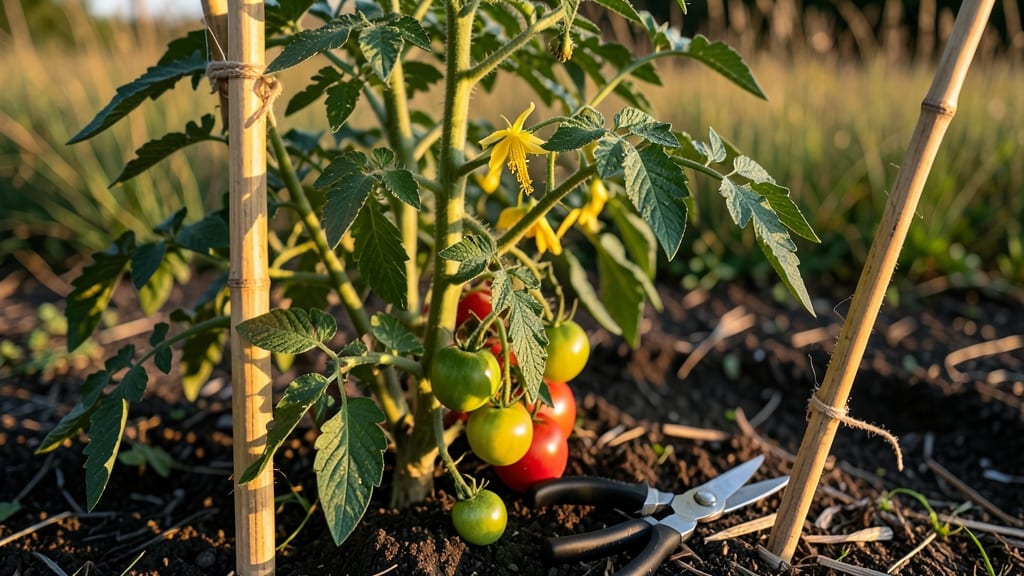
Trimming the bottom of tomato plants is the secret weapon behind my heaviest harvests—and it’s simpler than you think. ✨ I used to skip it, thinking it would stunt growth, but removing the lower leaves actually strengthens stems and prevents disease.
The key? Timing and technique matter more than how much you cut.
You’ll need clean pruners or scissors, a sunny day, and about 15 minutes for each plant. Start when seedlings are 6-12 inches tall, focusing on leaves below the first flower cluster.
For indeterminate varieties (like Roma or Beefsteak), keep pruning as they grow, while determinate types (like Bush Early Girl) rarely need trimming.
The payoff is sturdier plants that support more fruit without snapping, plus better airflow that keeps blossom end rot at bay. You’ll notice thicker stems within weeks, and the lower branches stay free of soil-borne diseases. Just avoid over-trimming—never remove more than one-third of the foliage at once.
This works for container or in-ground tomatoes, though dwarf varieties need minimal pruning. The biggest mistake? Waiting too long—early trimming sets up a stronger plant for the whole season. Ready to try it?
📚 In This Guide
- What you need
- Instructions
- Tips and common mistakes
- Wrapping up and next steps
What you need
- ● Pruning shears or sharp bypass pruners – Look for clean, sterilized tools (alcohol wipe or bleach solution works) to prevent disease spread.
- ○ Gloves (optional but recommended) – Garden or work gloves to protect your hands from thorns and dirt.
- ● Disinfectant (rubbing alcohol or bleach) – For sterilizing tools between cuts (mix 1 part bleach to 9 parts water).
- ○ Garden twine or plant ties (optional) – To support stems if heavy pruning is done (especially for indeterminate varieties).
- ● Compost bin or mulch – To dispose of pruned stems (avoid composting if disease is suspected).
- ● Healthy tomato plants – Wait until plants are at least 12–18 inches tall (usually 4–6 weeks after transplanting).
- ● Good weather – Choose a dry, sunny day to minimize stress on the plant.
- ● Patience and observation – Monitor plants for signs of stress or disease post-pruning.
Step-by-Step guide to pruning tomato plants for maximum yield
This method transforms weak, sprawling plants into sturdy producers with fewer but far larger fruit.
✂️ Step 1: Identify Suckers and Weak Growth
Suckers are the small shoots that form in the V-shaped junction between the main stem and a branch. These energy vampires divert nutrients from fruit production. Use your sterilized pruning shears to remove any sucker larger than 1 inch—leave smaller ones until they grow.
Focus on the lower third of the plant first. These suckers compete with your main stem for resources, so removing them early directs energy upward where it belongs. I always start pruning when plants reach 12-18 inches tall—before suckers get too large to manage easily.
✂️ Step 2: Prune the Bottom Leaves (But Not Too Much!)
Remove only the lowest 6-8 inches of leaves—never strip the entire lower stem. This creates air circulation that prevents soil-borne diseases like blight. Use your fingers to gently pinch off leaves rather than cutting, which reduces damage to the stem.
Here's the thing—don't go overboard. If you remove too many leaves, the plant loses its ability to photosynthesize efficiently. Watch for yellowing leaves at the base—this signals over-pruning. Healthy plants should retain enough foliage to shade the fruit while still allowing sunlight to reach lower branches.
☀️ Step 3: Train the Main Stem for Optimal Growth
Select the strongest, most vertical shoot as your main stem. Remove all competing side shoots to prevent energy division. For indeterminate varieties (the vining types), I leave only 1-2 strong branches per node to maximize fruit production.
Use soft plant ties to gently guide the main stem along your tomato cage or trellis. This prevents flopping and makes future pruning easier. You'll know you're doing it right when the plant channels all its energy into upward growth and fruit development rather than sprawling branches.
⏰ Step 4: Ongoing Maintenance for Continuous Harvest
Prune suckers weekly during the growing season. Check plants every 5-7 days for new growth in leaf axils. The key is consistency—removing small suckers is far easier than dealing with large, woody growth later.
As flowers appear, remove any suckers within 12 inches of the fruit clusters. This ensures the plant focuses its energy on ripening existing tomatoes rather than developing new growth. You'll see the difference immediately in fruit size and plant vigor.
🌿 Step 5: Final Pruning Before Harvest
When plants reach your cage height or trellis top, stop pruning new growth. This signals the plant to focus on ripening existing fruit. For indeterminate varieties, you can continue light pruning of suckers near the top to maintain air flow.
Watch for yellowing leaves at the top—this natural aging process helps direct nutrients to the fruit. Remove only the oldest, most diseased leaves at this stage. By late summer, your plant should look like a well-organized fruit factory with minimal foliage competing for resources.
Tips & tricks for perfect tomato plant pruning
Here's what nobody tells you about transforming your tomato plants from scraggly vines into productive powerhouses.
Timing Secret: The 12-18 inch height mark I mentioned in Step 1 is your golden window—this is when tomato plants are just developing their root systems enough to handle pruning stress but haven't yet wasted energy on excessive foliage. I've learned this the hard way: pruning too early (before 12 inches) stresses young plants, while waiting too long (after 18 inches) lets suckers become woody and difficult to remove.
Leaf Pruning Technique: When removing those lowest 6-8 inches of leaves in Step 2, work from the bottom up and leave the leaves just above any developing fruit clusters. This creates that crucial airflow while maintaining the plant's ability to photosynthesize. I use my fingers to gently pinch leaves rather than cutting—the stem heals better this way, and you avoid creating entry points for disease. The key is balance: you want sunlight to reach lower branches but not so much that the fruit gets sunburned.
Equipment Upgrade: Sterilized pruning shears are non-negotiable, but I've found that a small pair of sharp scissors works better than shears for removing suckers—you get more precision. For leaf removal, though, I swear by a clean, sharp knife or even my fingers. The difference between clean cuts and jagged tears is night and day when it comes to plant recovery. Always wipe your tools with rubbing alcohol between plants to prevent spreading disease.
Maintenance Strategy: That weekly pruning schedule in Step 4 is your friend, but don't let it become a chore. Set a reminder on your phone for every 5-7 days—it only takes 10 minutes per plant. I've found that morning is the best time to prune: the plants are turgid (full of water) from overnight, so they handle the stress better. Plus, you'll see any new suckers that popped up overnight, making removal easier before they get too large.
Pro Tips for Do You Trim The Bottom Of Tomato Plants
- Here's what nobody tells you about transforming your tomato plants from scraggly vines into productive powerhouses.
- I've learned this the hard way: pruning too early (before 12 inches) stresses young plants, while waiting too long (after 18 inches) lets suckers become woody and difficult to remove.
- Leaf Pruning Technique: When removing those lowest 6-8 inches of leaves in Step 2, work from the bottom up and leave the leaves just above any developing fruit clusters.
Frequently asked questions
Why should I trim the bottom of my tomato plants?
Trimming the bottom of tomato plants—called suckering—redirects energy from leafy growth at the base to fruit production. This strengthens stems, improves air circulation (reducing disease), and boosts yields by focusing resources on the upper plant where most fruit forms. Think of it as giving your plant a "growth makeover"!
When is the best time to trim the bottom of tomato plants?
Start when plants are 12–18 inches tall (usually 2–3 weeks after transplanting). For indeterminate varieties (like cherry tomatoes), keep pruning the bottom leaves as the plant grows. For determinate (bush) tomatoes, minimal trimming is needed—just remove dead or diseased leaves. Pro tip: Do it on a dry morning to avoid spreading disease.
How far down should I trim tomato plants?
Aim to remove leaves below the first flower cluster (or where the main stem meets the soil for bush varieties). For indeterminate tomatoes, trim aggressively—up to 12–18 inches from the ground as the plant grows. For determinate tomatoes, light trimming (just the lowest leaves) is enough to improve airflow.
What if I don’t trim the bottom of my tomato plants?
You won’t lose your harvest, but you might see smaller fruit, weaker stems, and more diseases (like blight). Overgrown bottoms trap moisture, attract pests, and compete with fruit for nutrients. If you’re short on time, at least remove yellow/diseased leaves—it’s better than nothing!
Are there alternatives to trimming the bottom?
Yes! If pruning feels extreme, try these:
- Mulch heavily (straw or grass clippings) to shade the soil and reduce leaf growth at the base.
- Use a tomato cage or stake early to encourage upward growth naturally.
- Grow determinate varieties (like Roma or Bush Early Girl), which need less pruning.
Wrapping up and next steps
Pruning the bottom of your tomato plants isn’t just a gardening trick—it’s a game-changer for healthier, more productive vines! 🌱 By removing suckers and lower leaves, you boost airflow, reduce disease risks, and channel energy toward fruit production.
Whether you’re a seasoned gardener or just starting, this simple step can transform your harvest.
Ready to try it? Grab your pruners and give it a go—your future tomatoes will thank you! Next up: Monitor your plants weekly for new suckers and adjust as needed. Happy gardening! 🌿