Companion Plants
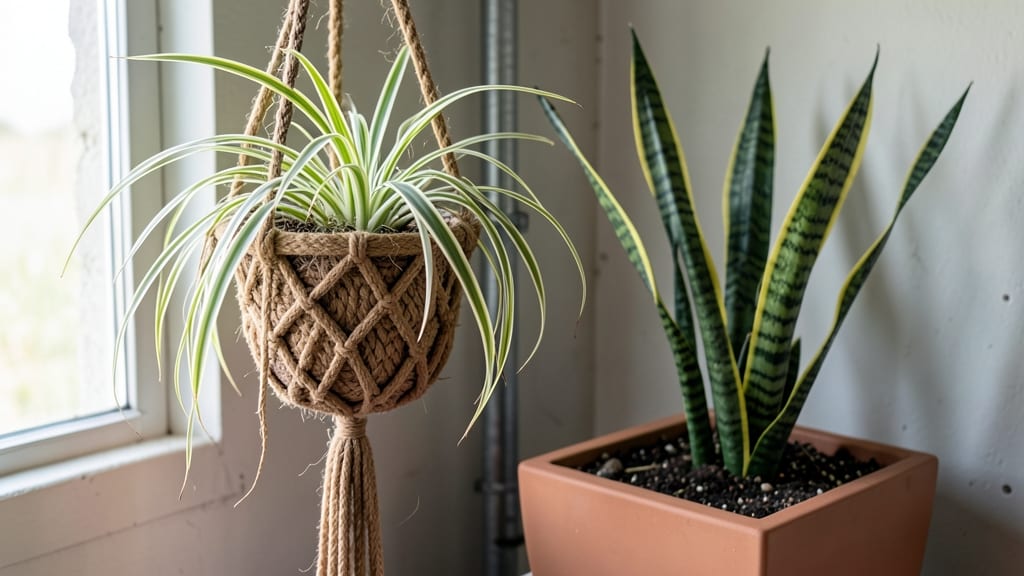
Garage plants ideas can turn that dusty corner into a lush, functional green space without breaking the bank or your back.
Picture this: your car parked neatly, tools organized, and shelves lined with thriving herbs and veggies—all under one roof. No backyard? No problem. With the right setup, your garage can become a year-round garden oasis, even if sunlight is scarce.
You don’t need a green thumb or a spacious yard to grow fresh basil, leafy greens, or even dwarf tomatoes. The key is choosing the right plants for low-light conditions and maximizing every inch of vertical space.
Whether you’re a beginner or a seasoned gardener, these ideas will help you grow more without giving up your garage’s original purpose.
From hanging planters to LED grow lights, I’ll show you how to balance beauty and practicality—so you can enjoy fresh herbs for cooking while keeping your workspace clutter-free. Let’s get started!
Best space-saving veggies and herbs for garage growing
Your garage doesn’t have to stay a storage space—it can become a year-round garden packed with high-yield veggies and herbs that thrive in tight spaces. The key is selecting compact varieties that don’t require deep soil or sprawling roots.
These space-saving plants grow well under LED grow lights or near south-facing windows, making them perfect for garage cultivation. With the right setup, you can harvest fresh basil, leafy greens, and microgreens without sacrificing your garage’s functionality.
When choosing plants for garage growing, prioritize fast-growing, shallow-rooted varieties that fit in hanging planters, vertical shelves, or small pots. Many leafy greens, dwarf herbs, and microgreens mature in 30-60 days, giving you quick rewards.
Below, I’ve curated a list of the best space-saving crops, including their growth requirements, yield potential, and garage-friendly traits to help you maximize your harvest.
summary-table
One of my top garage garden picks is bush basil—it stays compact, grows quickly, and thrives under LED grow lights. Place it in a 6-inch pot near a south-facing window or under a 12-inch grow light, and you’ll have harvestable leaves in just 6 weeks.
Basil’s aromatic leaves also help deter pests like aphids and whiteflies, keeping your garage garden healthy naturally. For a low-maintenance option, try woody thyme; it’s drought-tolerant and can survive in partial shade, making it ideal for garages with limited light.
If you’re craving fresh greens year-round, arugula and leaf lettuce are must-haves. These fast-growing leafy greens mature in 3-6 weeks and can be harvested repeatedly by cutting outer leaves.
Use shallow trays or hanging pockets to save space, and keep the soil consistently moist for crisp, tender leaves. For maximum yield in minimal space, microgreens are unbeatable—**bro
Garage garden setup: lighting, shelving, and climate control tips
Turning your garage into a productive garden requires smart planning to create the ideal environment for your plants. Without natural sunlight or controlled temperatures, you’ll need to strategically combine LED grow lights, space-efficient shelving, and climate control to maximize growth.
The right setup ensures your herbs and veggies thrive year-round without taking up valuable floor space.
Start by assessing your garage’s natural light sources—even a small window can help supplement artificial lighting. Pair this with energy-efficient LED grow lights that mimic sunlight, and you’ll create the perfect balance for leafy greens and herbs.
Vertical shelving isn’t just for storage; it’s a game-changer for maximizing space while keeping plants organized and accessible.
Here’s how to optimize your garage garden with practical solutions for lighting, shelving, and climate control:
Don’t forget to rotate your plants every few days to ensure even light exposure—this prevents leggy growth and keeps foliage lush. Group plants with similar needs together, like basil and parsley, to simplify care routines. With these adjustments, your garage garden will be as productive as it is space-efficient.
Test your setup with a few low-maintenance plants like mint, chives, or lettuce before expanding to more demanding crops. These hardy options will help you refine your lighting and climate strategies before tackling tomatoes or peppers. Once you’ve mastered the basics, you can experiment with more ambitious garage gardening projects!
🌱